
Premium window tint: Benefits, types, and key metrics
TL;DR:
- Premium window films are nearly invisible multilayered technologies that block UV rays and heat without darkening windows. They enhance energy efficiency, interior protection, privacy, and security while maintaining natural light and avoiding mirror-like appearances. Proper selection and professional installation are essential for optimal performance and durability.
Many homeowners and business owners assume window tinting means dark, reflective glass that turns their windows into mirrors. That assumption is holding people back from a genuinely useful upgrade. Today's premium window films can be nearly invisible while blocking up to 99.9% of UV radiation and rejecting substantial solar heat. This article breaks down what premium window tint technology actually is, how each film type performs, which numbers to trust when comparing products, and how to match the right film to your home or business in Southern New Hampshire or the Greater Boston Area.
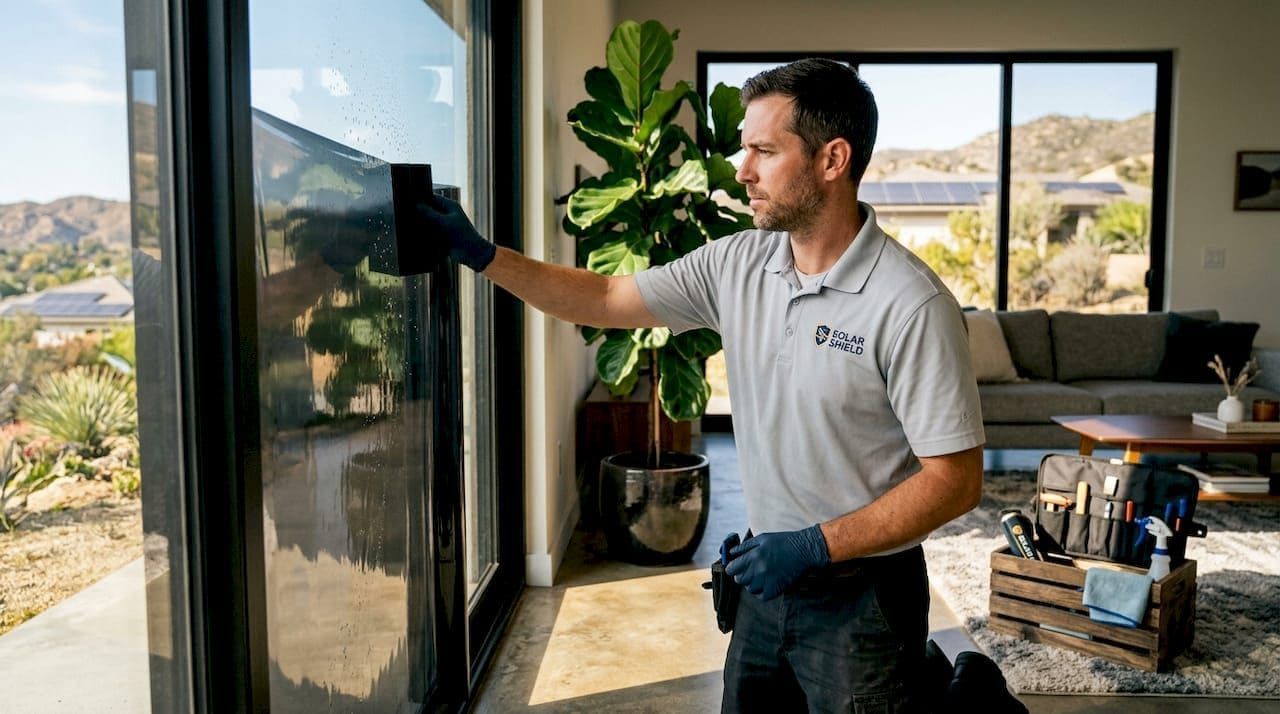
Table of Contents
- What defines premium window tint technology?
- Key benefits: Energy efficiency, comfort, privacy, and security
- Comparing film performance: How to read the metrics
- How to select the right premium film for your space
- What most buyers get wrong about premium window tint
- Ready to experience premium window tint?
- Frequently asked questions
Key Takeaways
| Point | Details |
|---|---|
| Not all tints are dark | Premium window films can block heat and UV without noticeably changing your windows' appearance. |
| Metrics matter | Understanding VLT, SHGC, and TSER helps you compare products fairly. |
| Installation impacts results | Even top-rated film needs professional installation for best performance and durability. |
| Choose by priorities | Decide if energy savings, privacy, or security is your main goal before picking a film. |
What defines premium window tint technology?
Most people picture window tint as a single dark layer of film stuck to the glass. Premium technology is something entirely different. Modern high-performance films are built from dozens of ultra-thin layers bonded together, each one engineered to target a specific part of the solar spectrum.
The result is a film that can turn away heat and UV while letting natural light pour through. Here is what separates premium from basic:
- Multilayer construction: Advanced multi-layer stacks target heat, UV, and visible light independently, rather than blocking everything with a single dark material.
- Nano-ceramic technology: Ceramic particles embedded in the film scatter and absorb infrared radiation without the metallic interference that disrupts Wi-Fi or cell signals.
- Spectrally selective performance: The best films distinguish between the wavelengths that carry heat and the wavelengths that carry visible light, so you get daylight without the heat penalty.
- Non-metallized options: These films reject up to 97% of infrared light and up to 99.9% of UV without the mirror-like appearance of older metallic films.
- Broad application: The same film families work across residential windows, commercial storefronts, and large curtain-wall glass.
One critical misconception is worth addressing directly: darker tint does not equal better performance. A nearly clear spectrally selective film often outperforms a dark film on every measurable dimension. Darkness reduces visible light, which is only one slice of the solar spectrum. Premium films work across the full spectrum, including the near-infrared range that carries most of the heat your HVAC system fights all summer.
"The real leap in window film technology is not about how dark you can go. It is about how precisely you can target the parts of sunlight that cause problems while leaving the rest alone."
Pro Tip: When a contractor or product listing leads with "darkness" as the main selling point, ask specifically about infrared rejection and TSER ratings. Darkness alone is a weak predictor of real-world performance.
Exploring premium solar window films for your home is a good first step to see how these technologies translate into real products for Southern New Hampshire and Greater Boston properties.
Key benefits: Energy efficiency, comfort, privacy, and security
Once you understand what premium films are made of, the benefits make a lot of sense. These films do not just address one problem. They solve several at once, and the measurable results are specific.
Here are the four primary benefit areas and what you can realistically expect from each:
- Energy efficiency and cooling cost reduction. Premium films can reject up to 60% of solar heat coming through your glass. During a New England summer, south- and west-facing windows can raise a room's temperature by 10 to 15 degrees Fahrenheit on a clear afternoon. Reducing that solar load means your air conditioning runs less, and rooms stay comfortable without closing the blinds entirely. The savings accumulate over the life of the film, which typically spans 10 to 20 years with a quality product and proper installation.
- UV protection for interiors and health. Ultraviolet radiation is the primary cause of fading in wood floors, furniture, artwork, and textiles. It also contributes to skin damage even through untreated glass. Premium films block up to 99.9% of UV radiation, a number that holds across nearly all film types in this category. For a home with antique furniture or a business with branded interior displays, this protection represents real dollar savings on replacement and upkeep costs.
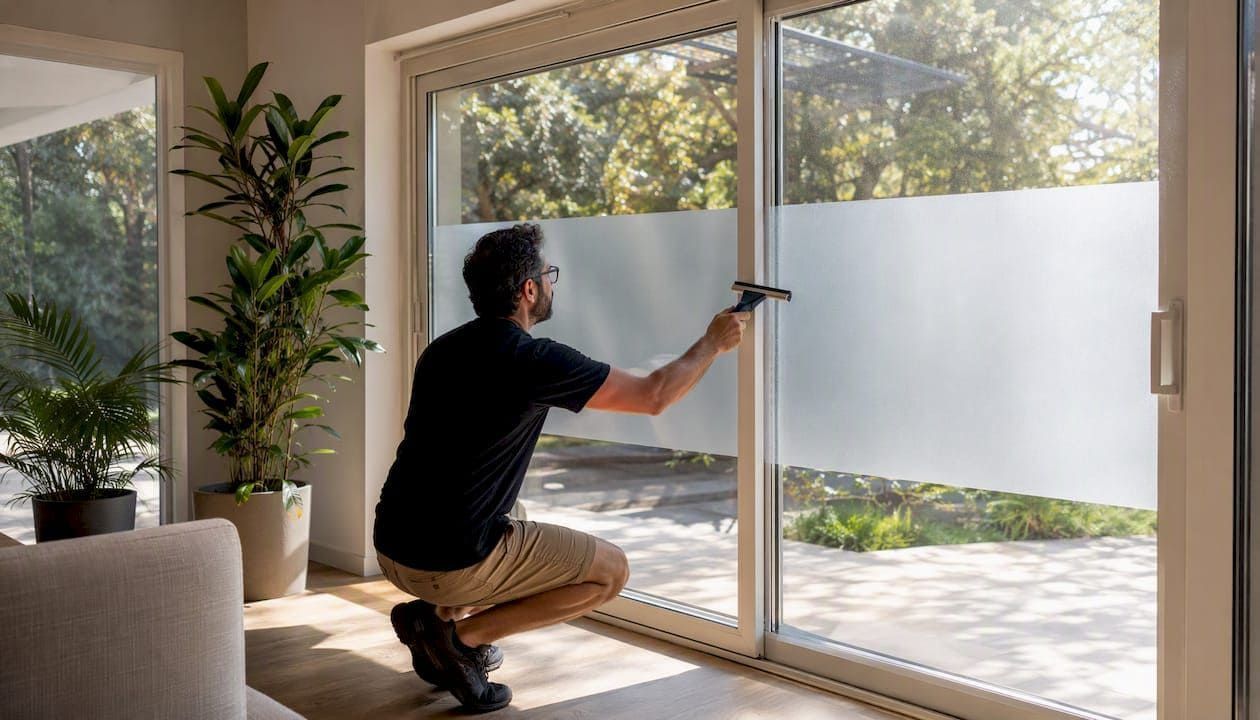
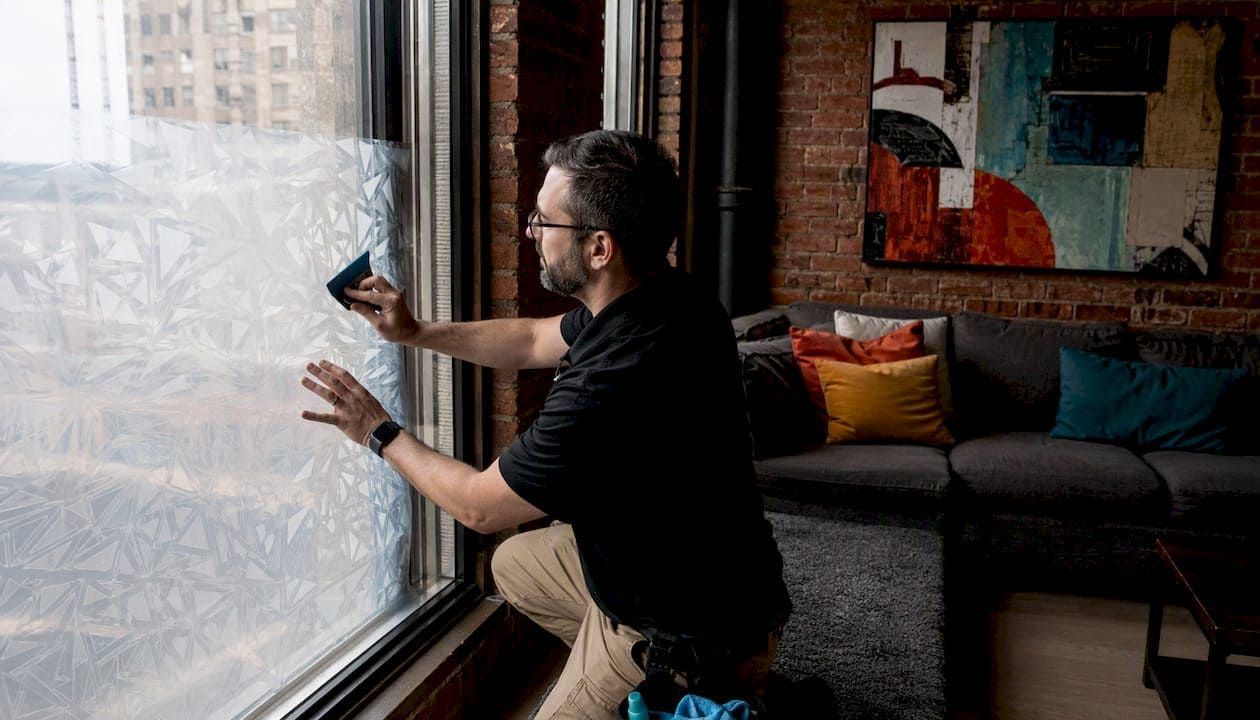
- Privacy without darkness. Many property owners want privacy from street-level views without losing natural light or the feel of an open space. Spectrally selective and lightly tinted films reduce visibility from outside during daylight hours while maintaining a clear interior view. Decorative and frosted film options add a further layer of privacy in specific zones like conference rooms, bathrooms, or ground-floor office spaces. You get the openness of glass without the fishbowl feeling.
- Safety and security. Security-rated films can admit up to 89% of daylight while blocking nearly all UV and adding meaningful shatter resistance. When glass breaks, whether from an accident, a storm, or an attempted break-in, security film holds the shards together. This slows entry dramatically and reduces injury risk. For commercial properties in the Greater Boston area, this is a meaningful upgrade to ground-floor and lobby windows.
Stat callout: A quality security film can hold broken glass in place long enough to delay a smash-and-grab by several minutes, which security research consistently identifies as enough deterrent to abort most opportunistic break-ins.
Pro Tip: Use the window tinting energy savings calculator to see how your specific window count, orientation, and local climate translate into projected savings before you commit to a film type.
For homeowners who want to go deeper on the security side, learning how to enhance home security with window film covers the options in detail.
Comparing film performance: How to read the metrics
This is where most buyers get confused, and where some marketing claims take advantage of that confusion. Window film performance is measured by standardized metrics, and those metrics are not interchangeable. Using the wrong one to compare two products is like comparing miles per hour to miles per gallon and calling it even.
Here are the core metrics you need to know:
| Metric | What it measures | What to look for |
|---|---|---|
| VLT (Visible Light Transmittance) | Percentage of visible light that passes through | Higher = brighter interior |
| SHGC (Solar Heat Gain Coefficient) | Fraction of solar heat entering through glass | Lower = less heat gain |
| TSER (Total Solar Energy Rejected) | Percentage of total solar energy blocked | Higher = better heat control |
| IRR (Infrared Rejection Rate) | Percentage of infrared light blocked | Useful, but check the measurement band |
| IRER (Infrared Energy Rejected) | A variation of infrared measurement | May differ significantly from IRR |
The most commonly misused number in window film marketing is "percent heat rejection." This claim can reference IRR, IRER, or TSER, which measure different slices of the solar spectrum. A film marketed as "90% heat rejection" based on a narrow infrared band might perform much more modestly when measured against the full solar spectrum using TSER.
The industry standardized metrics VLT, SHGC, and TSER are defined by organizations like the NFRC (National Fenestration Rating Council) and IWFA (International Window Film Association). These standards exist precisely to make comparisons honest and consistent.
Here is a numbered guide to reading those numbers in practice:
- Start with TSER. This is the broadest and most honest measure of how much total solar energy a film blocks. Compare films using this number first.
- Check VLT next. This tells you how bright your interior will feel. A VLT of 70% or higher typically feels very natural. Below 50%, you start to notice the tint.
- Look at SHGC. A lower coefficient means less heat gets through. Compare the SHGC of the tinted window system, not just the film alone, for the most accurate picture.
- Ask about IRR only in context. IRR can be useful for comparing films within the same product family, but it should not be used to compare across brands without knowing the measurement band used.
"The fastest way to cut through window film marketing claims is to ask for the TSER and SHGC on the manufacturer's official spec sheet. If a salesperson cannot produce those numbers, move on."
For homeowners in Southern New Hampshire dealing with afternoon sun on west-facing windows, learning how to reduce heat and glare with the right film spec is worth the extra ten minutes of research.
How to select the right premium film for your space
Knowing the metrics is useful. Applying them to your specific situation is where the real decision gets made. Film selection is not about finding the highest number on a spec sheet. It is about matching the right performance profile to your priorities, your glass type, and your property's orientation.
Here is a practical comparison of common film categories by use case:
| Priority | Recommended film type | Key metrics to check |
|---|---|---|
| Maximize energy savings | Spectrally selective solar | Low SHGC, high TSER, VLT 50-70% |
| Maintain natural light | Nano-ceramic, light tint | VLT 60-80%, TSER above 40% |
| Daytime privacy | Reflective or dual-reflective | VLT 15-35% on exterior side |
| Security and safety | Safety/security film | Shatter resistance rating, UV block |
| Decorative privacy | Frosted or patterned film | Opacity level, design compatibility |
Follow these steps when making your final selection:
- Define your primary goal. Energy savings, privacy, security, or appearance each point toward a different film family. Trying to optimize for all four simultaneously usually results in a compromise product. Pick your top one or two priorities first.
- Match VLT to your room. A home office that relies on natural light needs a higher VLT than a west-facing bedroom where afternoon glare is the main complaint.
- Confirm the performance basis. Ask your installer or the manufacturer to confirm whether heat rejection numbers are based on TSER, IRR, or IRER. The right selection process means confirming the measurement basis before comparing products.
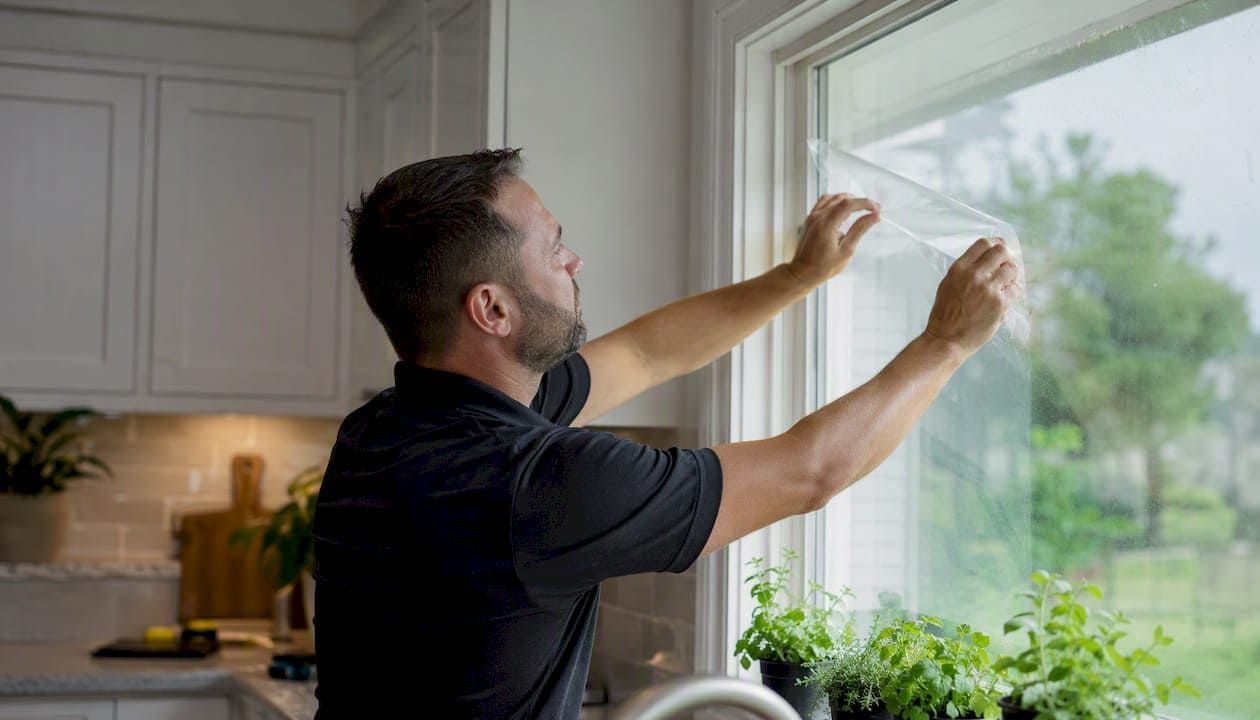
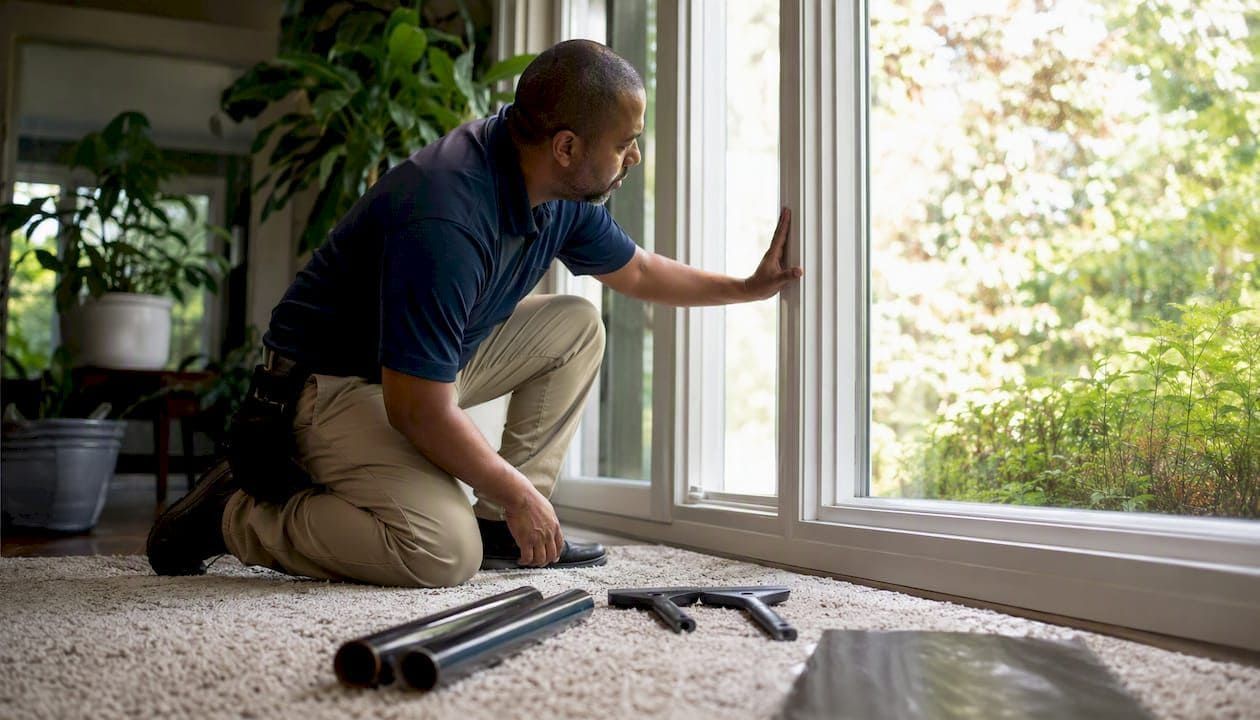
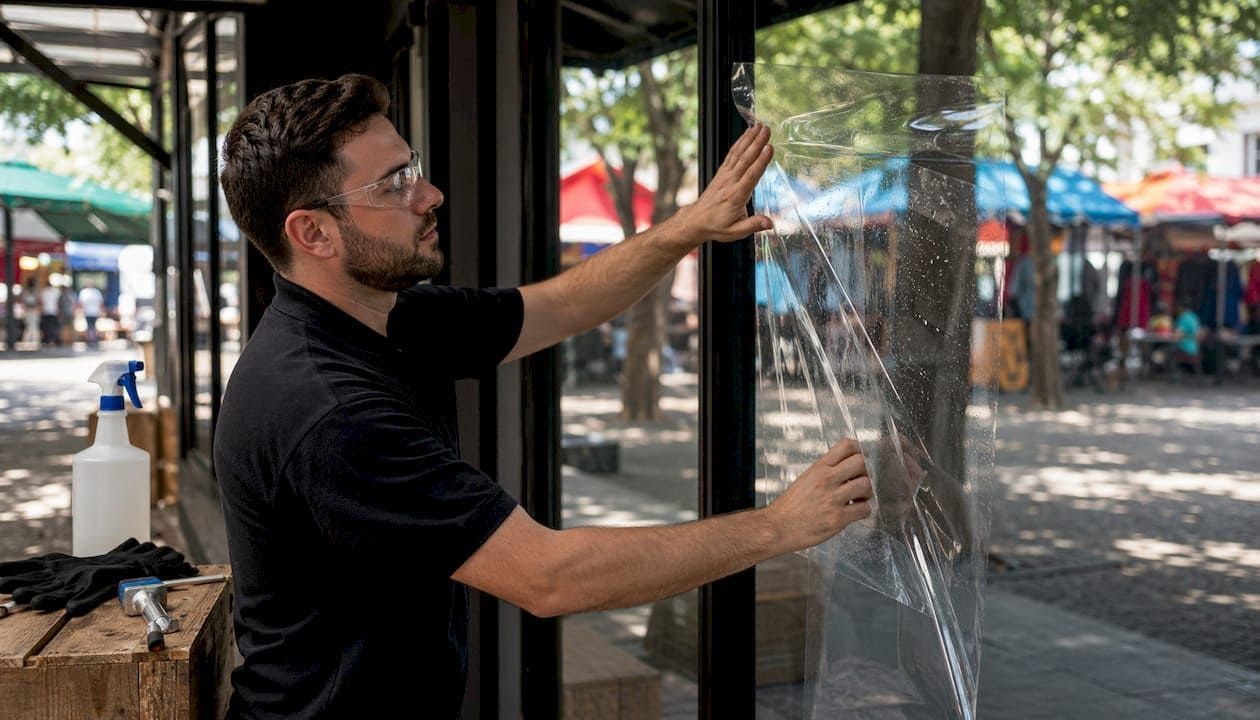
- Insist on professional installation. Even a technically superior film performs poorly if it is not installed correctly. Bubbles, edge lifting, and improper adhesion all reduce performance and void warranties. Installer workmanship directly affects the final look and how long the film performs.
- Ask about warranty coverage. Quality manufacturers back their products with warranties that cover delamination, fading, and adhesive failure. A warranty is only as good as the installer honoring it, so professional installation matters here too.
Pro Tip: If your property has existing low-e glass, confirm film compatibility before purchasing. Some films combined with low-e coatings can cause thermal stress that cracks the glass. A qualified installer will check this before recommending a product.
For properties where privacy is the main concern, exploring options to improve window privacy and privacy window solutions will give you a concrete look at what is available for both homes and businesses.

What most buyers get wrong about premium window tint
Here is something that years of working in this industry has made clear: the buyers who get the best outcome are rarely the ones who chased the highest number on a spec sheet. They are the ones who asked the right questions before choosing.
The most common mistake is treating "percent rejection" as the only metric that matters, then selecting a film based on that number alone without understanding what it actually measures or whether the film is appropriate for the glass type and orientation involved. A film with a staggering infrared rejection claim installed on north-facing windows in a climate where winter heat retention matters more than summer cooling is a poor fit, regardless of the spec.
The second mistake is undervaluing installation. High numbers on paper do not deliver if a film is not installed correctly or if the wrong type is picked for the situation. A poorly installed premium film will look worse and perform worse than a properly installed mid-tier film. Bubbles, streaks, and contamination under the film are not cosmetic annoyances. They indicate adhesion failures that compound over time.
The third mistake is ignoring film type compatibility with the building's glass. Single-pane, double-pane, laminated, and tempered glass each have different thermal properties, and some films interact badly with specific glass types. This is not a scare tactic. It is a detail that a qualified installer handles routinely, but a DIY installation or an unqualified contractor might miss entirely.
The bottom line is this: the best window film for your property is the one that matches your priorities, fits your glass, and is installed by someone who stands behind their work. Understanding the difference between safety film and security window film is one example of the kind of nuance that separates a well-matched installation from a generic one.
Ready to experience premium window tint?
You now have a solid framework for understanding what premium window tint actually delivers, how to read the numbers, and how to match a film to your goals. The next step is seeing it applied to real windows.
At Surface Dynamics Window Tinting, we serve homeowners and business owners throughout Southern New Hampshire and the Greater Boston Area as an exclusive LLumar SelectPro Dealer. You can explore options using our residential window film viewer or commercial window film viewer to visualize how different films look on actual glass. Browse real installations in our window tint photo gallery, or connect with us directly for a window tinting free estimate tailored to your property. We bring the expertise to match the right film to your windows, not just the highest-rated film on the market.
Frequently asked questions
Does premium window film change the look of my windows?
Most premium films are spectrally selective and visually clear, meaning they appear nearly transparent from both inside and outside while still blocking heat and UV. You will not get a mirror effect or a noticeable darkening with most high-performance options.
How do I compare heat rejection percentages between brands?
Always ask which standardized metric the percentage refers to, because heat rejection claims vary by measurement band. IRR, IRER, and TSER can produce very different numbers for the same film, so comparing them directly across brands leads to false conclusions.
What's the difference between privacy, solar, and security films?
Privacy films adjust opacity to limit visibility, solar films focus on reducing heat and UV, and security films add shatter resistance alongside UV block. Premium products in each category often combine two or more of these features in a single film.
Why does installation quality matter so much for window tints?
Installer workmanship directly affects film longevity, appearance, and whether manufacturer warranties remain valid. Poor installation leads to bubbles, edge lifting, and early adhesion failure that no amount of film quality can overcome.
Recommended