
Patio Door Privacy Film: Choose, Install, and Get It Right
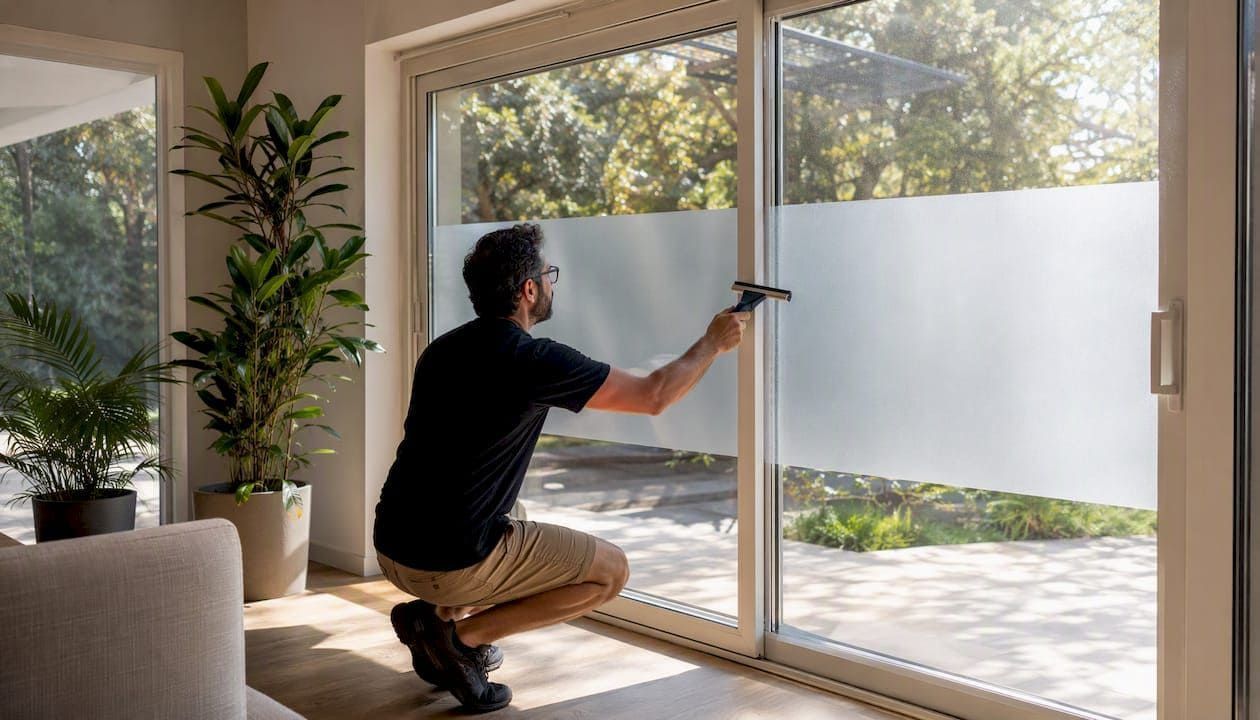
For most patio and sliding glass doors, frosted or opaque adhesive film is the smartest default choice. It delivers genuine 24/7 privacy, still lets natural light through, and works whether the lights inside are on or off. If you want to preserve your view during the day and can pair the film with curtains or blinds at night, a dual-reflective or ceramic tinted film is a solid second option. Order a sample kit first to see how each looks on your specific glass, or request a free estimate if you want a certified installer to handle it.
DIY kits make sense for a single-panel door, a renter who needs something removable, or a low-traffic area where a small bubble or edge lift won't bother you. For large multi-panel sliders, security film, or any job where you want a warranty-backed finish, hire a professional.
Key Takeaways
For most patio and sliding glass doors, frosted or opaque adhesive film is the most reliable choice because it delivers consistent privacy day and night without requiring curtains or lighting adjustments.
| Point | Details |
|---|---|
| Best all-around film | Frosted or opaque adhesive film provides 24/7 privacy and still transmits natural light. |
| Night privacy limitation | One-way and reflective films lose effectiveness when interior light exceeds exterior light after dark. |
| DIY vs. pro threshold | DIY works for single panels and removable film; hire a certified installer for multi-panel, security, or warranty-backed jobs. |
| Lifespan gap | Consumer-grade film lasts 2–5 years; professional-grade LLumar and Vista films last 10–15 years or more. |
| Surfacetint next step | Request a free on-site estimate from Surfacetint for certified patio door film installation in Southern NH and Greater Boston. |
Table of Contents
- What type of patio door privacy film fits your situation?
- How each type of sliding glass door privacy film actually works
- Does privacy film actually work at night?
- DIY kits vs. professional installation: who should do what?
- How to measure, prep, and install privacy film on a patio door
- What does patio door film cost, and how long does it last?
- Cleaning, maintaining, and removing patio door film
- Why certified installation and professional-grade film make a real difference
- Can you get samples and installation tool kits before committing?
- How to choose the right privacy film for your specific needs
- What is the environmental footprint of window film?
- The case for frosted film first, reflective film second
- Surfacetint brings certified patio door film installation to Southern NH and Greater Boston
- Sources
What type of patio door privacy film fits your situation?
Match your use case to the right film before you spend a dollar on product.
- Ground-floor slider facing neighbors or a street: Frosted or opaque film. Full-time privacy, no curtains needed, natural light still comes through. Trade-off: no outward view.
- Daytime privacy + heat control, view matters: Dual-reflective or ceramic tinted film. Blocks sightlines and rejects solar heat during the day. Requires curtains or blinds after dark when interior light reverses the one-way effect.
- Poolside or back-patio door, partial privacy: Decorative patterned or etched film at eye level, clear above and below. Balances aesthetics with a partial view.
- Rental or temporary situation: Static-cling removable film. No adhesive, no damage, peels off cleanly. Shorter lifespan and less crisp finish than adhesive options.
- Security concern (break-in risk, storm zone): Safety and shatter-resistant security film. Holds glass together on impact. Must be professionally installed to meet performance expectations.
- Maximum light control (bedroom slider, media room): Blackout or opaque film. Zero light transmission, zero view, total privacy around the clock.
Not sure which category fits? Request samples from your installer or retailer and hold them against your actual glass in both daylight and evening light before committing. That single step eliminates most buyer regret.
For urban homes where neighbors are close and night privacy is a constant concern, privacy films for urban homes covers the specific trade-offs worth knowing.
How each type of sliding glass door privacy film actually works
Privacy films fall into distinct categories, and each behaves differently across lighting conditions. Here is what you get with each one.
Static cling (removable): No adhesive. The film clings to glass electrostatically and peels off without residue. Ideal for renters. Durability is lower than adhesive films, and edges can lift in humid conditions near a patio door.
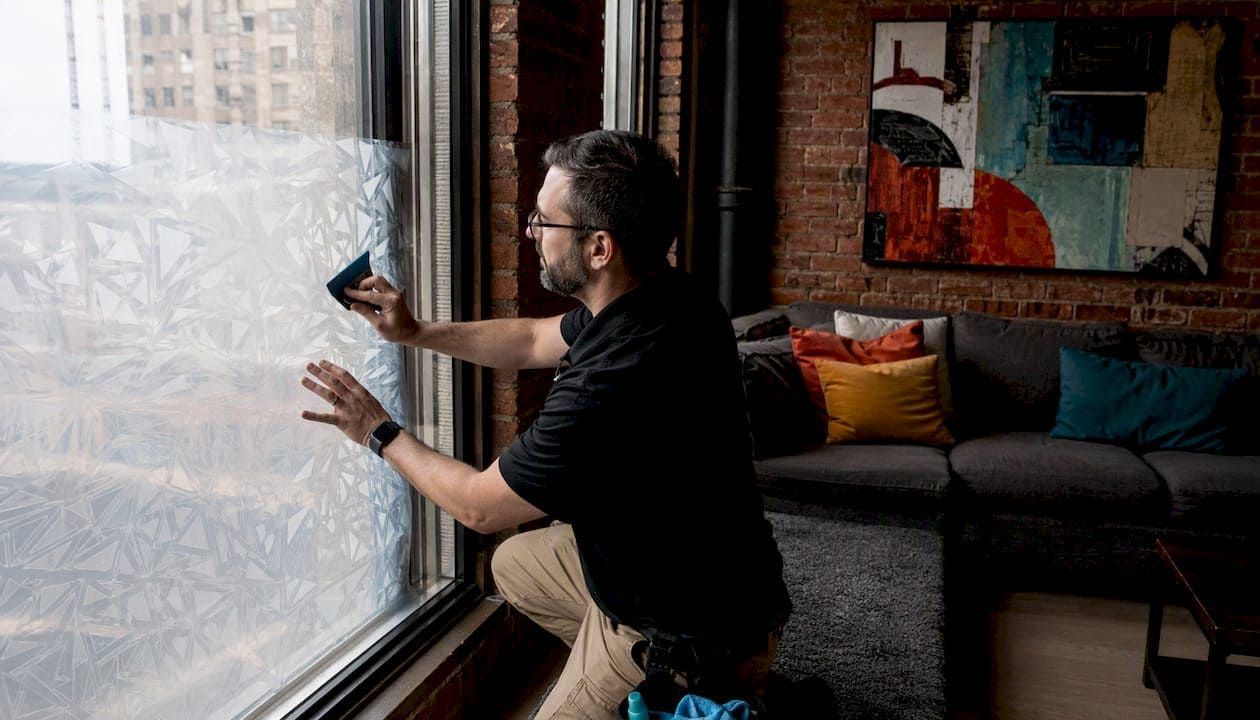
Frosted/etched adhesive: The workhorse of residential privacy film. A translucent coating scatters light so you see shapes and brightness but no detail. Works equally well day and night. Available in dozens of patterns, from plain matte white to geometric or botanical designs. Decorative glass film in this category is sold by specialty retailers and big-box stores alike.
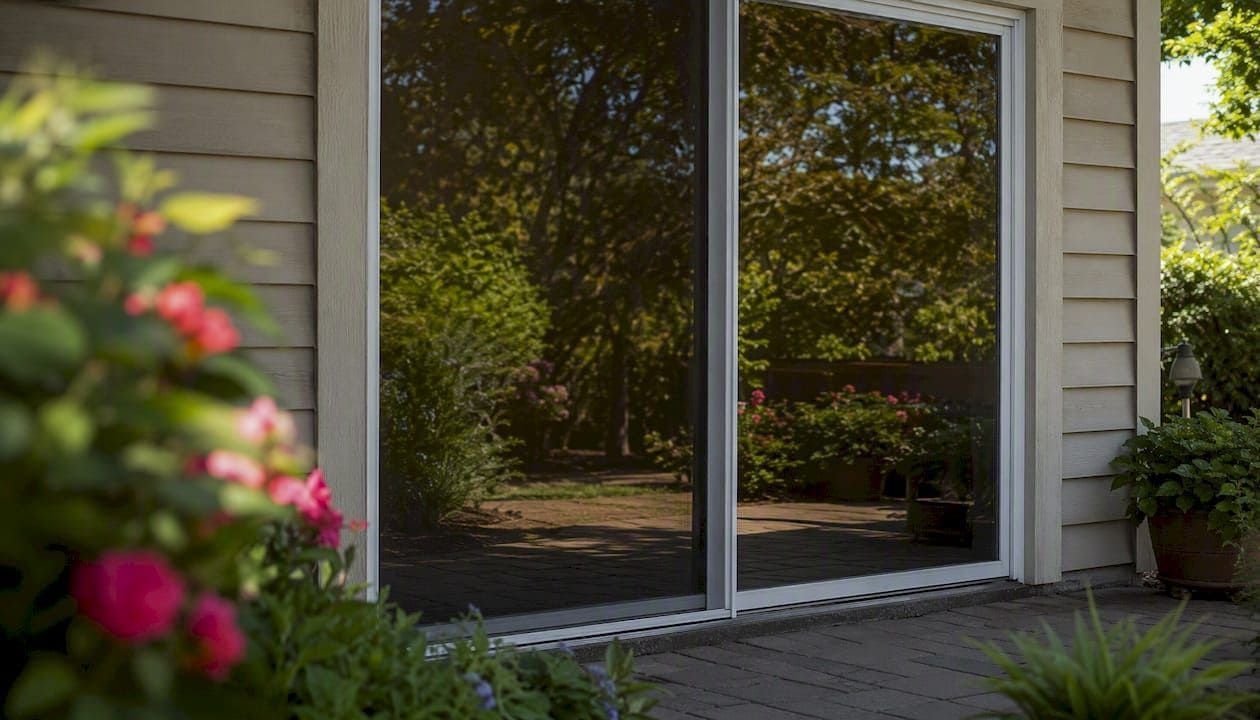
Micro-perforated and one-way/mirrored: These films use either tiny perforations or a metallic coating to create a one-way mirror effect. From outside in bright daylight, the glass looks reflective. From inside, you see out clearly. The catch: the effect depends entirely on the light differential between inside and outside. Once interior lighting exceeds exterior lighting after dark, the effect reverses and you become visible. Quality window films can block up to 99% of UV rays and reject significant solar heat, but one-way films do not solve the night-privacy problem on their own.
Dual-reflective: A more sophisticated version of mirrored film. The outer surface is highly reflective for daytime privacy; the inner surface is engineered with lower reflectivity to reduce the "fishbowl" mirror effect you see from inside at night. Better night performance than standard mirrored film, but still not a complete 24/7 solution without supplemental window treatments.
Decorative stained, leaded, or etched patterns: Primarily aesthetic, though frosted versions provide real privacy. These work well on accent panels or partial-height applications on a patio door where you want style alongside function.
Switchable/electrochromic (smart glass film): Applied to glass and wired to a switch or app. Flips between clear and opaque on demand. High cost, requires professional installation, and is typically reserved for high-end residential or commercial projects.
Security/shatter film: A thick, optically clear polyester film that holds broken glass in place on impact. Provides no visual privacy on its own but is often layered with tinted or frosted film. Shatter-resistant safety films should be specified and installed by professionals to meet performance and code expectations.
Blackout/opaque: Blocks all light transmission. Used for media rooms, bedrooms, or any space where complete darkness is the goal.
Pro Tip: A layered approach works well on large patio doors: apply a solar control film across the full pane for heat and UV rejection, then add a frosted band at eye level for targeted privacy. You keep the view above and below while blocking the sightline that matters most. North American Tint describes this layered strategy as one of the most practical solutions for sliding doors.
Does privacy film actually work at night?
The short answer: most one-way and reflective films do not provide reliable night privacy on their own. Most one-way or perforated privacy window films give daytime privacy but often fail at night when interior lighting is brighter than exterior lighting. The physics are simple: the one-way effect depends on a light differential. Bright sun outside, dim room inside — you get privacy. Bright room inside, dark night outside — the effect flips and you are visible.
Here is how common lighting scenarios play out:
- Exterior-lit patio (bright outdoor lights or street lamps): Reflective and one-way films hold up reasonably well because the exterior light source stays competitive with interior light.
- Interior bright room, dark outside: Privacy collapses. Anyone outside can see in clearly, even through a film marketed as "one-way."
- Mixed lighting (some exterior, some interior): Partial privacy. Sightlines are obscured but not blocked.
- Frosted or opaque film, any lighting: Consistent privacy regardless of which side is brighter.
Interior Visible Light Reflectance (VLR-Int) and Exterior Visible Light Reflectance (VLR-Ext) are the key specs to check when predicting night performance. Dual-reflective films lower VLR-Int to reduce the interior mirror effect, but they do not eliminate the light-differential problem entirely. Always ask for the manufacturer data sheet and check VLR-Int, VLR-Ext, and VLT before ordering any film you expect to perform at night.
Practical mitigation tactics:
- Install exterior lighting (wall sconces, landscape lights) aimed at the patio to keep the outside brighter than the inside.
- Use directional interior fixtures that point light downward and away from the glass rather than toward it.
- Add a dimmer to living room or kitchen lights near the patio door.
- Pair reflective film with sheer curtains or roller blinds for after-dark use.
- When night privacy is non-negotiable, frosted opaque film is the only reliable 24/7 solution.
Pro Tip: Place a floor lamp or table lamp on the opposite side of the room from the patio door rather than near the glass. Light directed away from the window reduces the interior brightness that kills the one-way effect. It won't replace frosted film for true privacy, but it meaningfully extends the useful hours of a reflective film.
DIY kits vs. professional installation: who should do what?
Hire a professional when:
- The door is a large multi-panel slider (anything over 6 feet wide gets difficult to align without professional tools).
- You are installing security or shatter-resistant film, where improper application leaves gaps that defeat the purpose.
- You want a manufacturer warranty that requires certified installation.
- The glass has a low-E coating or is tempered, which can affect film compatibility and void glass warranties if the wrong product is applied.
- You have tried DIY before and ended up with bubbles, dust inclusions, or peeling edges.
DIY is reasonable when:
- You have a single standard-size panel (typically 36 inches wide or less).
- You are using removable static-cling film and can afford to redo it if the first attempt goes wrong.
- The film is decorative only, not a security or solar-control product where performance specs matter.
- Cost is the primary constraint and you accept a shorter lifespan.
Consumer peel-and-stick options are convenient and reversible but often lack long-term warranties and professional-grade adhesives, making them best for renters or short-term situations.
When hiring a pro, check for:
- Certified dealer or installer status (LLumar SelectPro, Vista dealer programs).
- Manufacturer warranty on both the film and the installation labor.
- Willingness to provide sample swatches before the job starts.
- References or a project gallery showing completed residential patio door installs.
- Clear scope of work: site measure, glass compatibility check, surface prep, installation, and warranty registration.
| Factor | DIY Kit | Professional Installation |
|---|---|---|
| Complexity | Low to medium | Any complexity |
| Risk of bubbles/defects | Moderate to high | Low |
| Expected lifespan | 2–5 years (consumer grade) | 10–15+ years (pro grade) |
| Warranty | Limited or none | Manufacturer + labor warranty |
| Best for | Single panels, renters, static cling | Multi-panel, security, solar, permanent |
Pro Tip: Ask any installer you are considering whether they will show you a VLT and VLR data sheet for the specific film they plan to use. An installer who can pull that sheet immediately is working with professional-grade product. One who cannot is likely sourcing consumer-grade film at a professional price.
For a deeper look at the benefits of going pro, professional tinting upgrades walks through the common upgrade paths homeowners take.
How to measure, prep, and install privacy film on a patio door
Step-by-step installation:
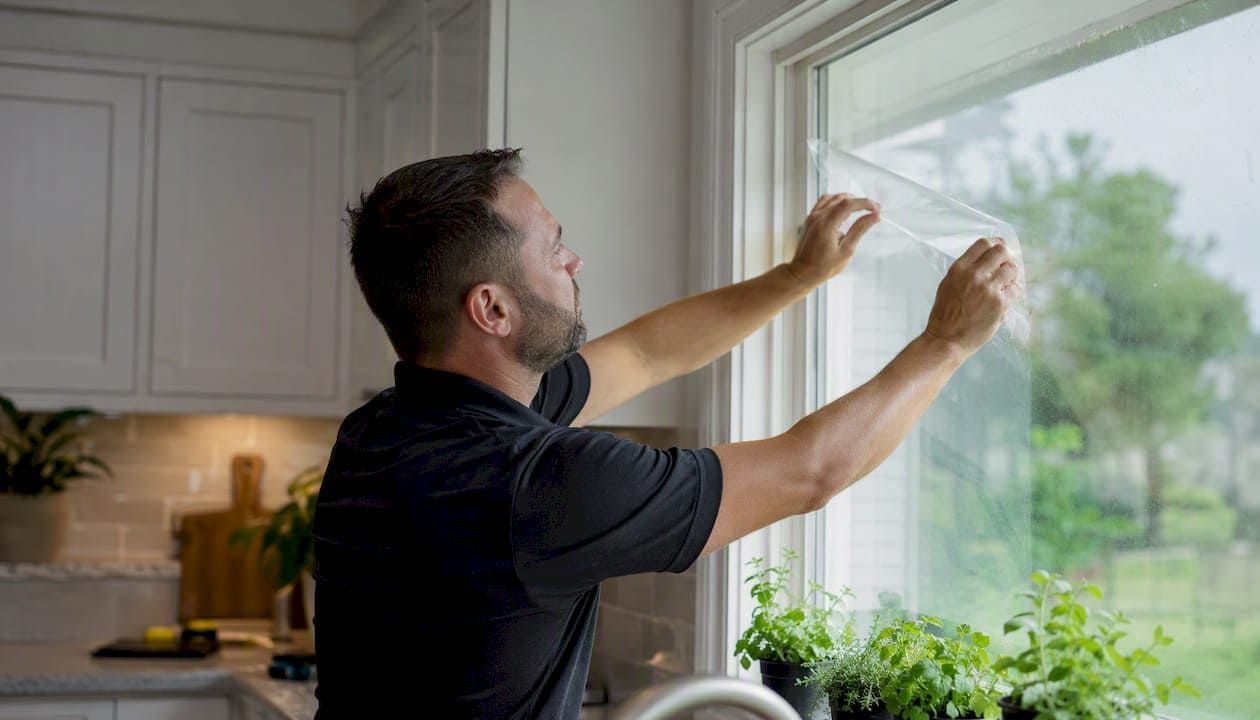
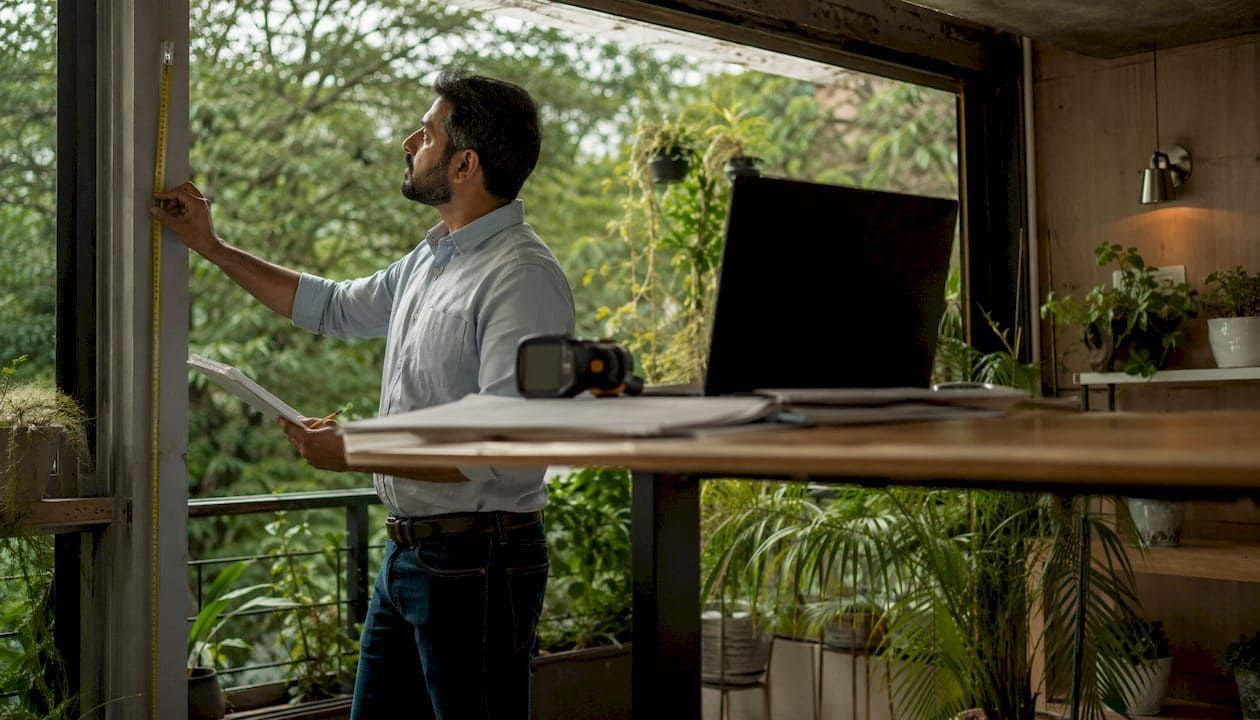
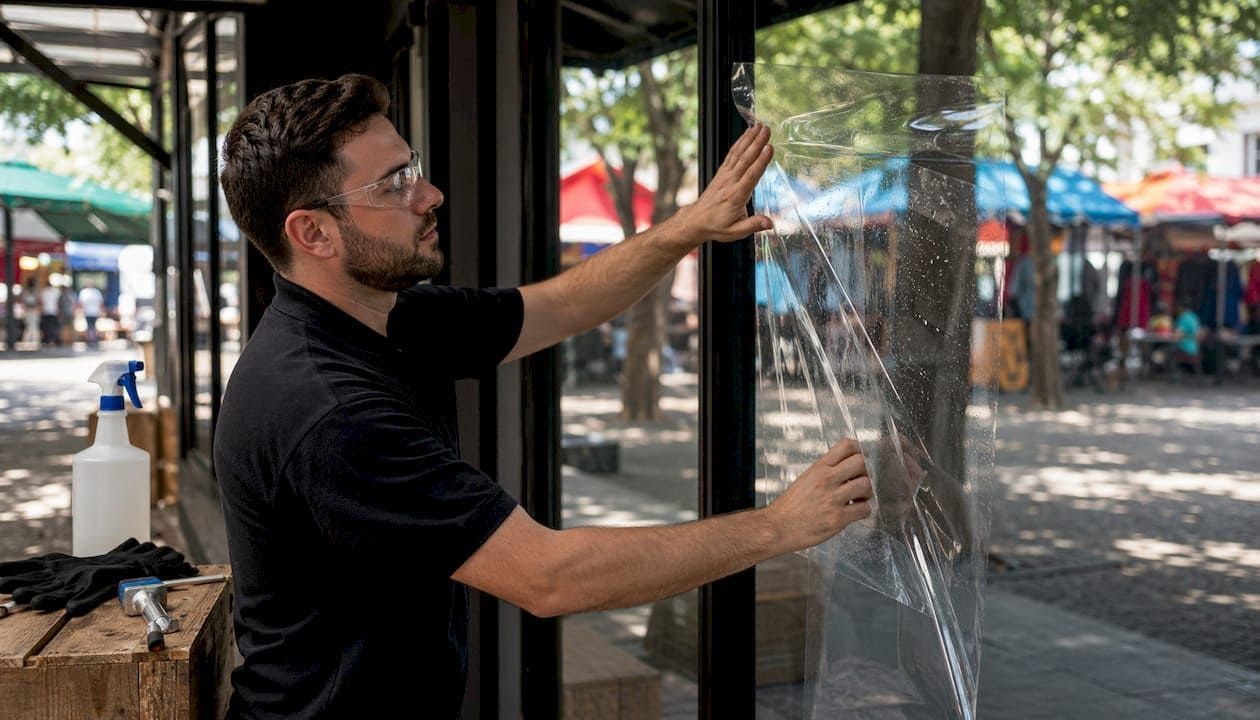
- Measure the glass, not the frame. Measure the actual glass pane width and height. Order film 1–2 inches larger than each dimension so you have material to trim after application.
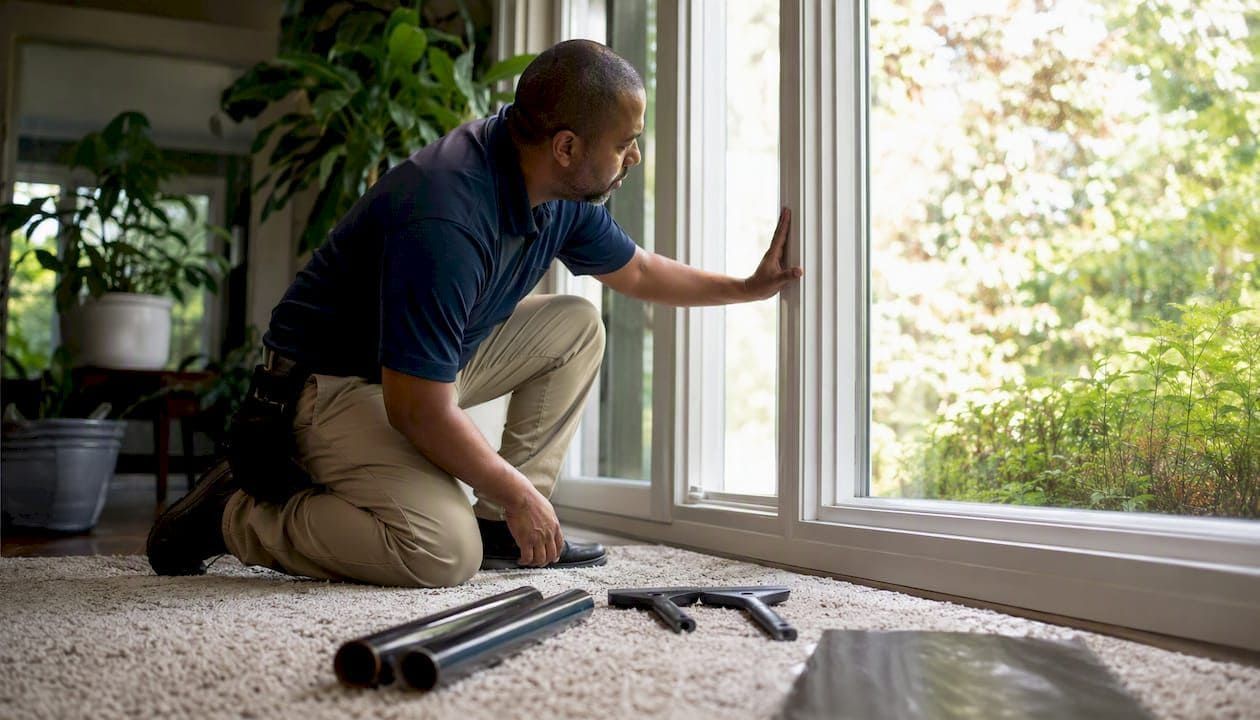
- Gather your tools. You need a spray bottle filled with a slip solution (a few drops of dish soap in water works), a hard plastic squeegee, a sharp utility knife or precision trimming tool, a lint-free microfiber towel, and a clean spray bottle for the glass surface.
- Clean the glass thoroughly. Spray the glass with the slip solution and wipe with the lint-free towel. Repeat until no streaks, dust, or fingerprints remain. Any debris trapped under the film will show as a permanent bump.
- Spray the glass again with slip solution just before applying the film. This lets you reposition the film during alignment.
- Peel the film backing and spray the adhesive side lightly with slip solution as well. This prevents the film from bonding immediately and gives you time to align it.
- Position the film on the wet glass, starting at the top. Let it float on the solution while you align the edges.
- Squeegee from the center outward in overlapping strokes, working toward each edge. Apply firm, even pressure to push water and air out from under the film.
- Trim the edges with a utility knife against a straight edge, leaving a 1/16-inch gap from the frame to prevent edge lift.
- Squeegee the edges one more time and wipe away excess water with the lint-free towel.
- Allow 3–7 days to cure before cleaning. Small water bubbles visible immediately after installation typically disappear as the film dries.
Common mistakes to avoid:
- Skipping the slip solution and applying film to dry glass. The film bonds instantly and cannot be repositioned.
- Cutting film to exact size before application. Always trim after squeegeeing.
- Using paper towels or rough cloths that leave lint under the film.
- Installing on a cold or very humid day, which slows curing and increases bubble risk.
- Pressing too hard at the edges before the center is fully squeegeed, trapping air inside.
Big-box retailers like Home Depot stock privacy films alongside installation tool kits, so you can pick up everything in one trip. Specialty window film retailers often carry better-quality squeegees and trimming guides than the kits bundled with consumer film.
What does patio door film cost, and how long does it last?
| Film Type | DIY Kit Cost (per door) | Pro Installation Cost (per door) | Expected Lifespan |
|---|---|---|---|
| Static cling (removable) | $15 | Not typically offered | 1–3 years |
| Decorative adhesive/frosted | $30 | $150 | 5–10 years |
| Ceramic/solar tinted | $50 | $200 | 10–15 years |
| Dual-reflective | $60 | $250 | 10–15 years |
| Security/shatter film | $80 | $300 | 10 years |
Cost ranges are general market estimates. Actual prices vary by film brand, glass size, and regional labor rates.
Warranty checklist — what to look for:
- Coverage for delamination, bubbling, adhesive failure, and color shift.
- Warranty duration: consumer-grade films typically offer 1–3 years; professional-grade LLumar and Vista films carry warranties of 10 years or more on residential applications.
- Whether the warranty requires certified installation to be valid.
- Registration requirements: some manufacturers require online registration within 30 days of installation.
- Maintenance conditions: most warranties are voided by abrasive cleaners or ammonia-based products.
For a direct comparison of solar film vs. privacy film and which makes more sense for your specific situation, that guide covers the trade-offs in detail.
Cleaning, maintaining, and removing patio door film
The single most important cleaning rule: never use ammonia-based cleaners (including most standard glass cleaners) on window film. Ammonia degrades the adhesive and causes edge lift over time.
Safe cleaning approach:
- Use a soft microfiber cloth and a mild soap-and-water solution or a cleaner specifically labeled as film-safe.
- Spray the cloth, not the glass directly, to avoid forcing liquid under the film edges.
- Clean every few weeks or when visibly dirty. Patio doors collect more grime than interior windows.
- Avoid abrasive scrubbers, razor blades, and anything that could scratch the film surface.
Removing adhesive film:
- Apply heat with a hair dryer or heat gun on a low setting to soften the adhesive. Work in small sections.
- Peel slowly from one corner at a low angle. Fast peeling tears the film and leaves adhesive behind.
- Remove adhesive residue with a citrus-based adhesive remover or isopropyl alcohol on a soft cloth.
- Clean the glass thoroughly before applying new film.
Removing static-cling film: Peel from a corner. No heat or adhesive remover needed. The glass underneath is typically clean and ready for a new application immediately.
When to replace vs. repair: If bubbles appear within the first two weeks, they are usually water and will resolve on their own. Bubbles that appear after months or years indicate adhesive failure. Edge lift that extends more than an inch into the film is not repairable with tape or re-squeegeeing. At that point, full replacement is the practical choice.
Sustainability note: Most window films are polyester-based (PET) and are not recyclable through standard curbside programs. Some specialty recyclers accept PET film. Choosing a longer-lasting professional-grade film reduces replacement frequency and the associated material waste.
Why certified installation and professional-grade film make a real difference
Consumer films and professional-grade films are not the same product. The gap shows up in adhesive quality, optical clarity, UV rejection consistency, and how the film holds up after five years of sun exposure on a south-facing patio door.
Certified installers working within dealer programs like LLumar SelectPro have access to film families that are not sold at retail. These films carry longer manufacturer warranties, tighter performance tolerances, and technical data sheets that let you verify exactly what you are getting before the job starts.
What a professional installation with Surfacetint includes:
- On-site measurement and glass compatibility assessment.
- Sample viewing in your actual space so you see the film in your door's real lighting before committing.
- Professional-grade tools and slip solutions that eliminate the dust and bubble problems common in DIY installs.
- Warranty registration handled at the time of installation.
- Access to LLumar and Vista film families, including solar control, decorative privacy, and safety and security films for patio doors where break-in resistance matters.
You can browse recent residential window tinting projects to see finished patio door installs and get a realistic sense of what each film type looks like in a real home.
Pro Tip: During your consultation, ask the installer to show you the VLT and VLR-Int specs for the film they recommend. If the film is right for your door's orientation and your night-privacy needs, those numbers will confirm it. If the installer cannot produce a data sheet, that is a signal to ask for a different product or a different installer.
Can you get samples and installation tool kits before committing?
Yes, and you should. Viewing a film sample on your actual glass in your actual lighting is the most reliable way to avoid a costly mistake. Colors, opacity levels, and reflectivity all look different on a product card than they do on a full-size patio door.
Where to get samples:
- Professional installers like Surfacetint can bring physical samples to an on-site consultation so you see them in context.
- Specialty window film retailers often mail sample swatches on request.
- Home Depot and similar retailers stock small rolls you can hold against your glass before buying a full roll.
Installation tool kits: Most consumer film products include a basic squeegee and instructions. Dedicated installation kits from specialty retailers add a precision trimming guide, a harder squeegee for larger panes, and a slip-solution concentrate. For a single patio door, a basic kit is sufficient. For multiple doors or a larger project, the better squeegee makes a noticeable difference in finish quality.
How to choose the right privacy film for your specific needs
Three criteria should drive your decision: privacy level required, aesthetic preference, and your local climate.
Privacy level: If you need privacy only during daylight hours and your patio faces a low-traffic area, a dual-reflective or lightly tinted film is enough. If neighbors or a street are close and you use the space at night, frosted or opaque film is the only category that reliably delivers. The privacy film selection guide covers this decision in more detail for rooms with specific lighting setups.
Aesthetic preference: Frosted films range from plain matte white to intricate etched patterns. Mirrored films have a modern, commercial look that suits some homes and clashes with others. Decorative stained or leaded patterns work well on accent panels. Glass interior doors and patio doors share similar aesthetic considerations when choosing between clear, frosted, and patterned treatments. Hold a sample against your door and look at it from both inside and outside before deciding.
Climate: In Southern New Hampshire and the Greater Boston area, solar heat gain is a summer concern and UV exposure is year-round. A film that combines privacy with solar heat rejection, such as a ceramic tinted or dual-reflective product, does double duty. In hotter climates, heat rejection becomes the primary spec to optimize. Check the Solar Heat Gain Coefficient (SHGC) and Total Solar Energy Rejected (TSER) on the data sheet alongside the privacy specs.
What is the environmental footprint of window film?
Window film has a smaller environmental footprint than most homeowners expect, especially when you account for the energy it saves over its lifespan.
The material itself is primarily polyester (PET), a petroleum-derived plastic. Manufacturing and shipping carry a carbon cost, and end-of-life disposal is a real consideration since most films are not recyclable through standard programs. Choosing a film with a 10–15 year lifespan rather than a 2–3 year consumer product reduces the number of replacement cycles and the associated material waste.
On the benefit side, solar control films reduce the heat load entering through glass, which lowers air conditioning demand during warm months. Over a 10-year lifespan on a south or west-facing patio door, the cumulative energy savings can meaningfully offset the production footprint of the film itself. UV-blocking films also protect flooring, furniture, and artwork from fading, extending the life of those materials and reducing replacement frequency.
Some manufacturers are moving toward films with recycled PET content or water-based adhesives with lower VOC profiles. When comparing products, ask whether the film carries any environmental certification or uses recycled content, and factor that into your decision alongside performance specs.
The case for frosted film first, reflective film second
Most homeowners shopping for patio door privacy film focus on preserving their view, which pushes them toward one-way or reflective options. That instinct is understandable, but it consistently leads to disappointment after the first evening when the lights come on inside and the privacy disappears.
Frosted film is not a compromise. It still transmits natural light, it looks clean and intentional, and it works at 2 PM and 2 AM without any adjustment. For a ground-floor patio door facing neighbors, a street, or a shared outdoor space, frosted film simply solves the problem. Reflective film solves half of it and asks you to manage the other half with curtains or lighting adjustments every night.
That said, dual-reflective film earns its place on doors where the view genuinely matters and night use is limited. A back door facing a private yard that you rarely use after dark is a reasonable candidate. The key is being honest about how you actually use the space, not how you imagine you will use it.
For large or security-focused jobs, the professional installation route is not just about a cleaner finish. It is about getting a film that performs to spec, backed by a warranty that holds, installed by someone who has done it on glass like yours before.
Surfacetint brings certified patio door film installation to Southern NH and Greater Boston
Skip the guesswork of ordering film online and hoping it looks right. Surfacetint, operating as Surface Dynamics Window Tinting, is an exclusive LLumar SelectPro dealer serving Southern New Hampshire and the Greater Boston area. Every residential patio door job starts with a free on-site estimate: a certified installer measures your glass, checks compatibility, and shows you physical film samples in your actual space before any product is ordered.
The installation covers surface prep, professional-grade application, edge finishing, and warranty registration, all in a single visit for most standard patio doors. LLumar and Vista films carry manufacturer warranties that consumer kits simply cannot match. Whether you need frosted privacy film, a dual-reflective solar control film, or safety and security film for a vulnerable ground-floor slider, Surfacetint has the product and the certified installation to back it up. Request your free estimate and get a same-week appointment for most residential projects in the service area.
Sources
The sources below back the technical claims in this article. Use them to check VLT and VLR data sheets, compare film categories, and verify night-privacy behavior before ordering or booking an installation.
- Advice on lighting for night privacy | Contra Vision
- Privacy Film for Windows: Types, Visibility, Day/Night Performance & Best Uses - Ecovision Window Films
- Privacy, Please! Top Window Films for Your Sliding Doors | North American Tint
- Does Window Film Provide Nighttime Privacy? - Concord Window Film
Recommended