
Why Use Environmental Glass Treatments for Homes & Offices
TL;DR:
- Environmental glass treatments are cost-effective retrofits that reduce cooling loads, block UV rays, and improve safety without replacing existing windows.
- A site-specific analysis using the EThCE framework ensures optimal selection for energy, comfort, cost, and environmental impact.
Environmental glass treatments — the industry term for professionally applied window films and coatings — are one of the most cost-effective retrofits available to property owners today. They cut solar heat gain, block up to 99% of UV radiation, reduce glare, and strengthen glass against breakage, all without replacing a single pane. The payoff shows up in lower utility bills, steadier indoor temperatures, and protected furnishings from the first season after installation.
Primary business-case outcomes at a glance:
- Reduced HVAC runtime from lower solar heat gain through glazing
- Slower furniture, flooring, and artwork fading from blocked UV
- Improved occupant comfort with fewer hot spots and less glare
- Stronger glass that holds together on impact, slowing forced entry
- Lower operational carbon from reduced cooling and heating demand
An on-site estimate with modeled energy savings is the fastest way to confirm what your specific glazing area and orientation will actually deliver.

Table of Contents
- What environmental glass treatments are and why the EThCE framework matters
- The concrete benefits: energy, comfort, health, safety, and carbon
- How treatments actually change window performance
- Which type of treatment fits your property?
- What drives cost and how to think about ROI
- What professional installation looks like
- How to vet a professional window film installer
- Why Surfacetint is a recommended local option
- How glass treatments compare to blinds and double glazing
- Common myths about environmental glass treatments
- Key Takeaways
- The trade-offs nobody talks about upfront
- Get a free estimate and mock-up from Surfacetint
- Authoritative sources and further reading
What environmental glass treatments are and why the EThCE framework matters
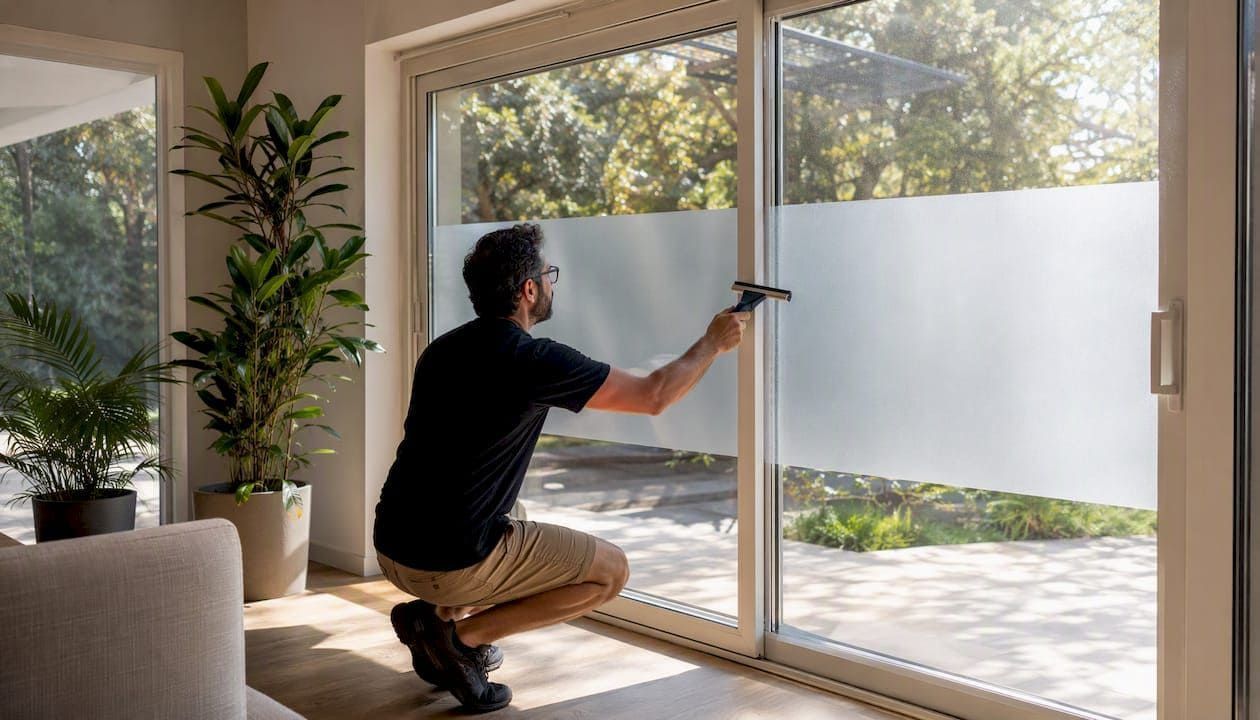
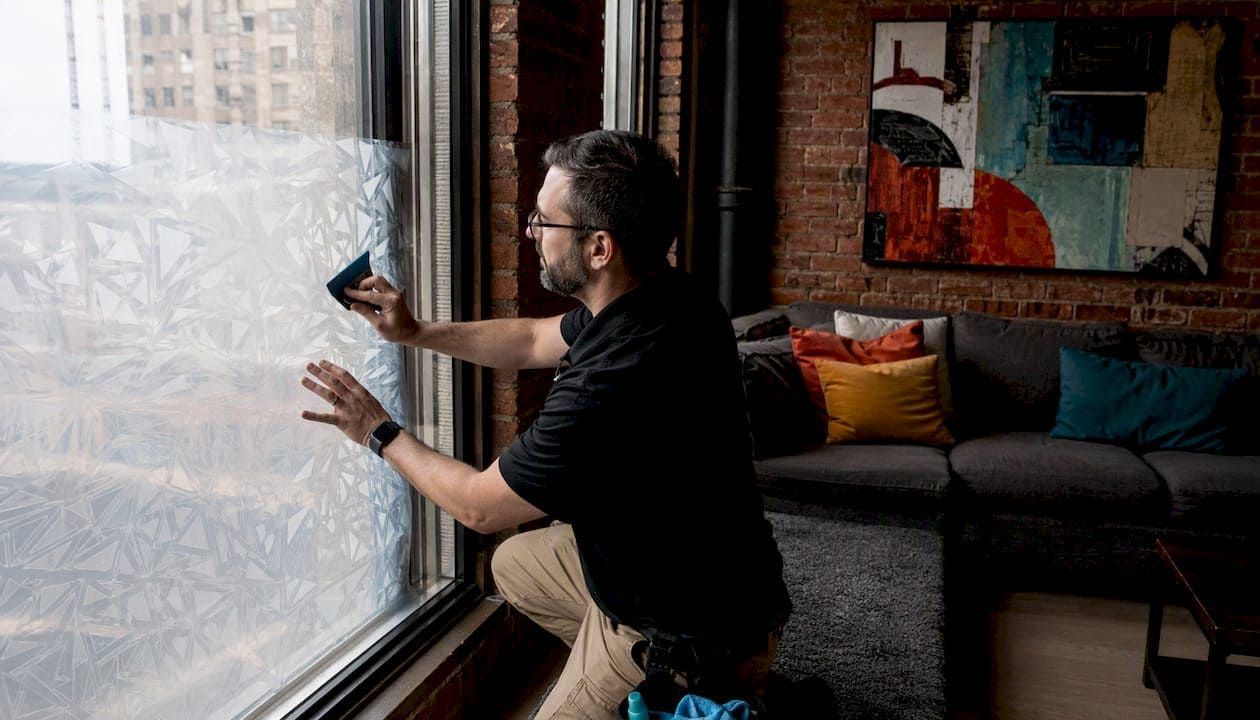
Window films and coatings change the optical and thermal properties of existing glazing without replacing it. The main categories are solar control films, low-emissivity (low-E) retrofit coatings, safety and security films, decorative and privacy films, and anti-graffiti films. Each targets a different performance gap, but they often overlap in practice.
A useful way to evaluate any treatment is the EThCE framework: Energy, Thermal Comfort, Cost-Effectiveness, and Environmental Impact. Researchers propose this lens specifically because glazing decisions involve trade-offs across all four dimensions simultaneously. Optimizing for energy alone, for example, can compromise daylighting; optimizing for aesthetics alone can leave thermal performance on the table.
Three technical terms appear throughout this article:
- SHGC (Solar Heat Gain Coefficient): how much solar energy passes through the glass (lower = less heat in)
- VLT (Visible Light Transmittance): the percentage of visible light that passes through (higher = brighter interior)
- U-value: the rate of non-solar heat transfer (lower = better insulation)
The concrete benefits: energy, comfort, health, safety, and carbon
Inefficient windows account for roughly 20%–60% of a building's total envelope energy loss depending on climate, glazing age, and window-to-wall ratio. That range explains why glazing retrofits consistently rank among the highest-ROI building upgrades.
Energy and thermal comfort. Solar control films reduce SHGC, which directly cuts the cooling load on your HVAC system. Research measuring reflective films found electricity savings of 3%–10.3% for air conditioning depending on building orientation, with northwest-facing glass in hot weather showing the largest gains. Beyond the utility bill, films eliminate the temperature gradient near glass surfaces — the uncomfortable hot zone that drives occupants away from window seats and forces thermostats lower than necessary.
UV and asset protection. Low-E soft-coat films block 75%–85% of UV radiation; some specialized coatings reach 95%. That matters for furnishings, flooring, and artwork, all of which fade primarily from UV exposure rather than visible light. Occupant health benefits follow too, since prolonged UV exposure through untreated glass accumulates over years of daily use.
Safety, security, and privacy. Safety and security films hold glass fragments together on impact, slowing forced entry and reducing injury risk from accidental breakage. Privacy films control sightlines without blocking daylight entirely.
Environmental impact. Lower HVAC runtime means lower operational carbon. When you also factor in deferred HVAC capital replacement from reduced peak cooling demand, the environmental and financial case strengthens further.
| Benefit | Mechanism | Measurable outcome |
|---|---|---|
| Energy savings | Reduced SHGC cuts cooling load | AC electricity savings of 3%–10.3% by orientation |
| Thermal comfort | Fewer hot spots near glass | More stable interior temps, better occupant satisfaction |
| UV protection | Blocks 75%–95% UV | Slower fading of furnishings and artwork |
| Safety/security | Film holds glass on impact | Delayed forced entry, reduced injury risk |
| Environmental | Lower HVAC runtime | Reduced operational carbon footprint |
How treatments actually change window performance
SHGC and U-value are the two numbers that matter most. SHGC measures how much solar heat enters through the glass; U-value measures how fast heat moves through it regardless of sunlight. Films primarily attack SHGC. Low-E retrofit coatings address both, reducing radiative heat transfer and improving U-value — low-E coatings can reduce window energy loss by 30%–50% compared to uncoated glass.
VLT vs. glare control involves a real trade-off. A film with 35% VLT blocks more heat and glare than one at 70% VLT, but it also darkens the room. The right balance depends on orientation, interior use, and occupant preference. South- and west-facing glass in a hot climate usually benefits from lower VLT; north-facing glass in a cold climate rarely needs aggressive solar control.
Film mechanics by type. Solar control films reflect or absorb near-infrared radiation before it converts to heat indoors. Low-E films add a metallic layer that reflects long-wave infrared, improving insulation in both directions. Safety films use a thick polyester layer that keeps glass bonded after breakage. Each technology targets a different part of the solar and thermal spectrum, which is why film selection should follow a site-specific analysis rather than a one-size-fits-all recommendation.
Which type of treatment fits your property?
| Film type | Primary benefit | Typical VLT | Key trade-off | Best use case |
|---|---|---|---|---|
| Solar control | Heat and glare reduction | 35%–70% | Lower VLT = darker interior | South/west-facing rooms, storefronts |
| Low-E retrofit | Insulation + heat control | 70% | Requires clean, compatible glass | Cold-climate homes, older single-pane |
| Safety & security | Shatter resistance, forced-entry delay | Varies | Adds thickness; visible on close inspection | Ground-floor commercial, schools |
| Decorative/privacy | Privacy, aesthetics | Varies | Blocks outward views | Bathrooms, conference rooms, facades |
| Anti-graffiti | Surface protection | Clear | Sacrificial layer needs periodic replacement | Storefronts, transit facilities |
LLumar Vista Films cover all five categories with published performance data for SHGC, VLT, and U-value, which makes warranty claims and energy modeling straightforward. Choosing a supplier with certified performance data matters when you need to verify projected savings or satisfy a building energy code.
What drives cost and how to think about ROI
Several variables move the final price of a window film project:
- Film type and grade — safety and low-E films cost more per square foot than basic solar control films.
- Total glazing area — larger projects lower cost per square foot but raise total spend.
- Glass complexity — insulated glass units (IGUs), curved glass, and high-access windows add labor time.
- Surface prep — existing coatings, sealant condition, or tempered glass issues require additional steps.
- Warranty level — manufacturer-backed lifetime warranties carry a premium over limited-term coverage.
Payback is fastest when you have large south- or west-facing glazing, high cooling loads, and expensive local electricity rates. A property with significant glazing area facing afternoon sun can see HVAC savings that recover film costs within a few years. Surfacetint's energy savings calculator lets you model kWh and cost savings using your actual glazing area and local utility rates before committing to a project.
One often-overlooked factor: reduced peak cooling demand can defer HVAC equipment upgrades, which changes the payback math considerably for commercial properties running aging systems.
What professional installation looks like
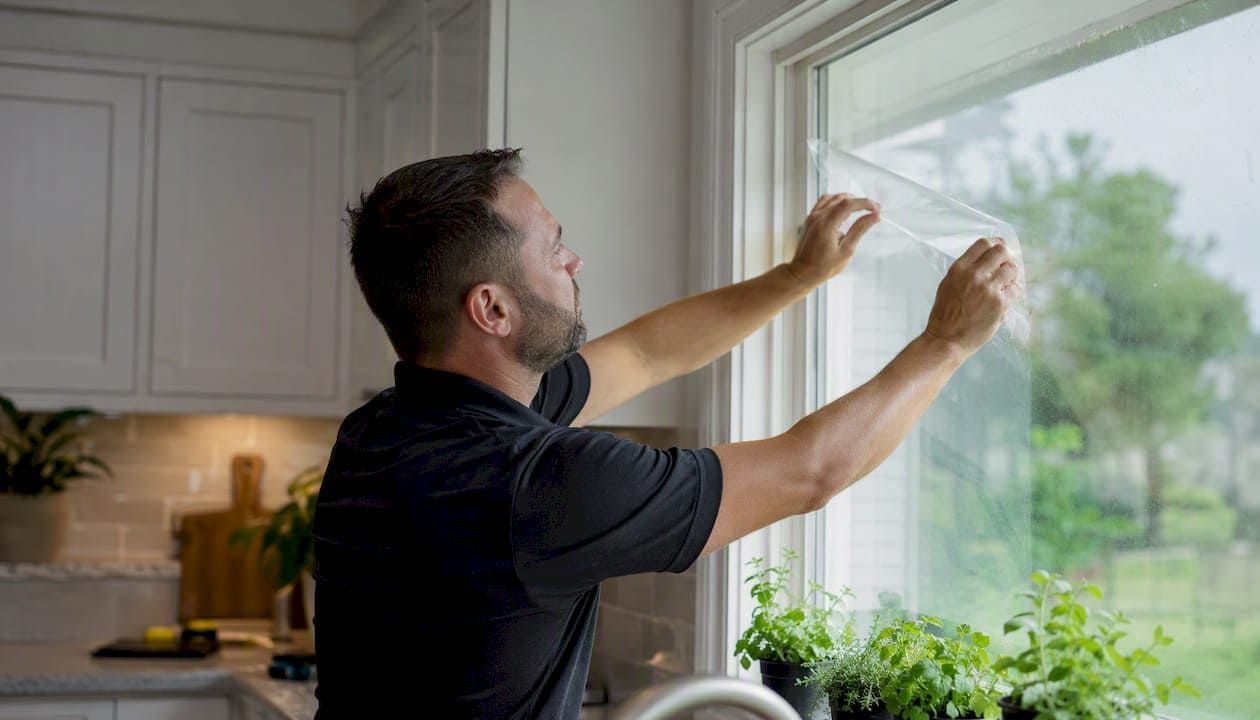
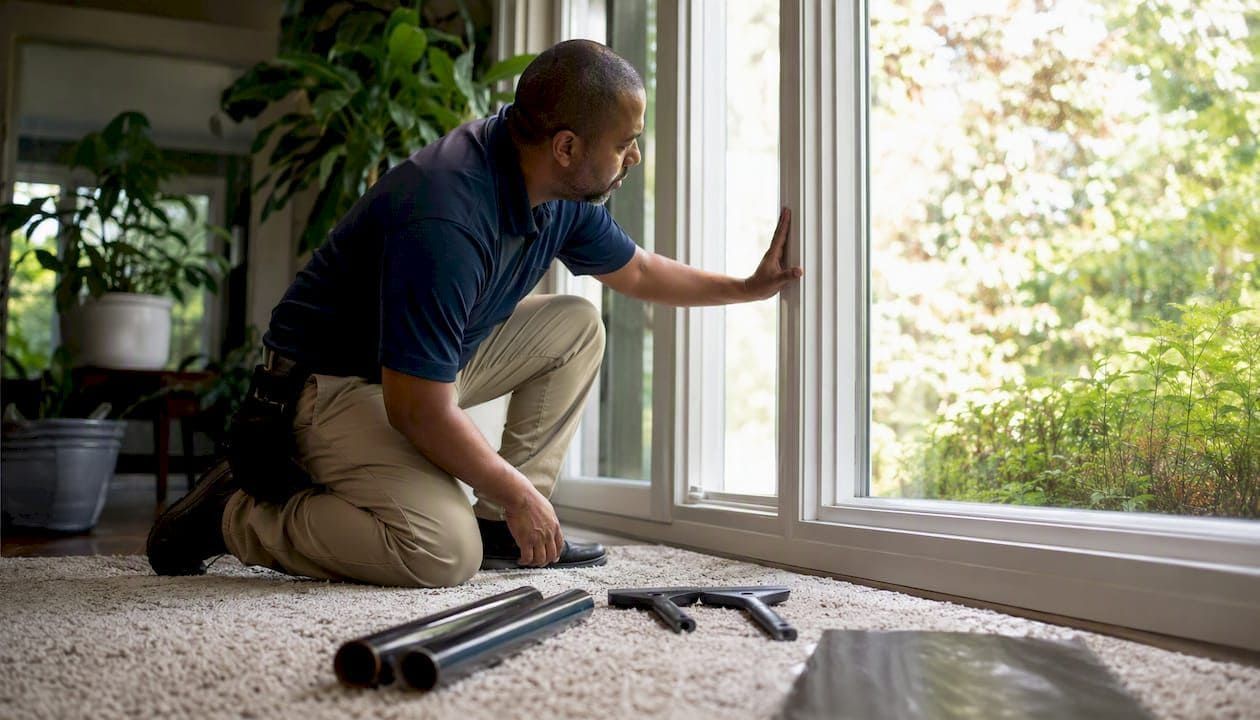
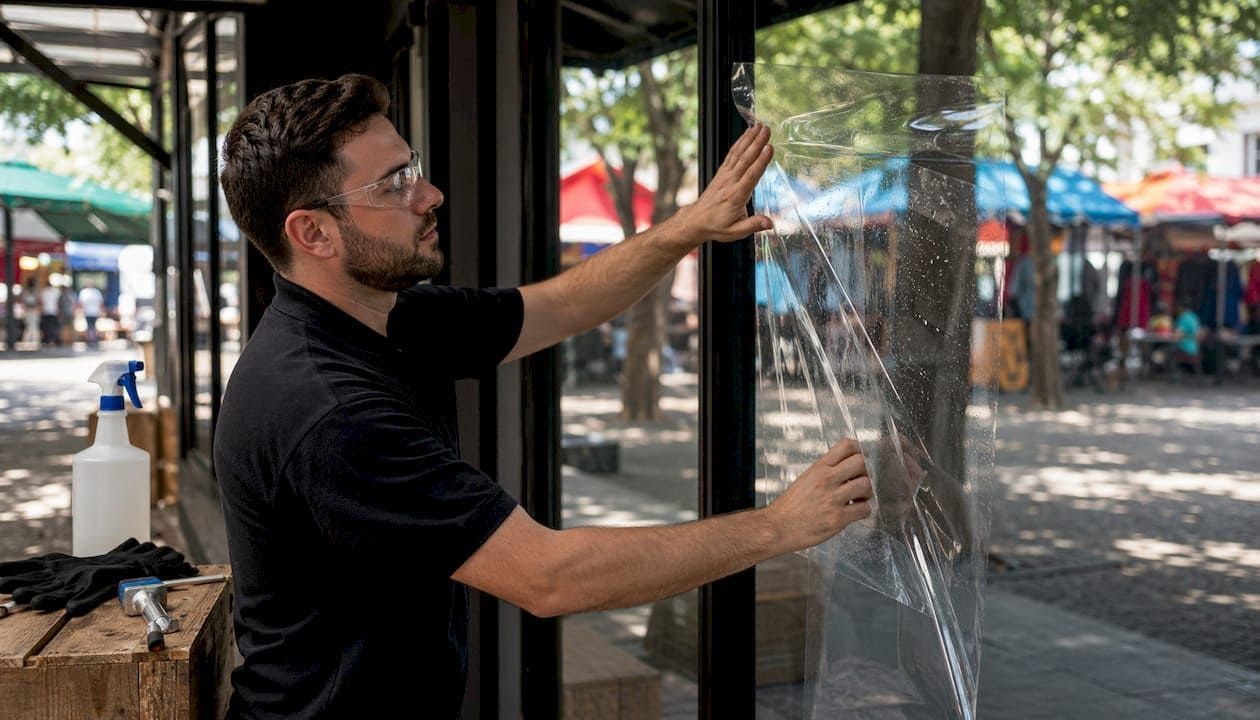
A typical project runs from on-site measurement through product selection, scheduling, surface prep, installation, and a cure-period inspection. The cure window — during which the film bonds fully to the glass — usually spans a few days to a few weeks depending on film type and ambient temperature.
Surface prep is where most DIY installs fail. Dust particles trapped under film, improper sealant removal, and incompatible glass types (some heat-treated glass cannot accept certain films without stress fracturing) all require professional judgment. Professional installers control surface conditions and application technique in ways that prevent bubbles, edge lifting, and creases — defects that shorten film life and void manufacturer warranties.
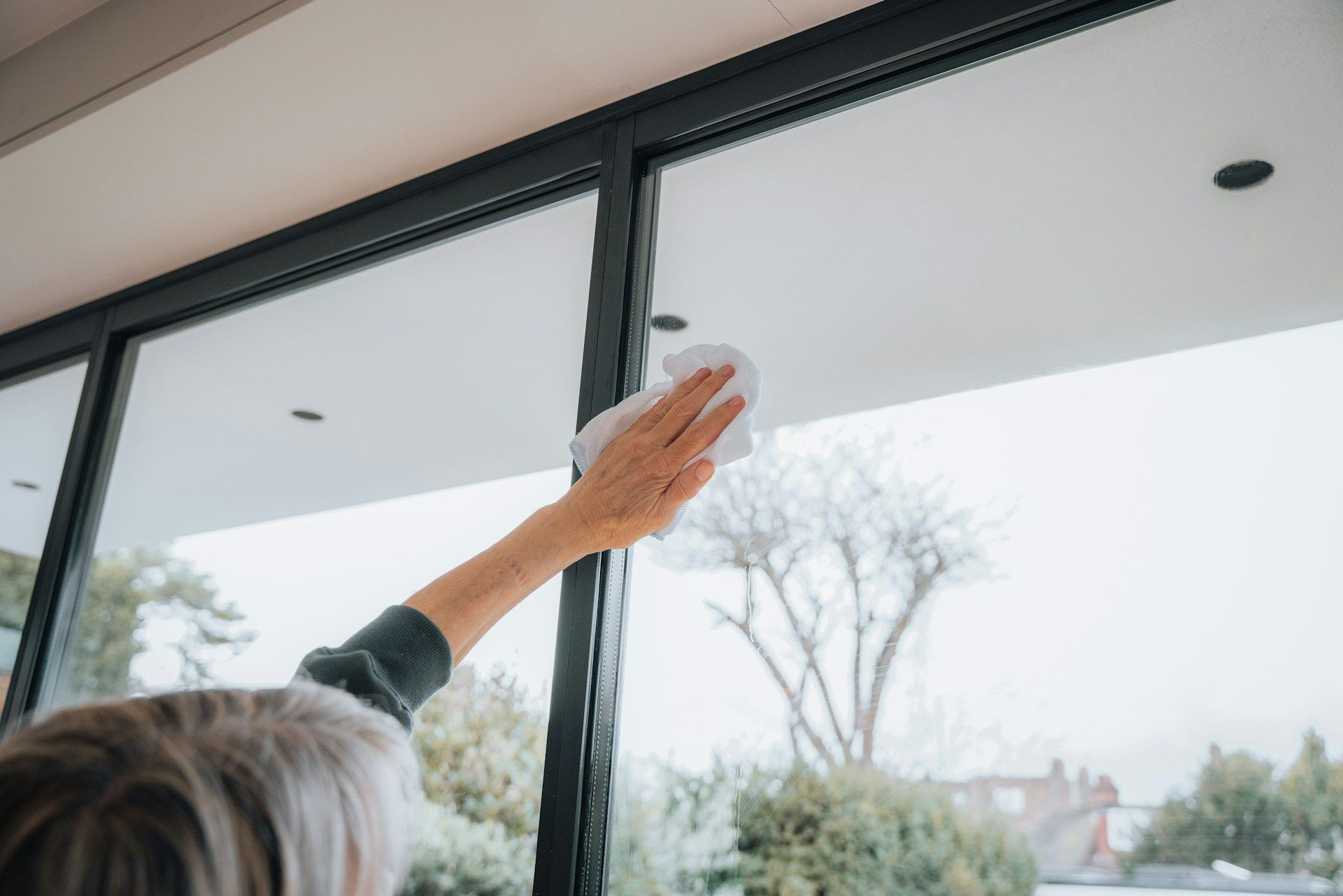
Maintenance is straightforward: clean with a soft cloth and a mild, non-abrasive cleaner. Avoid ammonia-based products on most films. Expected service life ranges from 10 to 25 years depending on film grade, orientation, and climate exposure.
Pro Tip: Before committing to a full installation, ask your installer to apply a full-size mock-up on one representative pane under actual site conditions. Digital samples and small swatches routinely misrepresent how a film looks at scale, especially its reflectivity and perceived darkness.
How to vet a professional window film installer
Checklist before you sign:
- Verified manufacturer-authorized dealer status (e.g., LLumar SelectPro certification)
- Published project gallery showing completed residential and commercial work
- Installer warranty separate from the manufacturer warranty
- Documented service area and local references
Questions worth asking: Which film grade do you recommend for my orientation and climate, and why? Can you show measured SHGC and VLT data for similar projects? What does the warranty cover, and who handles claims?
Red flags: No local photo gallery, pressure to choose the cheapest material without performance data, and no written warranty documentation.
Why Surfacetint is a recommended local option
Surfacetint (Surface Dynamics Window Tinting) is an exclusive LLumar SelectPro dealer serving Southern New Hampshire and the Greater Boston Area. That dealer status means access to the full LLumar Vista Films lineup — solar control, safety and security, and decorative privacy films — with manufacturer-backed warranties and certified installation.
- Tailored consultations for both residential and commercial properties
- Certified installation with warranty support on every project
- Project gallery documenting completed work across the service area
- Energy savings calculator to model site-specific ROI before installation
- Safety and security film options for commercial storefronts, offices, and schools
Pro Tip: Request a free on-site estimate that includes a mock-up on one pane. Seeing the actual film on your glass under your lighting conditions is the only reliable way to confirm both appearance and expected performance before full deployment.
How glass treatments compare to blinds and double glazing
Blinds and shades address glare and privacy but do nothing to stop solar heat from entering the glass in the first place. By the time sunlight hits an interior blind, the heat is already inside the room. Films intercept solar radiation at the glass surface, which is why they reduce cooling loads in a way interior shading cannot.
Double glazing is a permanent structural upgrade that improves both SHGC and U-value significantly. It also costs several times more per window than a film retrofit, requires full window replacement, and generates construction waste. For properties with structurally sound existing glazing, film is the faster, lower-cost path to meaningful performance gains. Pairing window film with other envelope upgrades — like attic insulation improvements — compounds the energy savings further.
Films also preserve views and natural light in ways that heavy blinds cannot, and they add safety benefits that neither blinds nor standard double glazing provides.
Common myths about environmental glass treatments
"Films make rooms too dark." Modern solar control films are available at 70% VLT and above, which is barely perceptible to the eye. Darkness is a film-selection issue, not an inherent product limitation.
"Window film damages glass." Properly specified film on compatible glass does not cause damage. The risk arises when an incompatible film is applied to heat-absorbing tinted glass without a thermal stress analysis — a step professional installers perform as standard practice.
"Films only work in hot climates." Low-E retrofit films improve insulation in both directions, reducing heat loss in winter and heat gain in summer. They deliver measurable benefits across all U.S. climate zones.
"DIY film is just as good." Manufacturer warranties typically require authorized installation. Improper DIY installs introduce defects that shorten film life and void coverage — meaning the savings calculation changes entirely.
"Films are a cosmetic upgrade." The EThCE framework positions glazing treatments as performance infrastructure, not decoration. Measured energy savings, documented UV blocking, and certified safety ratings are engineering outcomes, not aesthetic ones.
Key Takeaways
Environmental glass treatments deliver measurable energy, comfort, safety, and environmental benefits across residential and commercial properties when properly specified and professionally installed.
| Point | Details |
|---|---|
| Energy loss through glazing | Windows account for roughly 20%–60% of a building's envelope energy loss — film directly reduces that gap. |
| AC electricity savings | Reflective films cut air conditioning electricity use by 3%–10.3% depending on orientation and climate. |
| UV protection | Low-E and solar control films block 75%–95% of UV, slowing fading of furnishings and artwork. |
| Professional installation matters | Manufacturer warranties require authorized installation; DIY defects shorten film life and void coverage. |
| Surfacetint local option | Surfacetint is an exclusive LLumar SelectPro dealer in Southern NH and Greater Boston offering free on-site estimates with modeled ROI. |
The trade-offs nobody talks about upfront
Most articles on window film read like a product brochure: list the benefits, skip the nuances, close with a call to action. Here is what actually matters in practice.
Film appearance changes with light conditions. A film that looks nearly invisible on a cloudy morning can read as noticeably reflective on a bright afternoon. That is not a defect — it is physics — but it surprises people who chose based on a small swatch indoors. The mock-up recommendation exists precisely because of this.
Cure time also catches people off guard. Haze and small water pockets visible in the first week after installation are normal and resolve as the adhesive cures. Calling them defects and demanding a redo wastes everyone's time and sometimes damages a perfectly good installation.
The bigger point: the decision to install film should be driven by measured performance data for your specific glazing, orientation, and climate — not by a neighbor's experience or a rule-of-thumb payback estimate. The properties that see the fastest ROI are the ones where someone ran the numbers first.
Get a free estimate and mock-up from Surfacetint
Surfacetint brings certified LLumar Vista Film installation to homes and commercial properties across Southern New Hampshire and the Greater Boston Area, with no-obligation on-site estimates that include modeled energy savings for your specific glazing area and local utility rates.
Every estimate includes a mock-up option so you can see the actual film on your glass before committing. Manufacturer-backed warranties and post-install support come standard with every authorized installation. Whether you need solar control for a sun-facing living room or safety film for a commercial storefront, the process starts with one conversation.
Request a free on-site estimate and get a modeled ROI figure based on your property — not a generic industry average.
Authoritative sources and further reading
- Comprehensive review of glazing systems toward nearly zero-energy buildings (MDPI) — EThCE framework, energy loss ranges, and glazing retrofit analysis
- Window film effects on indoor environment and AC electricity consumption (MDPI) — measured electricity savings by film type and orientation
- Vitro Glass Design Handbook — mock-up best practices and glazing design guidance
- Guardian Glass: energy performance and low-E coatings — SHGC, U-value, and coating trade-off reference
- Low-E glass guide (GlassAdvisor) — climate-specific coating selection and UV blocking data
- Surfacetint: why invest in glass enhancement — brand overview of benefits and certified installation
- Surfacetint energy savings calculator — model site-specific kWh and cost savings
- Surfacetint commercial safety and security films — product details and use cases
Recommended