
Solar Film for Sliding Doors: Cut Heat and Boost Privacy
TL;DR:
- Solar film for sliding doors blocks infrared heat, UV rays, and glare while maintaining natural light and views. Ceramic films offer superior performance and signal safety, especially on large glass panels facing intense sun or in dual-pane units. Proper installation and matching film type to orientation and climate ensure long-lasting energy savings and comfort.
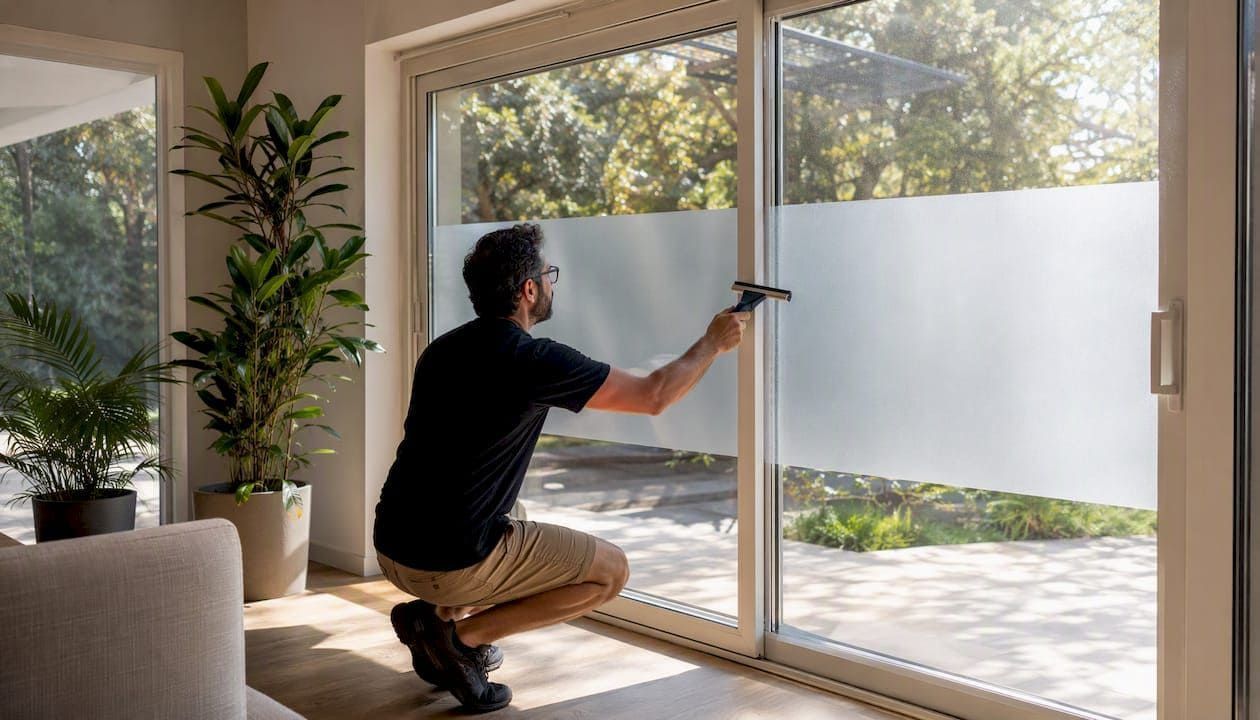
Solar film for sliding doors is a thin, high-performance laminate applied directly to glass that blocks infrared heat, UV radiation, and glare without sacrificing your view or natural light. The right film can block up to 97% of infrared heat and reject 99.9% of UV rays, cutting cooling costs by 20 to 30 percent. That kind of performance matters most at sliding doors, which are typically the largest glass surface in a home and the biggest source of unwanted solar heat gain. Whether you rent or own, applying solar control film to your sliding glass door is one of the highest-return upgrades you can make to your home's comfort and energy efficiency.
What is solar film for sliding doors and how does it work?
Solar control film works through three physical mechanisms: absorption, reflection, and transmission. When sunlight hits the glass, the film intercepts a portion of that energy before it enters your living space. Depending on the film type, it either reflects solar radiation back outward, absorbs it within the film layer, or allows a controlled amount through as visible light.
The key performance variables are solar heat rejection, UV blockage, and visible light transmission (VLT). These three numbers tell you exactly what a film does. A film with 70% solar heat rejection and 50% VLT, for example, cuts most of the heat while keeping the room bright. High-quality window films block 99% of UV rays, which is the primary cause of fading in floors, furniture, and artwork.
Ceramic vs. dyed vs. metallic films
The film technology you choose determines both performance and side effects. Ceramic films provide superior heat rejection without interfering with cellular or Wi-Fi signals, and they maintain a neutral, natural appearance on glass. Dyed films are the most affordable option but fade over time and offer limited heat rejection. Metallic films reflect heat effectively but can disrupt wireless signals and create a mirror-like exterior appearance that some homeowners find intrusive.
For sliding doors specifically, ceramic film is the strongest performer. It handles the large glass area without creating signal dead zones in your living room, and it holds its appearance and performance for years longer than dyed alternatives.
Interior vs. exterior mounting
Most residential solar films are applied to the interior surface of the glass. Exterior-mounted solar solutions block heat before it penetrates the glass, making them technically more effective at reducing thermal gain. The trade-off is durability: exterior applications require weatherproof materials and more frequent maintenance. For most homeowners, interior film installation delivers excellent results with far simpler upkeep.
Pro Tip: Ask your film supplier for the TSER (Total Solar Energy Rejected) rating, not just the VLT. TSER gives you the full picture of how much solar energy the film stops, combining heat, UV, and visible light rejection into one number.
What types of solar film work best for sliding doors?
Sliding doors present a specific challenge: large glass panels, frequent operation, and high sun exposure. Not every film handles that combination equally well. The four main categories worth considering are ceramic solar film, tinted privacy film, reflective one-way film, and static cling removable film.
| Film Type | Heat Rejection | Privacy Level | Best For |
|---|---|---|---|
| Ceramic solar film | Very high | Low to moderate | Energy savings, signal-safe homes |
| Tinted privacy film | Moderate | High | Bedrooms, street-facing doors |
| Reflective one-way film | High | High (daytime) | South and west-facing doors |
| Static cling removable | Low to moderate | Variable | Renters, temporary use |
The concept of openness factor is critical when selecting film for sliding doors. Openness factor refers to the percentage of open weave in a film or shade material. An openness factor between 1% and 3% is ideal for extreme sun exposure because it maximizes heat blocking. An openness factor of 5% to 10% balances light transmission and privacy for moderate sun conditions. Choosing the wrong openness factor is one of the most common mistakes homeowners make. Too low and the room feels dark; too high and the film barely reduces glare or heat.
Dual-pane glass compatibility is another non-negotiable factor. Many sliding doors use insulated double-pane glass, and applying a dark, heat-absorptive film to this type of glass creates a thermal stress risk. The heat trapped between the film and the glass can cause the inner pane to crack. Always verify that any film you purchase is rated as dual-pane safe before buying.
For renters or anyone who wants a reversible option, static cling films require no adhesive and peel off cleanly. They offer less heat rejection than adhesive ceramic films, but they work well for privacy and glare reduction without risking your security deposit.
Matching the film to your door's orientation matters as much as the film type itself. South and west-facing sliding doors receive the most direct afternoon sun and benefit most from high-rejection ceramic or reflective films. North-facing doors rarely need more than a light tint for privacy.
How to install solar film on sliding doors step by step
A clean, careful installation determines whether your film lasts five years or fifteen. Rushing the prep work is the single most common reason DIY installations fail.
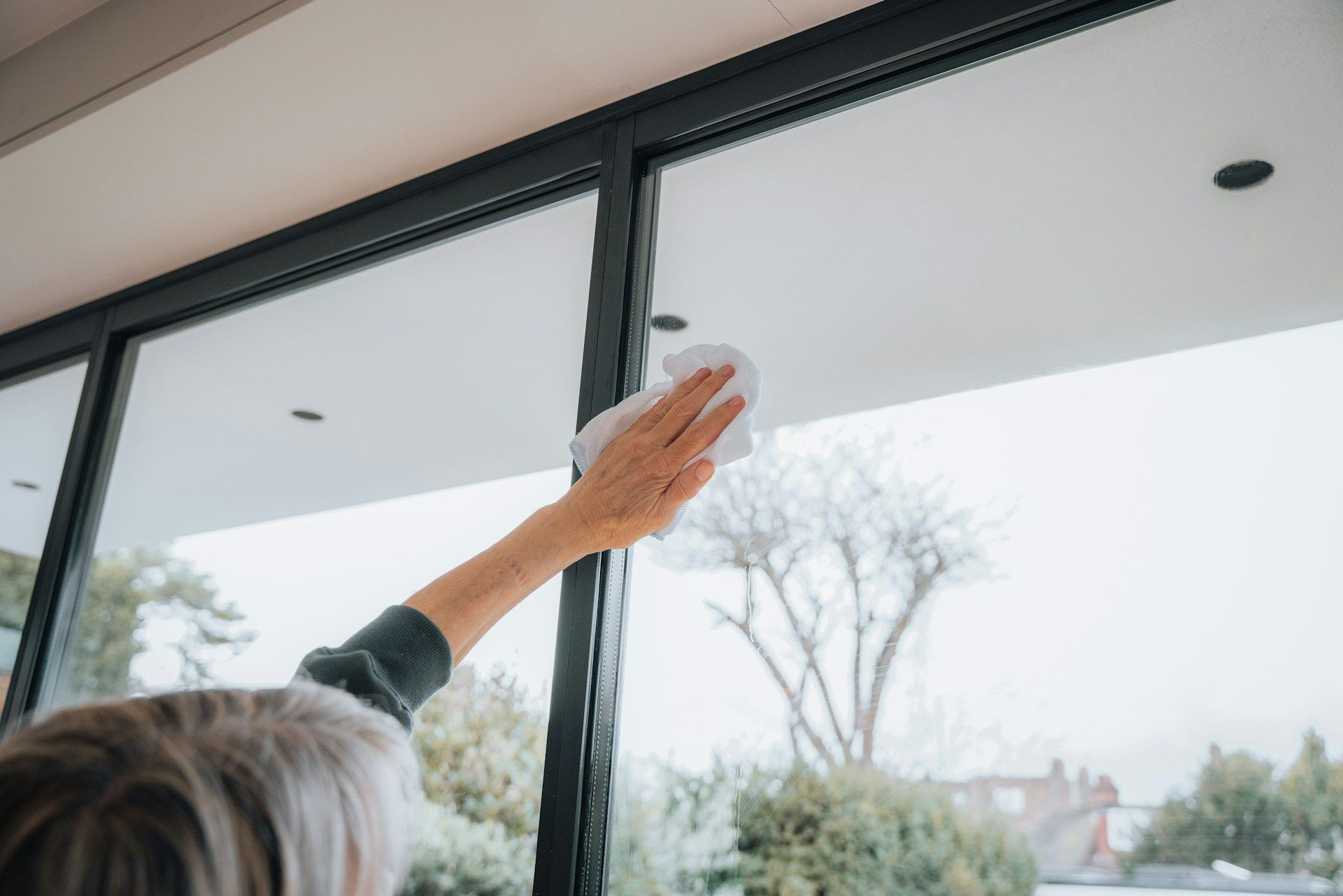
- Clean the glass thoroughly. Use a razor blade scraper to remove any adhesive residue, paint specks, or mineral deposits. Follow with a solution of a few drops of dish soap in water and a lint-free cloth. Any debris left on the glass will create visible bubbles that cannot be removed after installation.
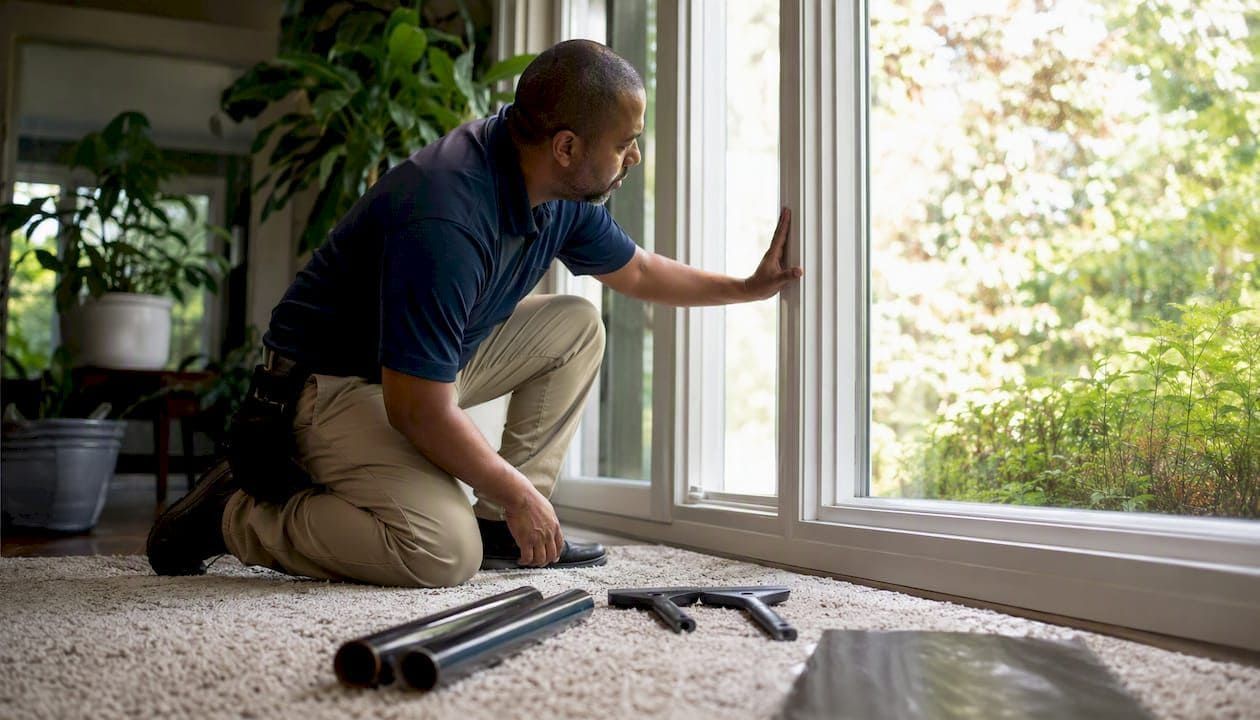
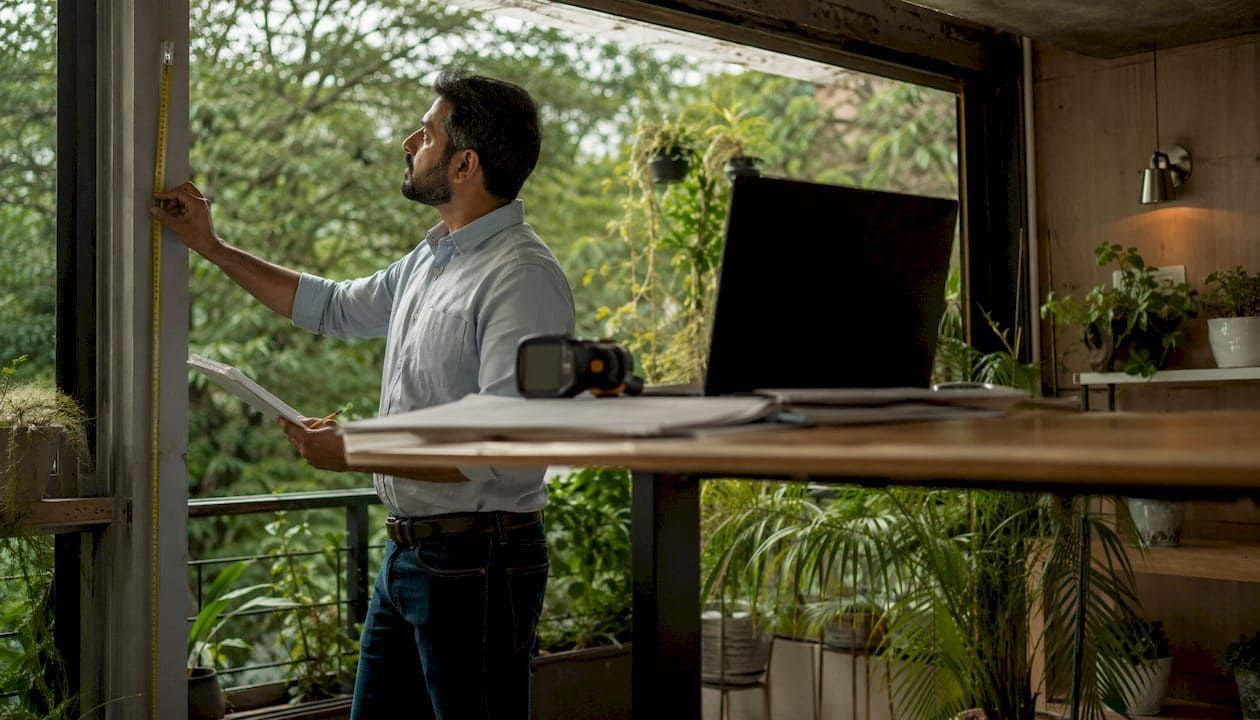
- Measure and cut the film. Measure the glass panel dimensions and cut the film approximately one inch larger on each side. You will trim to final size after application. Use a straight edge and a sharp utility knife for clean cuts.
- Mix your slip solution. A standard slip solution is water with a small amount of baby shampoo or dish soap. This keeps the film mobile on the glass long enough to position it correctly before it adheres.
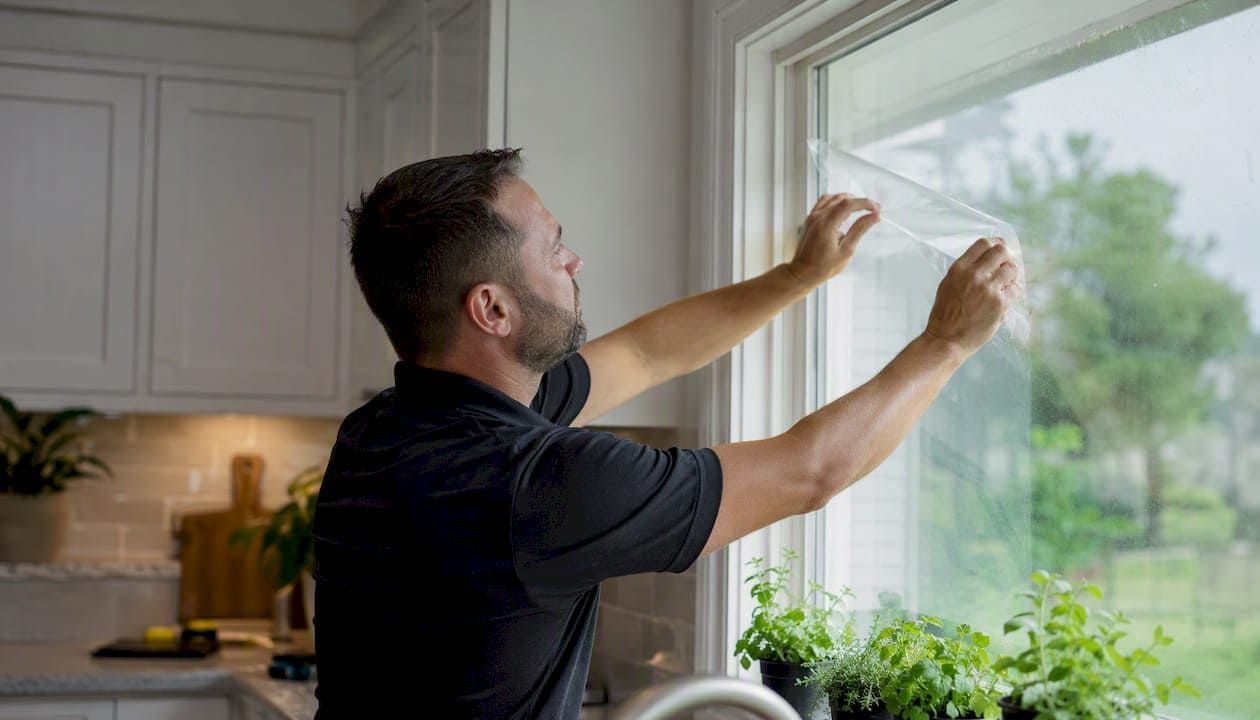
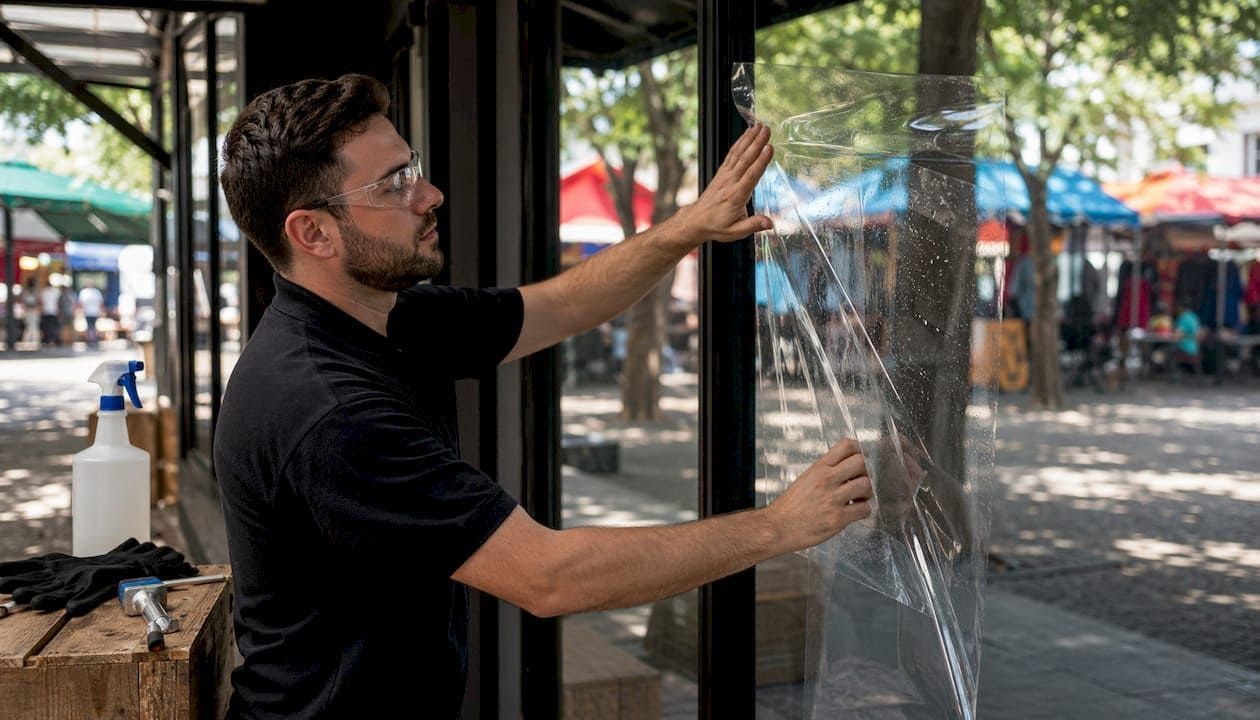
- Wet the glass and apply the film. Spray the glass generously with slip solution, peel the film backing, and spray the adhesive side of the film as well. Lay the film onto the glass and slide it into position.
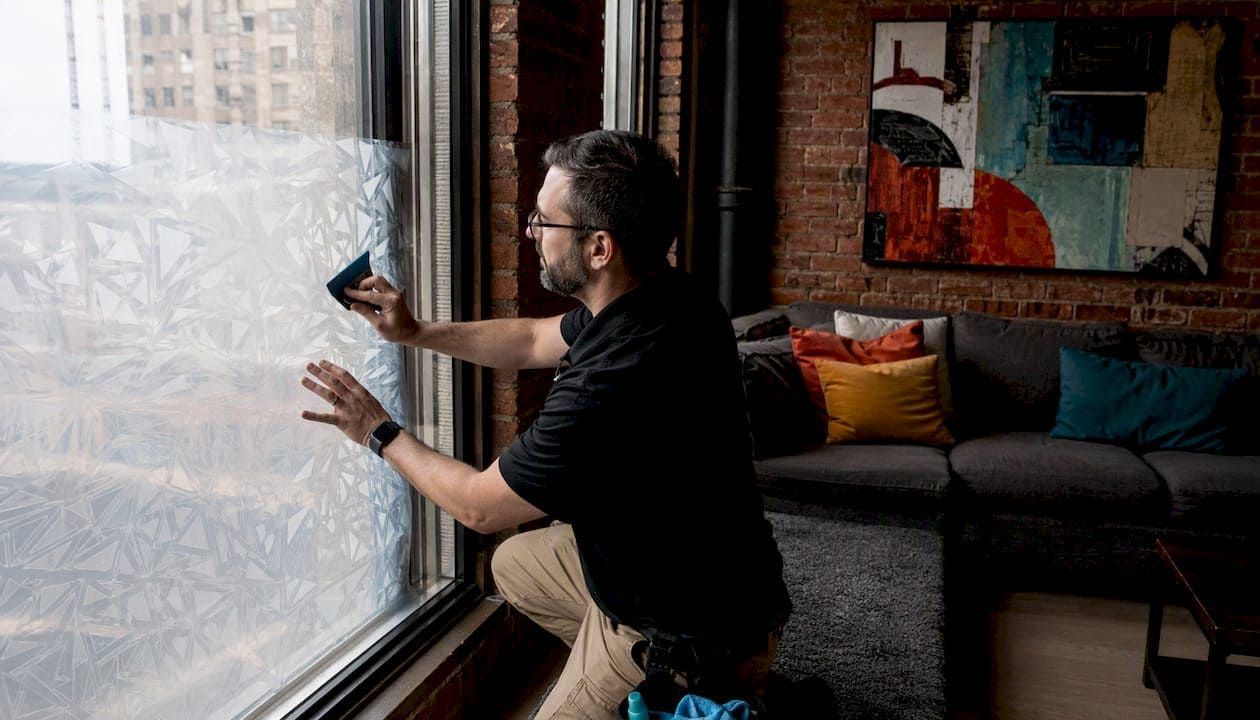
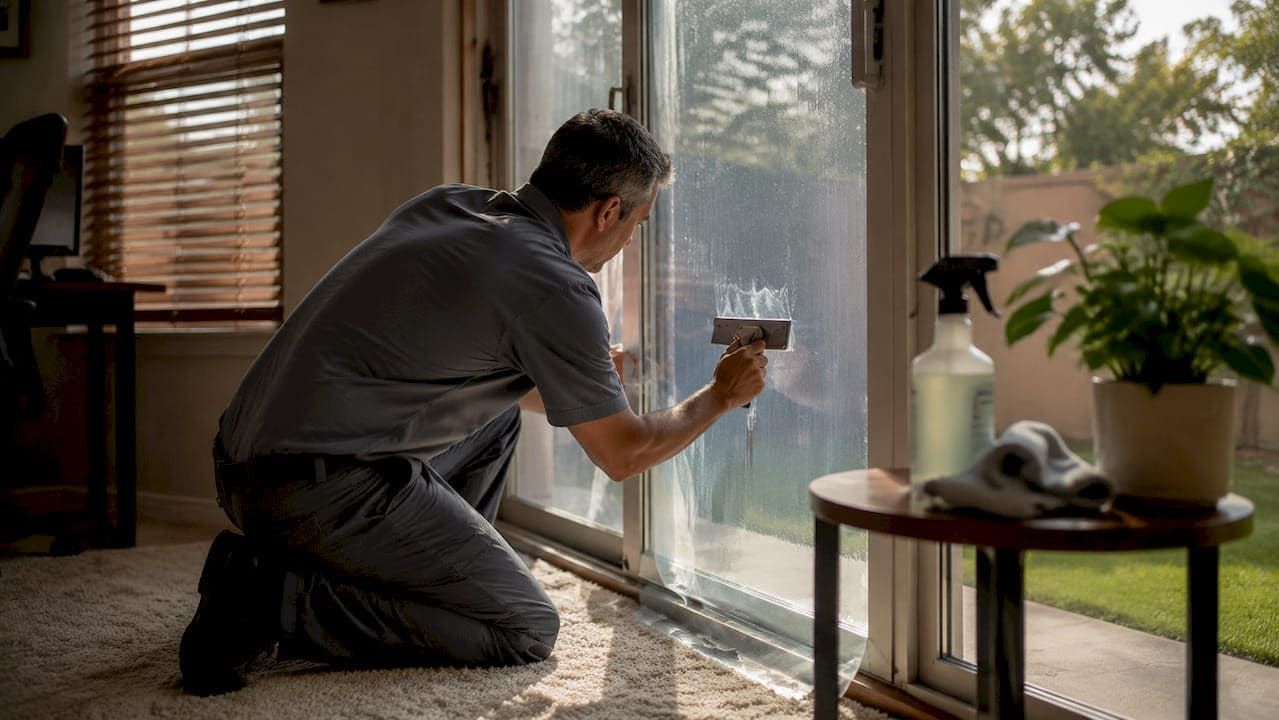
- Squeegee out water and air. Use plenty of slip solution, a quality squeegee, and an assistant when working on large sliding door panels. Work from the center outward in overlapping strokes to push water and air to the edges.
- Trim the edges. Use a straight edge and utility knife to trim the film flush with the door frame, leaving a 1/16-inch gap at all edges to allow for expansion.
- Final squeegee pass. Do one final firm squeegee pass across the entire surface. Small water pockets are normal and will dry out within a few days.
Pro Tip: Install film on an overcast day or in the early morning. Direct sunlight causes the slip solution to dry too fast, reducing your working time and increasing the chance of creases.
Maintenance and film longevity
Once installed, solar film requires minimal care. Clean it with a soft cloth and a mild soap solution. Avoid ammonia-based cleaners like Windex, which degrade the film's adhesive layer over time. Most quality ceramic films carry a manufacturer warranty of 10 to 15 years for interior residential applications.
Common problems and how to avoid them
Most solar film failures trace back to a small set of predictable mistakes. Knowing them in advance saves you money and frustration.
- Thermal stress cracking on dual-pane glass. Dark, heat-absorptive films trap heat between the film and the glass on double-pane units. This temperature differential causes the glass to expand unevenly and crack. Always confirm dual-pane compatibility before purchasing any film with a VLT below 35%.
- Wrong openness factor for your sun exposure. Choosing a 1% openness factor for a north-facing door leaves the room unnecessarily dark. Choosing a 10% factor for a west-facing door in a hot climate provides almost no heat relief. Match the openness factor to your actual sun conditions.
- Door binding from added thickness. Solar screens with suction cups add less than 3.5cm of thickness, but even small additions can interfere with sliding door tracks if clearance is tight. Measure the gap between your door panel and the frame before selecting any exterior-mounted product.
- Peeling edges from improper trimming. Leaving the film flush against the frame without a small gap causes the edges to lift as the film expands and contracts with temperature changes. Always leave a 1/16-inch gap at all edges.
"The most overlooked step in any window film installation is verifying glass type compatibility before purchasing. One wrong film on a dual-pane door can cost more to repair than the entire installation was worth." — Surfacetint installation team
Cleaning damage is also more common than most people expect. Abrasive sponges and ammonia-based sprays scratch and cloud film surfaces within months. Use only soft microfiber cloths and pH-neutral cleaners to protect your investment.
Key takeaways
Solar film for sliding doors delivers the best results when you match film type, openness factor, and glass compatibility to your specific door and climate conditions.
| Point | Details |
|---|---|
| Ceramic film outperforms alternatives | Ceramic solar film rejects more heat than dyed or metallic films without disrupting Wi-Fi or cell signals. |
| Openness factor drives performance | Choose 1% to 3% for intense sun exposure; choose 5% to 10% for moderate light and privacy balance. |
| Dual-pane compatibility is non-negotiable | Dark films on double-pane glass cause thermal stress cracking; always verify compatibility before buying. |
| Installation prep determines film lifespan | Thorough glass cleaning and proper slip solution use prevent bubbles, creases, and early peeling. |
| Exterior mounting beats interior for heat blocking | Exterior-mounted films intercept solar radiation before it reaches the glass, but require weatherproof materials. |
What I've learned after years of watching homeowners get this wrong
The most consistent mistake I see is homeowners choosing a film based on price or appearance alone, without checking the TSER rating or the openness factor. A film that looks great in a showroom sample can make a south-facing living room feel like a cave in winter if the openness factor is too low.
My strong preference is ceramic film for any sliding door that faces south or west. The signal transparency alone is worth the price premium. I've seen families install metallic reflective film and then spend months troubleshooting dead zones in their home Wi-Fi before tracing the problem back to the film. Ceramic avoids that entirely.
For large sliding doors, I consistently recommend professional installation over DIY. The glass panels on most modern sliding doors run 6 to 8 feet tall. Applying a single sheet of film to a surface that size without creases or trapped dust is genuinely difficult, even with a helper. The cost of professional installation is typically recovered within the first two cooling seasons through reduced AC use, especially when you factor in how much solar film reduces AC demand.
One thing most articles skip: privacy film and solar film are not the same product, and choosing the wrong one for your situation leads to disappointment. If your primary goal is daytime privacy, a one-way reflective film works well. If your primary goal is heat reduction, a ceramic solar film with moderate VLT is the better choice. Understanding that distinction before you buy saves a return trip to the hardware store. Surfacetint's guide on solar vs. privacy film lays out that comparison clearly if you want to go deeper.
Get professional solar film installation from Surfacetint
Surfacetint installs premium LLumar and Vista solar control films on sliding doors across Southern New Hampshire and the Greater Boston Area. Every installation starts with a professional measurement and glass-type assessment to match the right film to your specific door, orientation, and privacy needs. Surfacetint's team handles the full process, from film selection through final trim, so you get a clean, bubble-free result that lasts. Explore the full range of residential solar window films available, or take the first step toward a cooler, more comfortable home with a free window tinting estimate today.
FAQ
What does solar film for sliding doors actually do?
Solar film blocks infrared heat, UV rays, and glare from passing through your sliding door glass. Ceramic-based films can reject up to 97% of infrared heat and 99.9% of UV radiation, reducing cooling costs by 20 to 30 percent.
Can I apply solar film to double-pane sliding doors?
Yes, but only with films rated as dual-pane safe. Dark or heat-absorptive films on double-pane glass trap heat between layers and can cause thermal stress cracking. Always confirm compatibility with the manufacturer before purchasing.
How long does solar window film last on sliding doors?
High-quality ceramic solar films installed on interior glass surfaces typically last 10 to 15 years with proper care. Avoid ammonia-based cleaners and abrasive cloths to protect the film's adhesive and surface coating.
What is the best openness factor for a sliding door film?
An openness factor of 1% to 3% works best for doors with intense, direct sun exposure. An openness factor of 5% to 10% suits moderate sun conditions where you want a balance of light, visibility, and heat reduction.
Is professional installation worth it for sliding door film?
For large sliding door panels, professional installation significantly reduces the risk of creases, bubbles, and misalignment. The cost is typically offset by energy savings within the first two cooling seasons, making it a sound investment for most homeowners.
Recommended