
What Is Specialty Glass Coating? Types, Uses, and Benefits
Specialty glass coating is a precisely engineered thin film applied to glass surfaces to modify their optical, thermal, electrical, or protective properties beyond what standard glass can deliver. These coatings consist of metal oxides, metals, or silicon compounds deposited through industrial processes, either during glass manufacturing or afterward on finished panes. The result is glass that can block infrared heat, reduce glare, conduct electricity, repel water, or carry decorative color, all without sacrificing visible light clarity.
Key players and technologies shaping this field include:
- Specialty Glass Products , a U.S. manufacturer supplying precision glass for optical, industrial, and technical applications
- Pilkington Activ™ series , a line of self-cleaning and solar-control coated glass products using both pyrolytic and sputtered technologies
- Sprimag Coating Systems , a German engineering firm specializing in precision spray and dip-coating equipment for glass production lines
These are not protective films in the consumer sense. They are engineering solutions where exact layer thickness, material selection, and deposition technique determine every performance outcome.
What types of specialty glass coatings are available?
The category spans a wide range of functional solutions, each built around a different interaction between the coating material and light, heat, or electricity.
- Anti-reflective (AR) coatings use multilayer dielectric stacks to reduce surface reflections through light interference. Glass typically reflects about 4% of light on entry and another 4% on exit, but AR coatings can bring total reflectance below 0.5% in high-performance applications. Museums, display monitors, and optical instruments rely on these.
- Low-emissivity (low-E) coatings are the workhorse of architectural glass. They block near-infrared and ultraviolet portions of the solar spectrum while transmitting visible light, reducing heat transfer through windows without darkening them. They are the primary tool for lowering a window's U-factor and improving thermal insulation performance.
- Hydrophobic coatings lower the surface energy of glass so water beads and rolls off rather than sheeting across the surface. Silicon dioxide (SiO₂) is a common base material, and fluoroalkylsilane compounds offer superior bonding durability. Automotive glass, shower enclosures, and exterior architectural panels are typical targets.
- Electrically conductive coatings introduce conductivity to an otherwise insulating surface. Indium tin oxide (ITO) and fluorine-doped tin oxide (FTO) are the two dominant materials, used as transparent electrodes in touchscreens, solar cells, heated glass panels, and display technology. When both conductivity and minimal reflection are needed, index-matched ITO (IMITO) reduces interface reflections in liquid crystal on silicon (LCOS) devices.
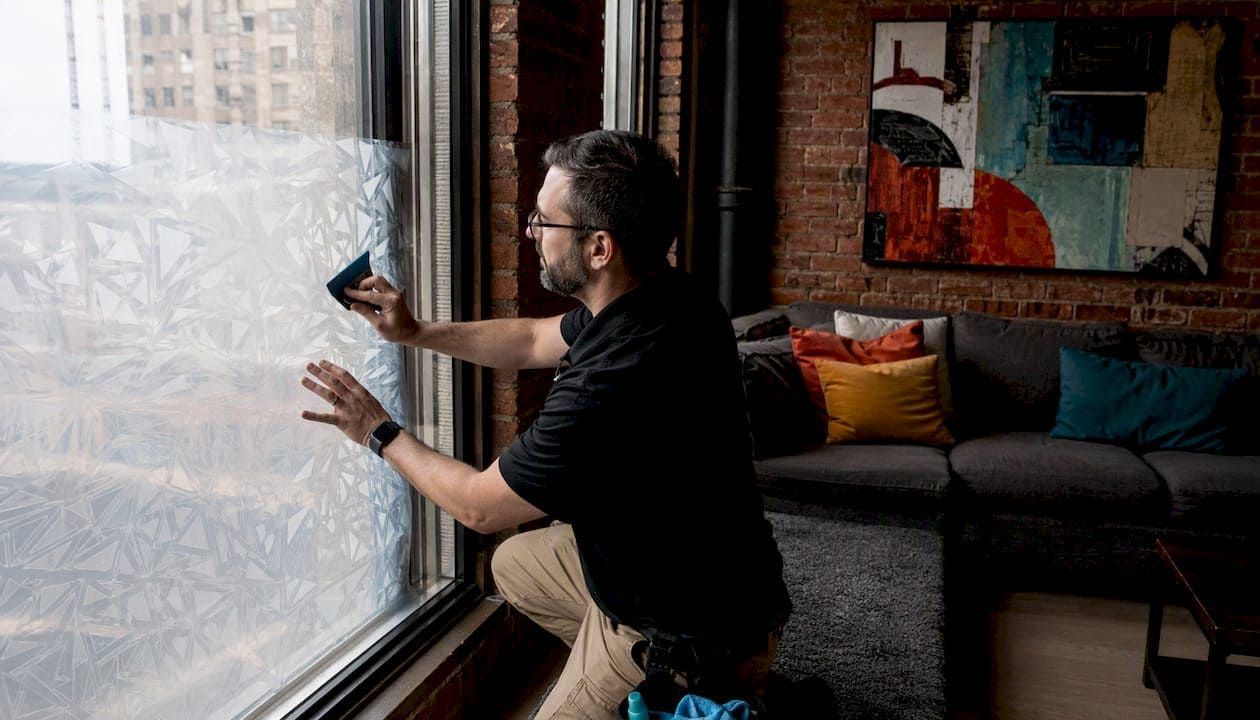
- Decorative coatings add color, metallic sheen, or patterned effects to glass surfaces. Lustre colors applied via dip-coating or spray methods and cured thermally are common in kitchen appliances and architectural feature glass.
- Mirror coatings deposit silver chemically onto clear glass, with a copper layer and paint backing protecting the silver from oxidation. The silver delivers the reflective properties; the copper and paint extend the mirror's service life.
For a closer look at how anti-reflective glass treatments work in residential and commercial settings, the performance differences between coating types become especially clear.
How are specialty glass coatings applied industrially?
Two primary methods dominate production, and choosing between them shapes every downstream performance and processing decision.
Online (pyrolytic) coating happens while the glass is still hot inside the annealing lehr during float glass manufacturing. Reactive gases, liquids, or powders are sprayed onto the glass surface, where they thermally decompose and fuse into a metal oxide layer at approximately 600–700°C. Because the coating becomes part of the glass rather than a layer sitting on top of it, pyrolytic coatings are exceptionally hard and durable. They can be tempered, bent, and cut without degradation, and they avoid the edge-sealing and sealant-compatibility issues that offline coatings require.
Offline (sputtered) coating , formally called Physical Vapor Deposition (PVD) or magnetron sputtering, is applied to finished, cut glass panes. Argon ions physically dislodge atoms from a target material, which then deposit onto the glass substrate in a vacuum chamber. Multiple thin layers of metal oxides or metals are built up this way, giving precise control over color, reflectance, and solar performance. The trade-off is that sputtered coatings remain on the surface rather than fusing into it, so secondary processing like tempering usually must happen before coating, and insulated glass units require compatible sealants.
Beyond these two, dip-coating immerses glass panes in chemical solutions that are then dried and fired, a method used for decorative lustre colors and some functional coatings. Chemical vapor deposition (CVD) is the most economical method for depositing flat-glass coatings at manufacturing scale, particularly for low-E applications. Precision manufacturing infrastructure and close engineering collaboration are required across all methods to meet performance specifications consistently.
Pro Tip: When specifying coated glass for a project, confirm whether the coating is online or offline before ordering secondary processing. Sending a sputtered coating through a tempering furnace without prior verification can destroy the coating entirely.
Where are specialty glass coatings used, and what do they deliver?
The advantages of glass coatings show up across nearly every industry that uses glass as a functional material.
Architecture and construction is the largest application segment. Low-E coatings on residential and commercial windows reduce solar heat gain in cooling-dominated climates like the U.S. Sunbelt, where minimizing the solar heat gain coefficient (SHGC) directly cuts air-conditioning loads. In heating-dominated northern climates, pyrolytic low-E coatings outperform sputtered versions because solar heat gain is actually desirable. For homeowners evaluating architectural window coatings, the climate context determines which coating type delivers the best return.
Automotive glass uses hydrophobic coatings for visibility in rain, UV-blocking films to protect occupants and interiors, and conductive coatings for heated rear windows. Specialty coatings also appear in head-up display (HUD) glass, where cold mirror coatings transmit infrared while reflecting visible light to protect display electronics from heat.
Consumer electronics and displays depend on ITO conductive coatings as transparent electrodes in touchscreens, and AR coatings to eliminate the reflections that make outdoor screen use difficult. UV-blocking glass protects image sensors in cameras and smartphones by filtering wavelengths below 400nm while passing visible light cleanly.
Museum and gallery applications use UV-cut filter glass to protect artwork from ultraviolet degradation without obscuring the view. The energy and safety benefits of specialty coatings extend to commercial window film applications as well, where solar control and security performance are both priorities.
Cost and lifecycle economics favor coated glass over uncoated alternatives in most long-term scenarios. The upfront cost of coated glass is higher, but reduced HVAC loads, lower maintenance frequency, and extended glass service life offset that premium over time. Proper commercial window maintenance also extends coating life significantly, since harsh cleaning chemicals can degrade surface coatings prematurely.
Technical factors that determine coating performance and longevity
Performance does not come from the coating material alone. It comes from the precision of the entire process, and from what happens to the glass surface before deposition begins.
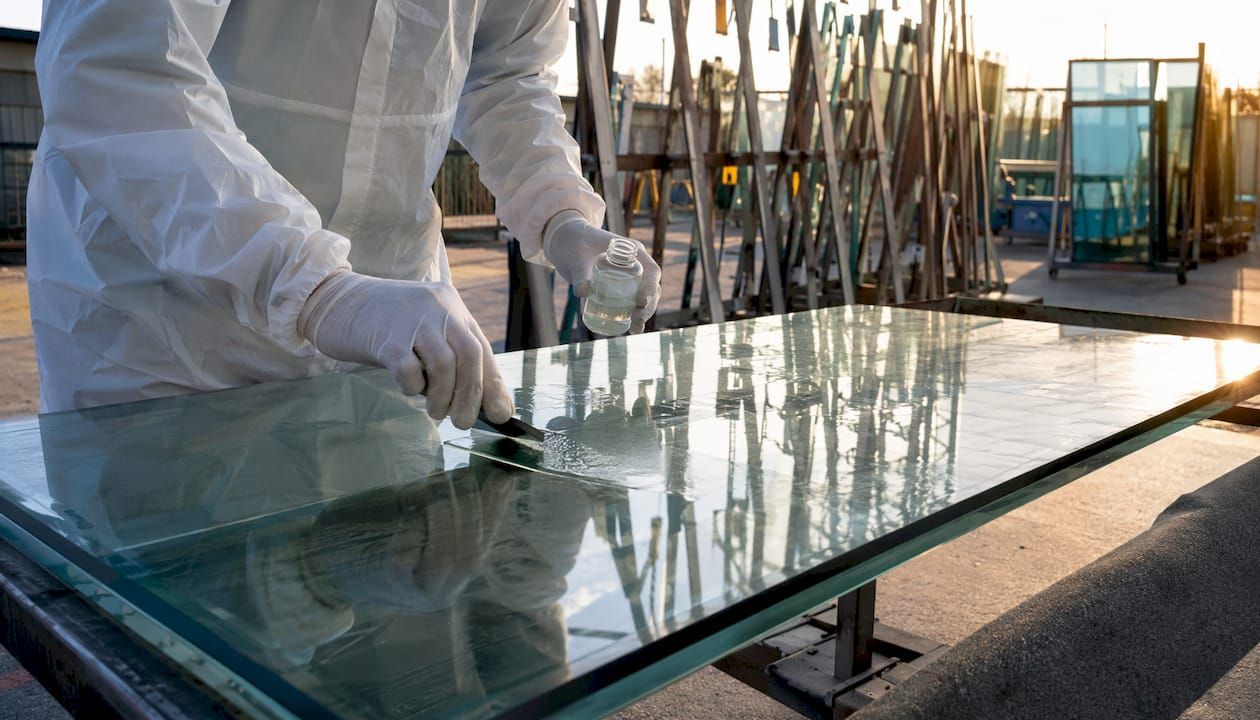
Poor surface preparation is the primary cause of coating failure, not the coating formulation itself. Contaminants like limescale, cleaner residue, or fingerprint oils left on the glass prevent proper bonding, resulting in patchy adhesion or premature degradation. Stringent cleaning protocols before any coating application are non-negotiable.
Hydrophobic coatings introduce a specific optical trade-off worth understanding. They improve visibility at highway speeds by shedding water aerodynamically, but at low speeds in rain, the water-beading effect can actually reduce clarity because droplets remain on the glass rather than sheeting off. Wipers may need to run continuously at low speed to compensate. For vehicles equipped with ADAS camera systems, hydrophobic coatings on the windshield carry an additional risk: the coating can interfere with camera-based safety systems, so application is recommended only on side and rear glass.
Climate should drive the choice between online and offline coating methods. Pyrolytic coatings suit heating-dominated climates where some solar gain is beneficial, while sputtered coatings allow finer solar control in cooling-dominated regions. Sputtered coatings cannot be used in single-glaze window systems, which limits their applicability in southern U.S. markets where single-glaze construction is common.
Multilayer dielectric coatings use index matching to control reflections and transmissions at each interface, enabling effects like high visible transmittance combined with strong infrared rejection. These are not achievable with single-layer coatings, which is why advanced low-E and AR products involve stacks of nine or more discrete layers, each contributing a specific optical function.
Pro Tip: For insulated glass units with sputtered coatings, always verify sealant compatibility with the coating manufacturer before fabrication. Incompatible sealants can chemically attack the coating edge and cause delamination within months of installation.
Key Takeaways
Specialty glass coatings are precision-engineered thin films that transform standard glass into a high-performance material by controlling light, heat, electricity, and surface chemistry at the molecular level.
| Point | Details |
|---|---|
| Two core deposition methods | Online (pyrolytic) coatings fuse at 600–700°C for maximum durability; offline (sputtered) coatings use vacuum PVD for precise optical control. |
| Surface prep drives durability | Coating failure stems from poor surface preparation, not coating formulation; contaminants prevent proper bonding. |
| Climate determines coating choice | Pyrolytic coatings suit heating-dominated climates; sputtered coatings offer finer solar control in cooling-dominated regions. |
| Sputtered coatings use multiple thin layers | Multiple thin layers of metal oxides are deposited to achieve targeted color, reflectance, and solar performance. |
| Hydrophobic coatings carry trade-offs | They improve high-speed rain visibility but can reduce clarity at low speeds and may interfere with ADAS camera systems on windshields. |
Recommended