
Smart Glass Coatings Terminology: A Professional Guide
TL;DR:
- Smart glass coatings are classified as active, requiring power to switch states, or passive, responding automatically to environmental changes. Performance metrics like SHGC, VLT, and transition speed quantify their effectiveness, with proper placement within the glazing system being essential for durability and energy efficiency. Accurate terminology and understanding of coating types, standards, and deposition methods are vital for correct specification and optimal building performance.
Terminology in smart glass coatings defines the specialized language covering adaptive thin films, laminated technologies, and performance standards that control how buildings manage heat and light. The industry divides these coatings into two fundamental categories: active coatings, which require electrical power to switch states, and passive coatings, which respond autonomously to environmental conditions. Key performance metrics include Solar Heat Gain Coefficient (SHGC), Solar Factor (SF), Visible Light Transmittance (VLT), and transition speed. Professionals who command this coating terminology guide can specify products accurately, avoid costly errors, and evaluate energy performance data with confidence.

What is the terminology in smart glass coatings?
Smart window coatings are sophisticated thin films that adapt their molecular states to control solar radiation, going well beyond simple tinting in performance. The term "smart glass coating" refers specifically to dynamic systems that change optical or thermal properties in response to a stimulus. That stimulus can be electrical voltage, heat, or light, depending on the technology.
The industry classifies all smart glass coatings under two operational categories.
Active coatings require an external power source to change state. The three primary active technologies are:
- Electrochromic (EC): A voltage triggers an ion exchange that darkens the glass, reducing solar gain on demand.
- SPD (Suspended Particle Device): Microscopic particles suspended in a film align under voltage to allow light through. Without power, they scatter light and block the view.
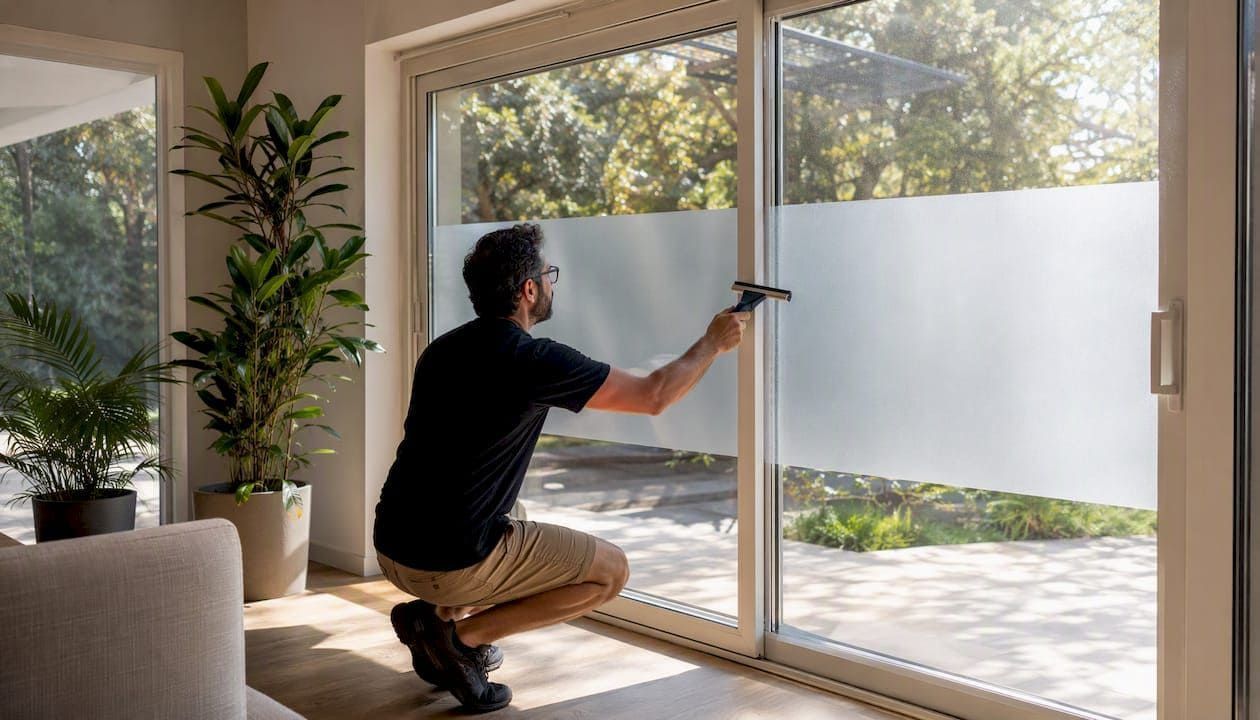
- PDLC (Polymer-Dispersed Liquid Crystal): Liquid crystals dispersed in a polymer matrix scatter light when unpowered, making the glass opaque. Voltage aligns the crystals to restore transparency, making PDLC the standard choice for switchable privacy glass.
Passive coatings operate without any power input. Thermochromic coatings darken when surface temperature rises. Photochromic coatings respond to UV light intensity. Passive technologies prioritize low maintenance and zero operational energy use, making them attractive for large-scale building envelopes where wiring costs are prohibitive.
Pro Tip: When reviewing product literature, confirm whether a coating is active or passive before comparing performance data. Active and passive systems use different metrics to describe their switching range, and mixing them up leads to specification errors.
How do performance metrics and standards define smart glass quality?
Performance metrics are the numerical language of smart glass coatings. Without them, comparing products from different manufacturers is impossible.
Solar Heat Gain Coefficient (SHGC) and Solar Factor (SF)
SHGC is the North American standard per NFRC 200, while Solar Factor (SF) is the European equivalent per EN 410. Both measure how much solar energy passes through a glazing system as a fraction between 0 and 1. The critical difference is scope: SHGC accounts for whole-window performance including frames, while SF focuses on center-of-glass measurements. A professional specifying glass for a Boston office building should use SHGC values. A researcher comparing European product data must convert SF figures before drawing conclusions.
Visible Light Transmittance (VLT) and Light-to-Solar Gain (LSG)
VLT measures the percentage of visible light that passes through the glass. A high VLT means more daylight enters the space. LSG is the ratio of VLT to SHGC. A higher LSG ratio means the coating lets in more light relative to heat, which is the goal for most commercial buildings seeking daylight without overheating.
| Term | Standard | What It Measures | Region |
|---|---|---|---|
| SHGC | NFRC 200 | Total solar energy transmitted, whole window | North America |
| Solar Factor (SF) | EN 410 | Solar energy transmitted, center of glass | Europe |
| VLT | NFRC 200 / EN 410 | Visible light transmittance percentage | Both |
| LSG | Derived metric | VLT divided by SHGC or SF | Both |
| Transition Speed | No single standard | Time to complete tint state change | Both |
Transition speed and why it matters
Transition speed is the time a thermochromic or electrochromic coating takes to move from its clear state to its tinted state. Thermochromic windows with transition speeds under 5 hours achieve up to 100% of optimal solar modulation performance. Slower systems reach only 64% and 58% of their potential energy efficiency and thermal comfort performance, respectively. That gap is significant. A coating with a slow transition speed can only respond to seasonal temperature shifts, not to the hour-by-hour solar changes that drive peak cooling loads.
Pro Tip: Always request transition speed data in hours, not just a qualitative description like "fast" or "responsive." A transition speed under 5 hours is the threshold that separates hourly solar tracking from seasonal adjustment only.
Low-emissivity (low-e) coatings and secondary heat flow
Low-e coatings are thin metallic layers that reflect long-wave infrared radiation back toward its source. In an insulated glazing unit (IGU), they reduce heat transfer between panes. Secondary heat flow is the term for heat that a coating absorbs from solar radiation and then re-radiates into the interior space. Proper layer placement within an IGU minimizes this effect, which is why coating position is a specification decision, not just a manufacturing detail.
How do advanced coating techniques affect durability and performance?
The fabrication method used to apply a smart glass coating determines its mechanical durability, spectral selectivity, and where it can be positioned within a glazing system.
Chemical vapor deposition (CVD): hard coat films
CVD produces hard coat films by chemically bonding the coating to the glass surface at high temperatures during the float glass manufacturing process. The result is a coating that is scratch resistant, can withstand cutting and tempering after application, and survives exterior exposure without degradation. Fluorine-doped tin oxide (FTO) is a common CVD-deposited material used in low-e and thermochromic applications because it combines electrical conductivity with high optical clarity.
Magnetron sputtering: soft coat films
Magnetron sputtering deposits thin metallic layers onto glass in a vacuum chamber at low temperatures. The process allows for multilayer stacks with precise spectral selectivity, meaning the coating can be engineered to block specific wavelengths of infrared radiation while transmitting visible light. The trade-off is durability. Soft coat films are sensitive to moisture and abrasion. They must be protected within an IGU cavity and cannot be used on single-pane exterior surfaces.
Key distinctions between the two deposition methods:
- Hard coat (CVD/pyrolytic): Durable, scratch resistant, can be tempered after coating, suitable for exterior surfaces and single-pane applications.
- Soft coat (sputtered): Higher spectral selectivity, better optical performance, must be sealed inside an IGU, not suitable for exterior exposure.
- Titanium dioxide (TiO₂) layers: Applied by CVD in photocatalytic self-cleaning coatings. TiO₂ breaks down organic contaminants under UV light, reducing maintenance on exterior glazing.
- Indium Tin Oxide (ITO): The standard transparent conductor in electrochromic and liquid crystal devices. ITO layers are commonly deposited on the second surface of IGUs and influence heat dispersion due to their thermal conductivity.
Understanding these distinctions helps professionals match the right coating technology to the right application. A retrofit project on an existing single-pane window requires a hard coat or a laminated smart film. A new curtain wall system can accommodate a soft coat IGU with superior spectral performance.
What terminology covers smart glass integration in building envelopes?
Applying smart glass coatings correctly requires understanding how they fit within the larger glazing assembly. The terms used in product specifications describe both physical position and functional role.
IGU surface numbering and layer placement
An IGU has four surfaces numbered from outside to inside. Surface 1 faces the exterior. Surface 4 faces the interior. Positioning a smart glass coating on the exterior panel of an IGU reduces secondary heat flow and improves thermal performance when combined with an interior low-e coating. Placing an active coating on the wrong surface causes absorbed heat to radiate into the occupied space, increasing cooling loads.
Lamination interlayers: PVB and EVA films
PVB (polyvinyl butyral) and EVA (ethylene-vinyl acetate) are the two standard laminating interlayers used to encapsulate liquid crystal and SPD films between glass lites. Both materials slow conductive heat transfer. They also trap heat within the laminate assembly, which can increase secondary heat flow if the overall IGU configuration is not designed to account for it. Specifiers should request thermal modeling data that includes the interlayer contribution, not just the glass and coating performance.
Smart film versus built-in smart glass
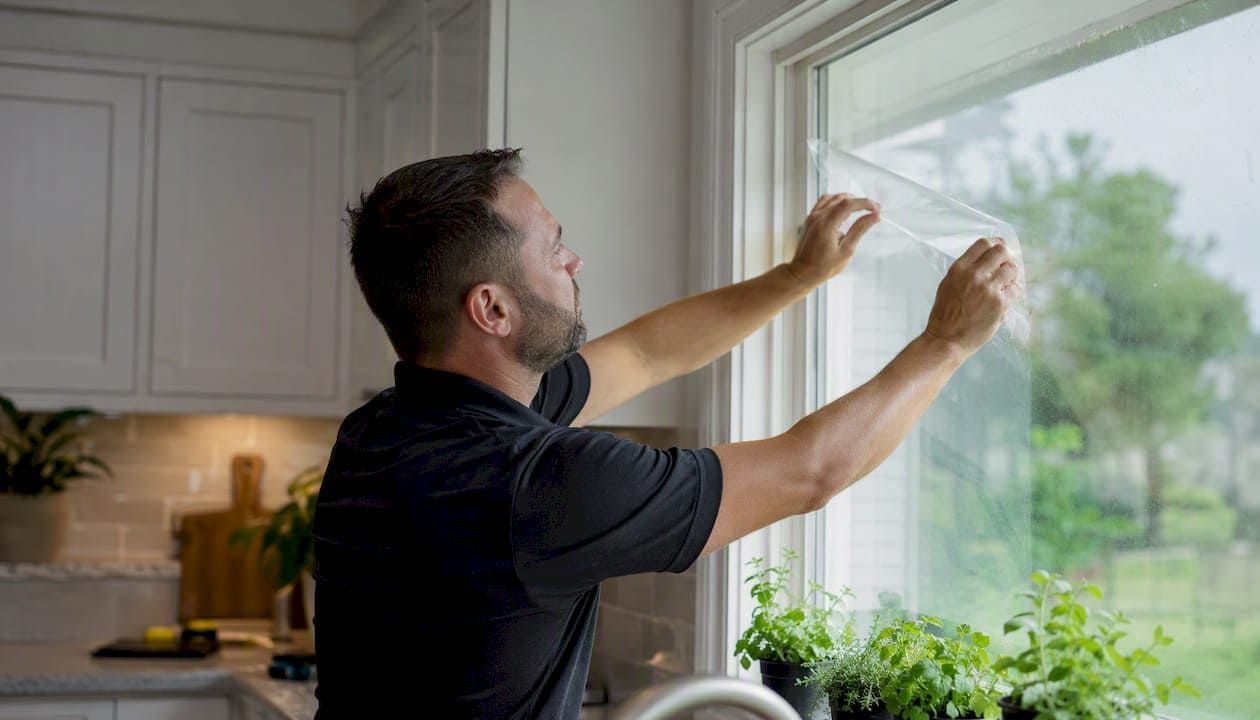
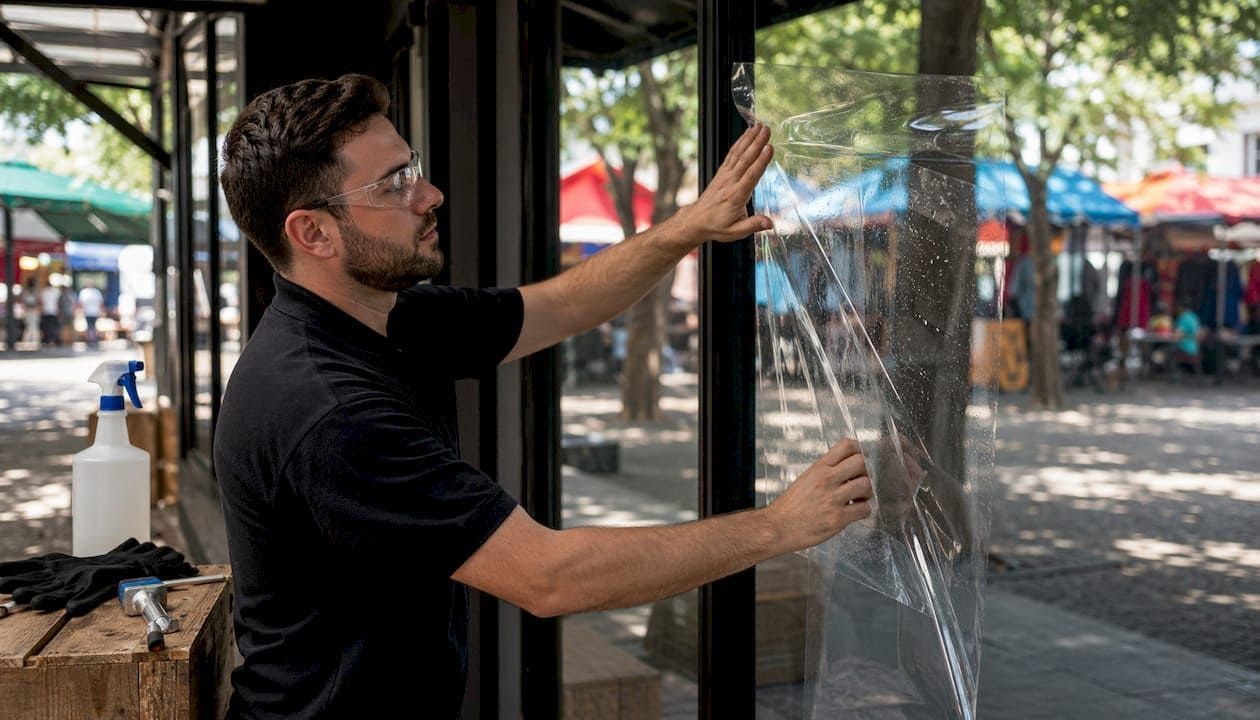
Smart film is a retrofit product. It is a self-adhesive laminate containing PDLC or SPD technology that applies to existing glass surfaces. Built-in smart glass integrates the active layer during manufacturing. Smart film offers lower installation cost and works with existing double glazing systems. Built-in smart glass delivers better optical clarity and longer service life. The choice between them depends on project budget, performance requirements, and whether the existing glazing can support the added thermal load.
Pro Tip: When evaluating retrofit smart film products, ask for the film's own SHGC contribution separately from the host glass. The combined system performance can differ significantly from either component alone, and energy models need both values to produce accurate results.
For professionals working on advanced window film applications, understanding these distinctions between retrofit and factory-applied systems is the difference between a specification that performs and one that disappoints.
Key Takeaways
Mastering smart glass coating terminology requires understanding active versus passive classifications, regional performance standards, deposition methods, and IGU layer placement as interconnected systems, not isolated facts.
| Point | Details |
|---|---|
| Active vs. passive classification | Active coatings need power; passive coatings respond autonomously. Confirm the type before comparing performance data. |
| SHGC versus Solar Factor | SHGC applies to North American projects per NFRC 200; SF applies to European specs per EN 410. Never mix the two without conversion. |
| Transition speed threshold | A transition speed under 5 hours enables hourly solar tracking and achieves up to 100% of optimal modulation performance. |
| Hard coat versus soft coat | CVD hard coats survive exterior exposure; sputtered soft coats deliver better spectral performance but require IGU protection. |
| IGU layer placement | Placing smart coatings on the exterior panel and pairing them with an interior low-e coating minimizes secondary heat flow. |
Why terminology precision is the real specification skill
Professionals who work with smart glass coatings regularly encounter a specific frustration: two products with similar marketing claims that perform very differently in practice. The gap almost always traces back to terminology misuse, either by the specifier, the manufacturer, or both.
The most common error I see is treating SHGC and Solar Factor as interchangeable. They are not. A product specified using European SF data for a North American energy model will produce inaccurate results. The whole-window versus center-of-glass distinction changes the numbers enough to affect compliance with energy codes like ASHRAE 90.1.
The second common error is underweighting transition speed. A thermochromic coating marketed as "responsive" with a transition time of 8 hours is, by the research definition, a seasonal device. It cannot track daily solar cycles. That matters enormously for peak load calculations and occupant comfort during summer afternoons.
My honest recommendation: treat the coating deposition method as a durability filter first. If the application requires exterior exposure or post-fabrication tempering, only hard coat CVD products qualify. Then apply performance metrics to narrow the field. Reversing that order wastes time evaluating products that cannot survive the installation conditions.
The smart tint solutions space is evolving quickly. New electrochromic formulations are closing the performance gap with sputtered soft coats while improving durability. Staying current with both the terminology and the underlying science is what separates professionals who specify confidently from those who rely on manufacturer claims alone.
Surfacetint's window film expertise for smart coating projects
Professionals and property managers in Southern New Hampshire and the Greater Boston Area can work directly with Surfacetint to evaluate smart film and solar control coating options for both new and existing buildings. Surfacetint is an exclusive LLumar SelectPro Dealer, installing Vista Films including Solar Control Films and Safety and Security Films engineered for heat rejection, UV blocking, and glare reduction.
Whether you are assessing a commercial retrofit or specifying window film for a new residential build, Surfacetint provides on-site consultation and product recommendations grounded in real performance data. Request a free window tinting estimate to get a professional assessment of which coating technology fits your project's thermal and optical requirements.
FAQ
What is the difference between active and passive smart glass?
Active smart glass requires electrical power to switch between states, as in electrochromic, SPD, and PDLC systems. Passive smart glass, such as thermochromic and photochromic coatings, responds automatically to heat or light without any power input.
What does SHGC mean in smart glass specifications?
SHGC stands for Solar Heat Gain Coefficient, the North American standard per NFRC 200 that measures how much total solar energy a glazing system transmits. A lower SHGC means less solar heat enters the building, which reduces cooling loads.
What is the difference between a hard coat and a soft coat?
A hard coat is applied by chemical vapor deposition during glass manufacturing, creating a durable, scratch-resistant surface that can be tempered and used on exterior glazing. A soft coat is applied by magnetron sputtering and delivers better spectral selectivity but must be sealed inside an IGU cavity to prevent degradation.
What is secondary heat flow in smart glass systems?
Secondary heat flow is the heat that a coating absorbs from solar radiation and then re-radiates into the interior space. Correct IGU layer placement, with the smart coating on the exterior panel and a low-e coating on the interior, minimizes this effect.
What is the difference between smart film and built-in smart glass?
Smart film is a retrofit adhesive laminate applied to existing glass, while built-in smart glass integrates the active layer during manufacturing. Smart film costs less and works with existing glazing systems. Built-in smart glass delivers better optical clarity and longer service life.
Recommended