
Why Prioritize UV Filtration for Safe Home Water
UV filtration is the most direct answer to microbial contamination in home water, and it works without adding a single chemical. A properly sized UV system inactivates the vast majority of microorganisms including bacteria, viruses, and protozoa by destroying their DNA before the water ever reaches your tap. For homeowners on private wells, or anyone with young children or immunocompromised family members, that protection is not optional.
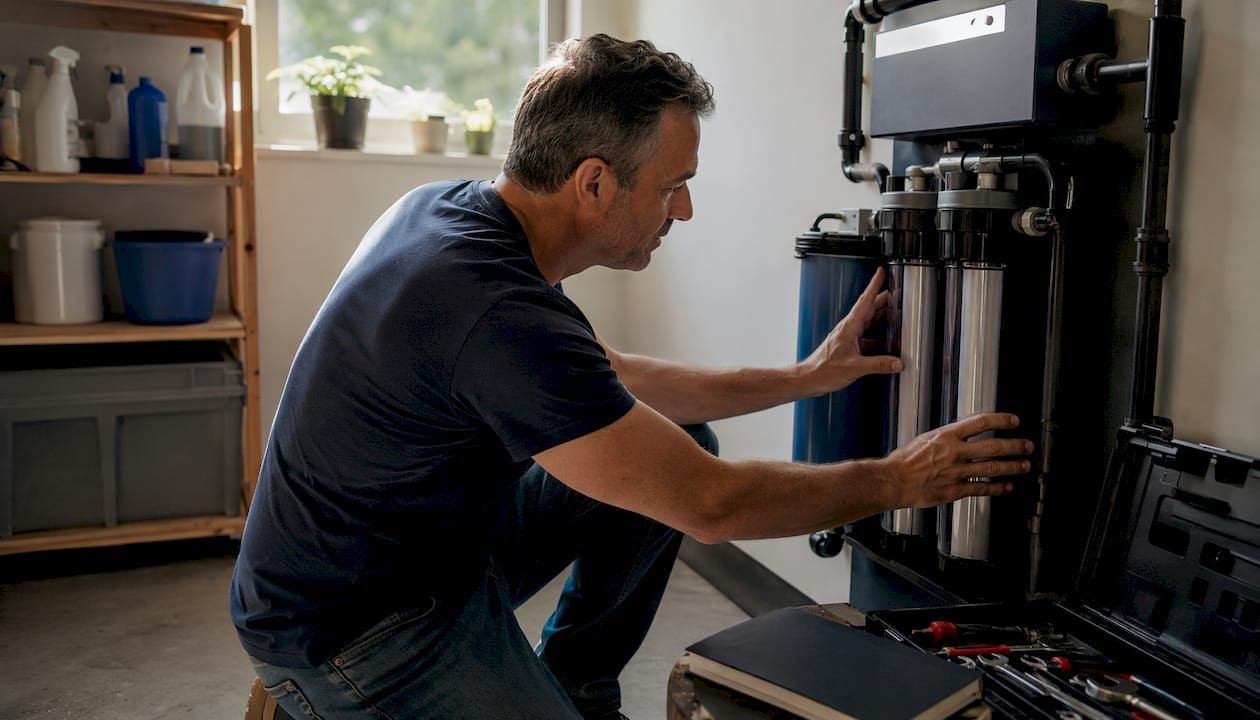
Here is what UV filtration delivers:
- Chemical-free disinfection with no chlorine, no taste change, and no harmful byproducts
- Instant action as water passes through the UV chamber, with no holding tank required
- Pathogen coverage that includes chlorine-resistant parasites like Cryptosporidium and Giardia
- Compatibility with sediment filters, carbon filters, and reverse osmosis systems as a final safety layer
- Certification under NSF/ANSI 55 standards, which independently verifies that a system delivers the UV dose it claims
Why prioritize UV filtration: the core case for homeowners
UV disinfection works by exposing water to ultraviolet light at a wavelength of 254 nanometers, which is the wavelength most lethal to microbial DNA. When a pathogen absorbs that energy, its genetic material is damaged beyond repair. It cannot reproduce, and it cannot cause illness. The process takes seconds, requires no chemicals, and leaves nothing behind in the water.
What UV filtration is not is a physical filter. It does not trap sediment, remove iron, or pull out dissolved chemicals. Think of it as a specialist: it does one job, killing living organisms, and does it exceptionally well. For complete water treatment, it works alongside sediment and carbon filtration stages rather than replacing them.
NSF/ANSI 55 splits certified UV systems into two classes. Class A systems deliver a minimum dose of 40 mJ/cm² and are designed to treat water that may be microbiologically unsafe. Class B systems deliver a lower dose of 16 mJ/cm² and are rated only for water that is already considered safe. If you are on a private well, Class A is the only appropriate choice.
Pro Tip: System sizing matters as much as the UV dose. A unit rated for 9 gallons per minute on a home that peaks at 15 gallons per minute will under-dose the water. Always size to your home's peak flow rate, not average use.
Key benefits and advantages of UV filtration
The single biggest advantage UV filtration holds over chlorine-based disinfection is its effectiveness against pathogens that chlorine cannot reliably kill. Cryptosporidium and Giardia are both resistant to chlorine at typical treatment doses, yet both are highly susceptible to UV light. The EPA has confirmed this, and it is a primary reason UV disinfection became standard practice in municipal water treatment for surface water sources.
For homeowners, the practical benefits stack up quickly:
- No chemical handling or storage. There is no chlorine to buy, store, or accidentally spill.
- No taste or odor impact. UV adds nothing to the water, so your water tastes exactly as it did before treatment.
- Low operating cost. Electricity use is roughly equivalent to a 40-watt light bulb, and the only recurring cost is an annual lamp replacement.
- Microbial safety for vulnerable households. Children, elderly adults, and anyone with a compromised immune system face higher risk from waterborne pathogens. UV provides a reliable, always-on barrier.
- Seamless integration. UV fits at the end of a multi-stage system, after sediment and carbon filtration, or after a reverse osmosis membrane. Reverse osmosis removes dissolved solids but not all microbes; UV closes that gap.
When should you consider UV filtration for your water system?
Private well owners are the clearest case. Municipal utilities disinfect continuously; private wells have no such protection. Water moves from the aquifer directly to your tap, and you are solely responsible for confirming it is safe. A single positive coliform test is reason enough to install a UV system immediately.
Beyond well water, several situations make UV filtration worth prioritizing:
- Boil-water advisories. If your area issues them regularly, UV provides continuous protection rather than requiring you to remember to boil.
- Seasonal contamination risk. Heavy rainfall and spring flooding can push surface contaminants into well casings or shallow aquifers. UV handles that microbial surge automatically.
- Households with vulnerable members. Young children, pregnant women, elderly adults, and anyone on immunosuppressive medication all face greater consequences from waterborne illness.
- Positive microbial test results. Any lab result showing coliform, E. coli, or other pathogens calls for immediate UV installation, paired with pre-treatment for sediment and iron.
- Multi-stage system completion. If you already have sediment and carbon filtration, adding UV as the final stage gives you genuinely comprehensive water treatment.
UV filtration is also worth considering as preventive insurance even when tests come back clean. Well water quality can shift seasonally, and contamination can appear without warning.

Is UV filtration safe, and what are its limits?
UV filtration is completely safe for homeowners. The UV-C light is contained inside a stainless steel chamber and never contacts you or your household. It does not alter water chemistry, and unlike some chemical disinfectants, it produces no harmful disinfection byproducts. The EPA, CDC, and NSF all recognize UV disinfection as an effective method for microbiological safety in residential settings.
That said, UV has real limitations you need to understand:
- It does not remove chemicals, heavy metals, or dissolved solids. For those contaminants, you need activated carbon, reverse osmosis, or other targeted filtration.
- Water clarity is non-negotiable. Iron above 0.3 ppm or turbidity above 1 NTU can coat the quartz sleeve and block UV rays, allowing pathogens to pass through untreated.
- No residual protection downstream. UV disinfects water inside the chamber only. If bacteria are living in your pipes after the unit, UV does nothing about them.
- Lamp output declines over time. A lamp that still glows may no longer deliver adequate germicidal intensity, which is why annual replacement is not optional.
Maintenance requirements for UV filtration systems
UV systems are genuinely low-maintenance compared to chemical treatment methods, but they are not zero-maintenance. The most common mistake homeowners make is trusting the lamp glow as proof the system is working. UV lamps need replacement after approximately 9,000 hours of use, roughly once a year, because germicidal output drops below effective levels well before the lamp burns out visually.
The quartz sleeve surrounding the lamp also needs attention. Iron, sediment, and mineral deposits coat the sleeve over time, reducing UV transmission. Cleaning the sleeve during your annual lamp replacement keeps output consistent. If your water has high iron or hardness, inspect the sleeve more frequently.
Pre-filters protect the UV system as much as they protect you. A 5-micron sediment filter upstream of the UV chamber catches particulates that would otherwise shadow bacteria from the light. Change pre-filters on schedule; a clogged sediment filter defeats the purpose of the UV stage entirely. Many quality systems include a UV intensity sensor that triggers an alarm when output drops, which takes the guesswork out of monitoring. For more on UV protection standards and what certified performance looks like, Surfacetint covers the key benchmarks homeowners should know.
How UV filtration compares to other purification methods
| Method | Kills bacteria and viruses | Removes chemicals | Removes chemicals | Adds byproducts |
|---|---|---|---|---|
| UV filtration | Yes (99.99%) | No | No | No |
| Chlorination | Yes (most) | No | No | Yes (DBPs) |
| Reverse osmosis | Partially | Yes | Partially | No |
| Activated carbon | No | Yes | Partially | No |
| Sediment filtration | No | No | Yes | No |
Chlorination is effective against most bacteria but struggles with Cryptosporidium and Giardia, and it produces disinfection byproducts that carry their own health concerns. Reverse osmosis removes a high percentage of dissolved contaminants and some microbes, but not all pathogens reliably. UV fills that microbial gap without adding anything to the water. For homes with chlorine-free cleaning priorities, UV fits naturally into a broader approach to reducing chemical exposure at home.
The practical takeaway: no single method covers everything. UV handles microbial threats better than any other residential technology. Pair it with sediment and carbon filtration, and you have a genuinely complete system.
How effective is UV filtration against specific pathogens?
UV light is broadly effective across the full range of waterborne pathogens, but its advantage over chlorine is sharpest with protozoa. Cryptosporidium and Giardia, both of which cause serious gastrointestinal illness, are resistant to chlorine but highly susceptible to UV at the doses a Class A system delivers. E. coli, coliform bacteria, Legionella, hepatitis A, and norovirus are all inactivated effectively at a dose of 40 mJ/cm².
The key variable is water clarity, not pathogen type. A UV system operating in clear, pre-treated water will inactivate virtually all waterborne pathogens it encounters. The same system operating in turbid or iron-rich water may let pathogens pass through in the shadows cast by particulates. Pre-filtration is what makes the UV dose reliable across all pathogen types.
Limitations and potential drawbacks of UV filtration
UV filtration's limitations are real, and understanding them prevents the most common installation mistakes. The technology does exactly one thing: it inactivates microorganisms. It does not filter, soften, or chemically treat water in any way. Homeowners who install UV on untreated well water with high iron or sediment often find the system underperforms within weeks as the quartz sleeve clouds over.
A few other drawbacks worth knowing:
- No residual protection. Once water leaves the UV chamber, there is nothing preventing recontamination in downstream pipes or storage tanks.
- Power dependency. UV systems require continuous electricity. A power outage means no disinfection until power is restored.
- Class B misapplication. Class B units are sold widely and cost less, but they are not appropriate for well water or any source that may be microbiologically unsafe. Using a Class B unit on a private well is a false sense of security.
- Sizing errors. A system undersized for your home's peak flow rate will under-dose the water. Professional sizing based on actual flow demand is worth the investment.
For homeowners thinking about UV protection more broadly, Surfacetint's work on UV protection for homes shows how UV-blocking technology applies across multiple layers of home safety, from water to windows.
UV protection extends beyond your water supply. If you are already thinking about reducing UV exposure and improving home safety, Surfacetint offers professional window film installation across Southern New Hampshire and the Greater Boston Area. LLumar Vista Films block harmful UV radiation, reduce heat and glare, and protect furnishings from fading. Request a free estimate and see what a complete UV protection approach looks like for your home.
Key Takeaways
UV filtration inactivates up to 99.99% of waterborne pathogens without chemicals, making it the most effective microbial barrier available for private well owners and sensitive households.
| Point | Details |
|---|---|
| Chemical-free disinfection | UV kills bacteria, viruses, and protozoa without adding chlorine or producing harmful byproducts. |
| NSF/ANSI 55 Class A for wells | Class A systems deliver 40 mJ/cm², the required dose for water that may be microbiologically unsafe. |
| Annual lamp replacement | UV lamps lose germicidal output after approximately 9,000 hours, even when they still visibly glow. |
| Pre-filtration is mandatory | Iron above 0.3 ppm or turbidity above 1 NTU blocks UV rays and allows pathogens to survive the chamber. |
| UV does not replace other filters | UV handles microbes only; sediment, carbon, or RO filtration is still needed for chemicals and dissolved solids. |
Recommended