
The Role of Decorative Glass Finishes in Modern Design
TL;DR:
- Decorative glass finishes enhance visual appeal while providing functional benefits such as privacy, solar control, and safety compliance. They range from durable ceramic frits to dynamic switchable films, each suited to specific applications and performance goals, with safety standards applying regardless of the finish. Integrating these finishes early in the design process ensures optimal performance, aesthetic impact, and regulatory compliance, especially in retrofit projects where films offer flexible, cost-effective solutions.
Decorative glass finishes are surface treatments applied to glass that simultaneously enhance visual appeal and deliver measurable functional benefits, including privacy, solar control, and safety compliance. Architects, interior designers, and homeowners increasingly treat glass not as a passive building material but as an active design component. Technologies like DotView™ one-way-vision glass and ElectraView Zero™ switchable privacy glass demonstrate how far the role of decorative glass finishes has evolved beyond simple aesthetics. The right finish controls daylight, manages glare, satisfies building codes, and defines spatial character, all within a single glass unit.
What are the common types of decorative glass finishes and their functional advantages?
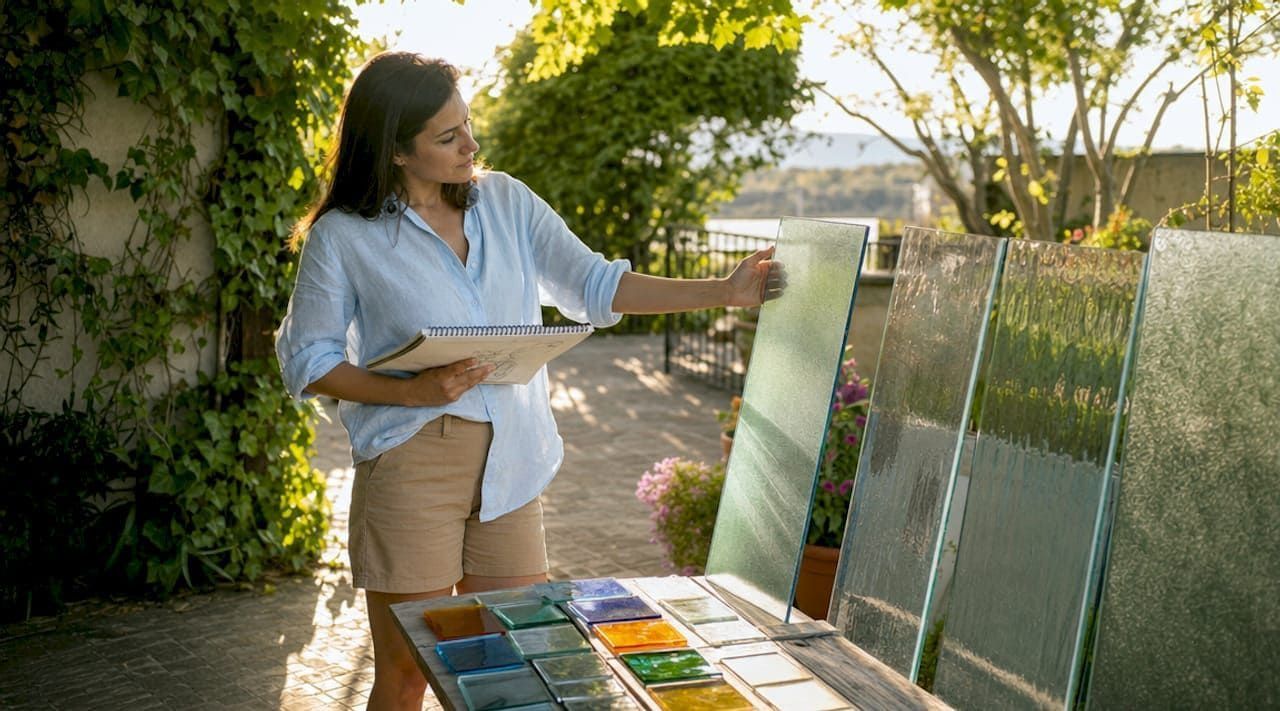
Decorative glass finishes fall into several distinct categories, each with a different performance profile. Understanding the differences helps you match the right finish to the right application rather than choosing by appearance alone.
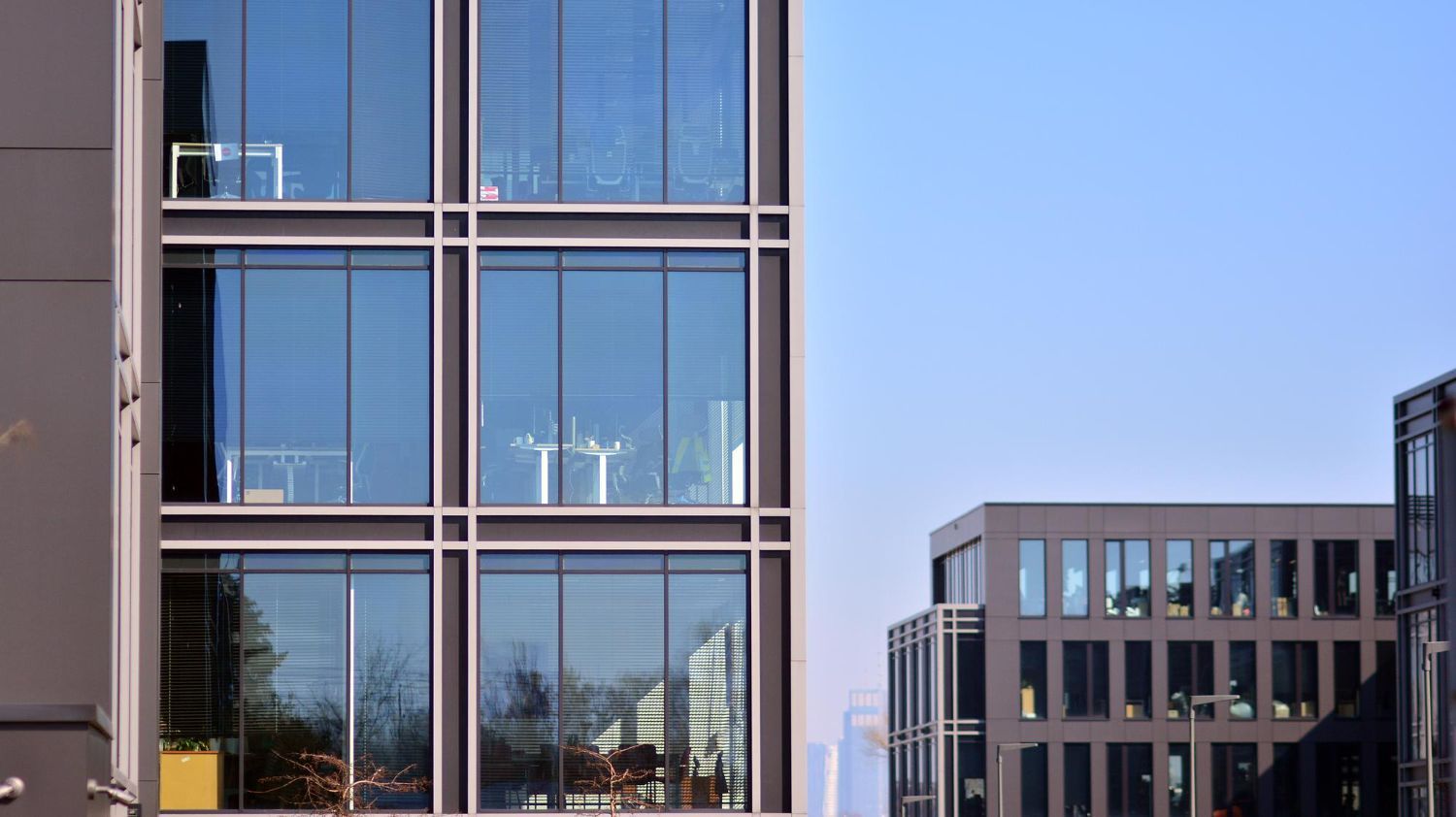
Ceramic frit is a glass-fused coating fired directly onto the surface, making it permanent and weather-resistant. Architects use frit primarily on building facades for solar shading, where frit opacity levels are tuned through panel mockups and solar radiation studies to balance heat gain, daylight penetration, and reflectivity. The result is a facade that reads differently at dawn versus midday, creating dynamic architecture without moving parts.
One-way vision glass like DotView™ uses a perforated or dot-pattern coating that allows clear outward views and daylight entry while blocking inward visibility from brighter exterior conditions. It works in office facades, healthcare partitions, and retail storefronts where occupant privacy matters without sacrificing natural light. Custom colors and patterns make it a branding tool as much as a privacy solution.
Switchable privacy glass takes dynamic control further. ElectraView Zero™ transitions from 70 to 80% visible light transmission in clear mode down to 4 to 10% in opaque mode, with haze rising to 90 to 100% in the obscured state. That range gives occupants real-time control over privacy and glare without blinds or curtains.
Beyond these technologies, several traditional finishes remain widely specified:
- Acid etching and sandblasting create a frosted surface that diffuses light and obscures views. Both are permanent and work well for bathroom glass, office partitions, and decorative panels.
- Tinting introduces color into the glass body or as a surface coating, reducing solar heat gain and glare while adding visual depth.
- Laminated interlayers , including polyvinyl butyral (PVB) and decorative fabric or film layers, add both safety performance and aesthetic texture within the glass unit itself.
| Finish Type | Primary Function | Typical Application |
|---|---|---|
| Ceramic frit | Solar shading, facade modulation | Commercial exteriors, curtain walls |
| One-way vision | Privacy with daylight | Office facades, retail, healthcare |
| Switchable glass | Dynamic privacy control | Conference rooms, bathrooms, partitions |
| Acid etch / sandblast | Light diffusion, static privacy | Residential bathrooms, interior partitions |
| Tinting | Solar control, glare reduction | Residential and commercial windows |
| Laminated interlayer | Safety, decorative texture | Hazardous locations, feature walls |
How do decorative glass finishes contribute to safety and code compliance?
Decorative glass meets safety glazing requirements through performance testing and certification, not through its visual appearance. This distinction matters enormously for designers and architects specifying glass in hazardous locations such as doors, sidelights, shower enclosures, and low-height glazing.
The two governing standards in the United States are ANSI Z97.1 and CPSC 16 CFR 1201. Both require impact and retention testing to verify that glass, when broken, does not produce dangerous shards. A decorative finish does not exempt a glass unit from these requirements. Frit, tinting, etching, and laminated interlayers all qualify as decorative treatments, but each must be tested and certified in its final fabricated form to count toward code compliance.
Here is the compliance process designers should follow when specifying decorative safety glazing:
- Confirm the glass product carries certification from an accredited testing laboratory such as Safety Glazing Certification Council (SGCC).
- Verify the permanent "bug" label is present on the glass unit before installation. This label identifies the manufacturer, standard met, and safety class.
- Specify the finish and safety requirements together in the project documents. Do not treat them as separate line items.
- Coordinate with the fabricator early. Some decorative processes, particularly acid etching applied after tempering, can compromise the safety performance of the base glass.
- For laminated units, confirm that the PVB interlayer performance accounts for the temperature and humidity conditions of the installation environment, since shear modulus varies significantly with aging and climate exposure.
Pro Tip: Request the certification documentation and bug label verification in writing from your fabricator before the glass ships to the job site. Discovering a compliance gap after installation is far more expensive than catching it during procurement.
A common misconception is that a beautiful or custom finish signals quality and safety. Safety compliance is determined by testing and labeling, not by how the glass looks. Custom decorative glass from a boutique fabricator carries the same compliance obligation as standard float glass in a hazardous location.
How do decorative glass finishes influence light management and occupant comfort?
Light management is where decorative glass finishes deliver their most measurable impact on occupant experience. The right finish controls how much daylight enters a space, how that light is distributed, and how much glare reaches occupants at their workstations or living areas.
Ceramic frit on facades demonstrates this most clearly at scale. At the FIU Innovation Building designed by Perkins&Will, frit opacity was tuned through physical mockups and solar studies to optimize shading performance while preserving daylight quality inside. Variable frit concentration across the facade creates zones of differing transparency, so the building modulates its own solar load without mechanical shading systems.
For interior applications, the performance variables shift toward haze and visible light transmission:
- Low haze finishes (acid etch, light tint) diffuse light gently and reduce glare without significantly darkening a space. These work well in offices and living areas where ambient light quality matters.
- High haze finishes (heavy sandblast, switchable glass in opaque mode) scatter light broadly, eliminating direct views and creating a soft, even illumination. Bathroom privacy treatments and conference room partitions benefit most from this approach.
- Dynamic finishes like ElectraView Zero™ let occupants adjust haze in real time, moving between a clear state with low haze and an obscured state with 90 to 100% haze. This eliminates the need for blinds in spaces that alternate between open collaboration and private meetings.
| Finish | Visible Light Transmission | Haze Level | Best Use Case |
|---|---|---|---|
| Clear tint | 40–70% | Low | Solar control, residential windows |
| Acid etch | 60–80% | Medium | Bathroom privacy, office partitions |
| Ceramic frit (50% opacity) | 30–50% | Low to medium | Facade shading, curtain walls |
| Switchable (clear mode) | 70–80% | Low | Conference rooms, open offices |
| Switchable (opaque mode) | 4–10% | 90–100% | Private meetings, healthcare rooms |
Pro Tip: When specifying finishes for south or west-facing glass, combine a solar control tint with a frit or film layer rather than relying on a single treatment. Layered approaches give you independent control over heat gain and privacy without sacrificing daylight quality.
Balancing natural light and privacy is the central design challenge in most residential and commercial glass projects. The finishes above give you a toolkit rather than a single solution, and the best outcomes come from matching the specific performance metrics of each finish to the orientation, occupancy, and visual comfort goals of the space.
Comparing decorative glass finishes: which options suit different architectural needs?
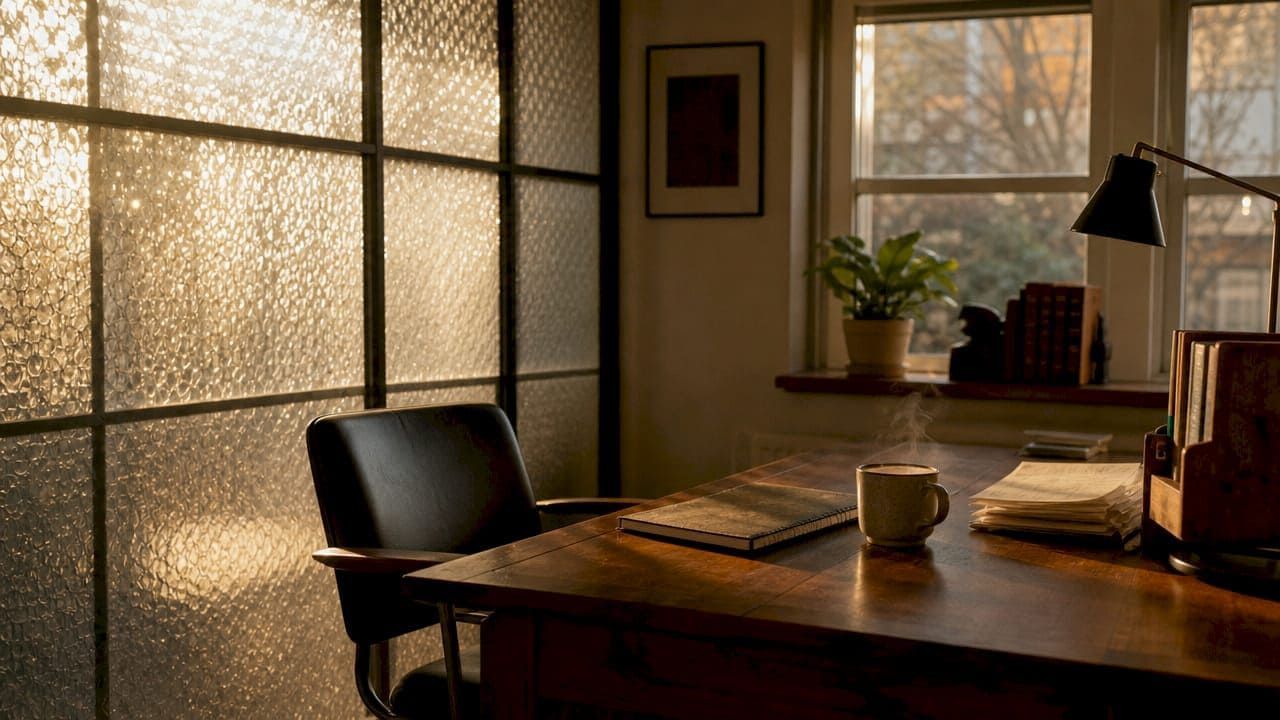
Selecting the right finish requires weighing durability, cost, customization potential, and the specific demands of residential versus commercial projects. No single finish wins across all criteria.
Ceramic frit offers the highest durability since it is fired into the glass surface and cannot delaminate or scratch off. It suits commercial facades and high-traffic interior applications. The tradeoff is cost and lead time. Custom frit patterns require fabricator coordination and mockup approval, making them impractical for small residential projects.
Acid etching and sandblasting are cost-effective for residential use and widely available from local glass shops. They are permanent and maintenance-free but offer no adjustability. Once etched, the privacy level is fixed. These finishes also reduce visible light transmission modestly, which suits bathrooms and privacy partitions but may feel too dark in small rooms with limited natural light.
Switchable glass carries the highest upfront cost of any finish category but delivers the most flexibility. For commercial conference rooms, healthcare facilities, and high-end residential projects, the ability to control privacy dynamically eliminates the need for window treatments entirely, which can offset some of the cost over the building's lifecycle.
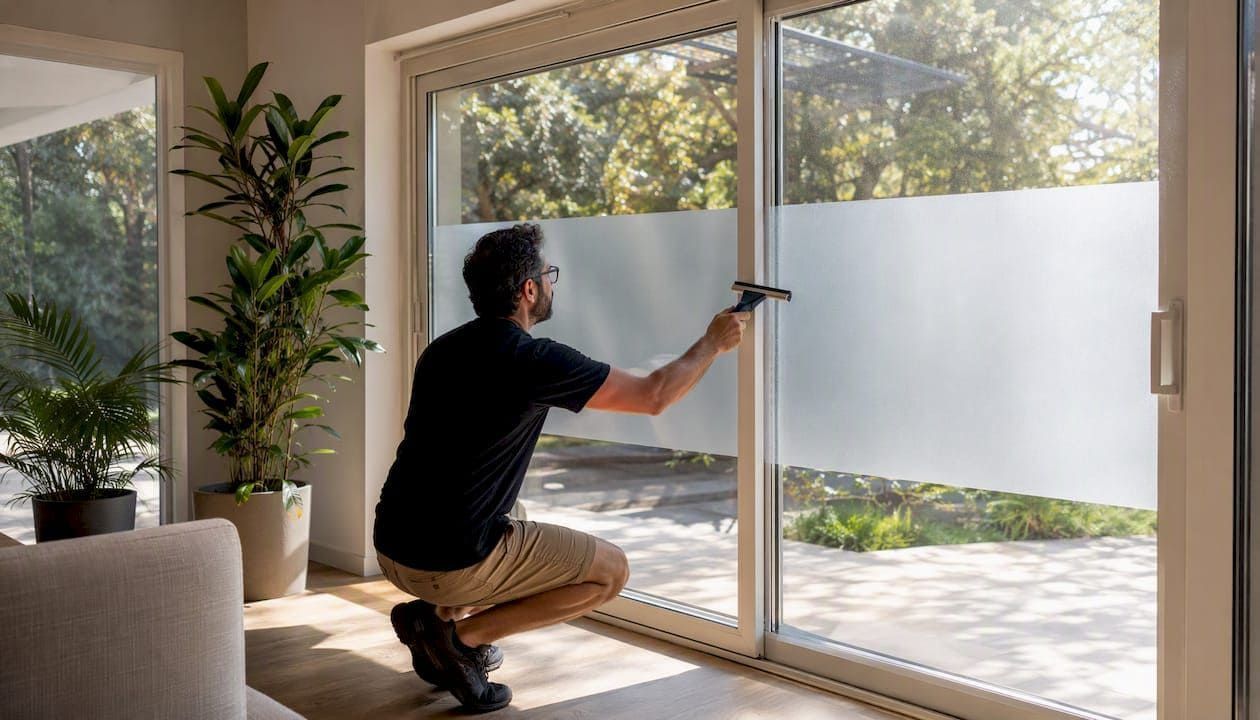
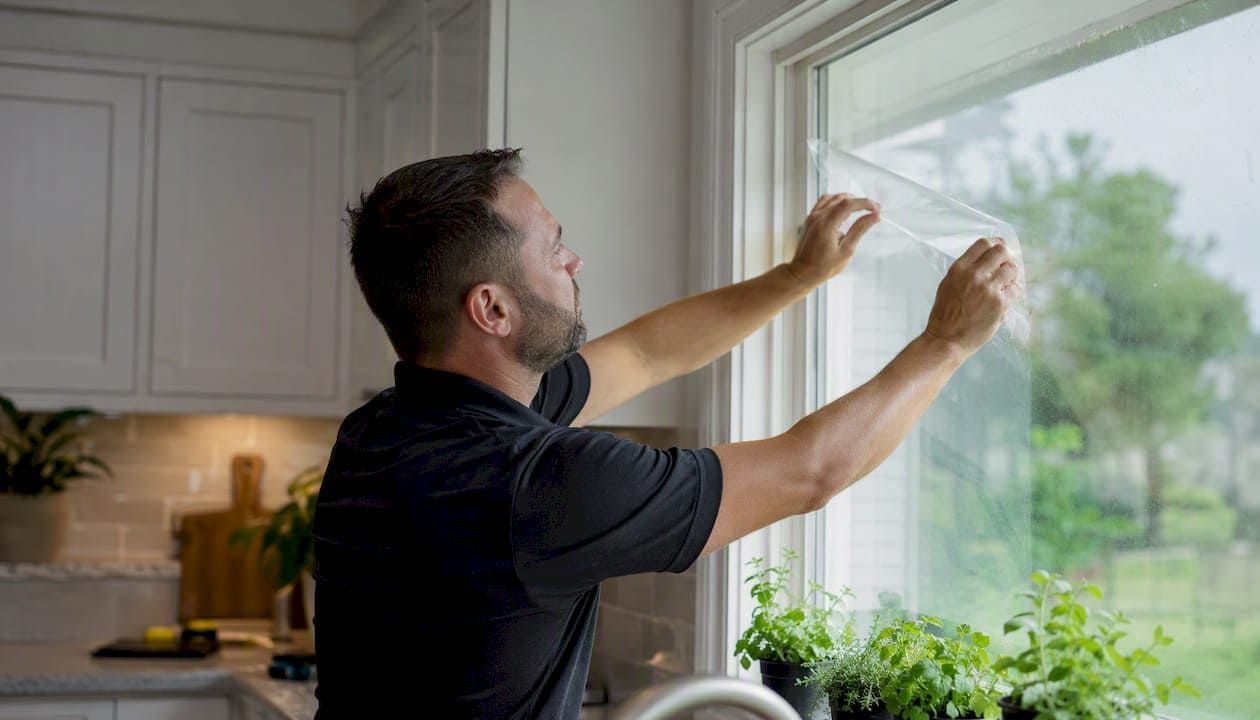
Window films and decorative privacy films , the category where Surfacetint specializes, occupy a practical middle ground. LLumar Vista decorative privacy films apply to existing glass, cost significantly less than fabricated specialty glass, and can be replaced or updated as design needs change. They are compatible with most existing window systems and can contribute to LEED credits through solar control performance. For retrofit projects in Southern New Hampshire and the Greater Boston Area, film-based finishes often deliver the best combination of performance, cost, and installation speed.
For green building projects targeting LEED certification, solar control films and frit finishes both contribute to energy performance credits by reducing cooling loads. Confirm the specific film or glass product's solar heat gain coefficient (SHGC) and visible light transmittance (VLT) values with your energy modeler before specifying.
Key takeaways
Decorative glass finishes serve dual roles as aesthetic design tools and performance components that control light, privacy, and safety compliance simultaneously.
| Point | Details |
|---|---|
| Finishes are performance components | Ceramic frit, switchable glass, and films each deliver measurable solar, privacy, and safety outcomes. |
| Safety compliance is non-negotiable | ANSI Z97.1 and CPSC 16 CFR 1201 apply to decorative glass in hazardous locations regardless of finish type. |
| Light management drives comfort | Matching haze and VLT values to occupancy and orientation produces better outcomes than choosing by appearance. |
| Films offer retrofit flexibility | Decorative privacy films apply to existing glass at lower cost and can be updated as needs change. |
| Early collaboration prevents errors | Coordinating with fabricators and safety consultants before design lock-in avoids costly compliance gaps. |
Why I think most designers underestimate decorative glass finishes
Most design briefs treat glass as a background material. The finish gets specified late, often by a contractor rather than the design team, and the result is a generic product that meets minimum code without contributing to the design intent. That approach wastes one of the most versatile tools available.
What I have seen work consistently is treating the glass finish as a primary design decision, not a finish schedule afterthought. The Perkins&Will approach at FIU, using physical mockups and solar studies to tune frit opacity, is the right model. It takes more time upfront, but the building performs better and looks more intentional. The same logic applies at residential scale. A homeowner who specifies a decorative privacy film for a bathroom window gets privacy, daylight, and a finished aesthetic in one decision. That is a better outcome than a frosted pane ordered off a standard catalog.
The trend toward multifunctional glass finishes becoming standard design components is real and accelerating. Switchable glass is no longer a luxury specification. Films with dual solar and decorative performance are available at price points that work for mid-range residential projects. The technology has caught up with the design ambition. The remaining gap is awareness, specifically, designers and homeowners who do not yet know what is available or how to specify it correctly.
My recommendation: get the glass fabricator or film installer into the design conversation at schematic design, not during construction documents. The decisions that matter most, orientation, opacity, safety class, and finish compatibility, are much easier to get right before the drawings are set.
See your decorative glass options before you commit
Choosing a decorative glass finish is easier when you can see the result before installation. Surfacetint offers an interactive residential film viewer and a commercial film viewer that let you visualize LLumar Vista decorative and privacy films on your actual windows before making a decision. For homeowners and property managers in Southern New Hampshire and the Greater Boston Area, Surfacetint provides professional installation of decorative privacy films, solar control films, and safety films tailored to your project's specific performance and aesthetic goals. Request a free estimate and get a clear picture of what decorative glass finishes can do for your space.
FAQ
What is the role of decorative glass finishes in architecture?
Decorative glass finishes control light transmission, privacy, solar heat gain, and visual character while meeting safety glazing standards. They function as performance components, not purely aesthetic treatments.
Does decorative glass need to meet safety glazing codes?
Yes. Decorative glass in hazardous locations must be tested and certified under ANSI Z97.1 or CPSC 16 CFR 1201 regardless of the finish applied. The decorative treatment does not substitute for safety compliance.
What is switchable privacy glass and how does it work?
Switchable privacy glass like ElectraView Zero™ uses an electrochromic or PDLC layer that shifts from 70 to 80% visible light transmission in clear mode to 4 to 10% in opaque mode when voltage is applied or removed.
How do ceramic frit finishes improve building energy performance?
Ceramic frit reduces solar heat gain by blocking a percentage of direct solar radiation based on opacity level. Architects tune frit concentration through solar studies to optimize shading without eliminating useful daylight.
Are decorative window films a practical alternative to specialty glass finishes?
Decorative window films apply to existing glass at significantly lower cost than fabricated specialty glass, offer comparable privacy and solar control performance, and can be replaced when design needs change, making them the practical choice for most retrofit projects.
Recommended