
Window Film for Skylights: Your 2026 Energy Guide
TL;DR:
- Window film for skylights blocks heat and UV rays while allowing natural light to enter homes. Spectrally selective films are the top choice, offering effective heat rejection and high visible light transmission. Proper installation and compatibility with skylight coatings are essential for long-lasting, effective results.
Window film for skylights is a solar control technology that blocks heat and UV rays while keeping natural light flowing into your home. Professional solar control films can cut heat transfer by up to 78% and reduce cooling loads on HVAC systems by up to 30%. That means real savings on energy bills without boarding up the brightest part of your ceiling. The industry measures film performance using two key standards: Total Solar Energy Rejected (TSER) and Visible Light Transmission (VLT). High-performing films also block up to 99.9% of UV rays, protecting furniture, flooring, and artwork from fading.
What makes the best window film for skylights?
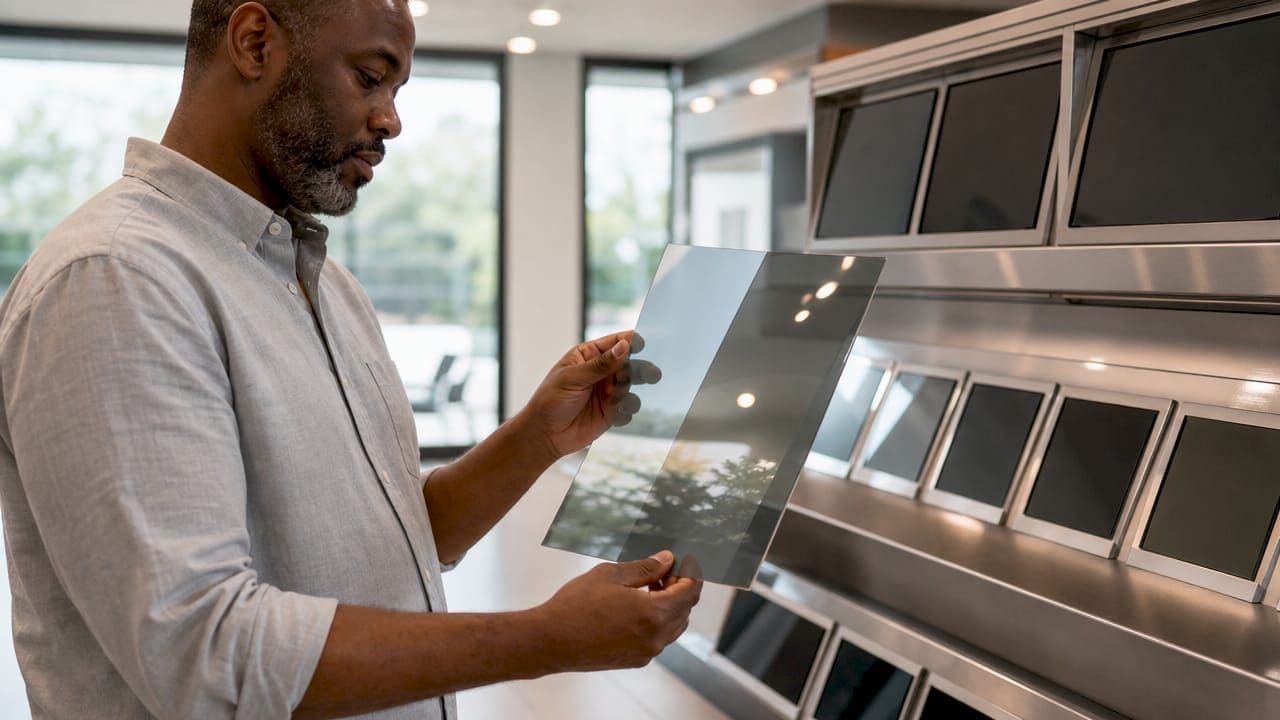
The right skylight film earns its place by hitting strong numbers on two core metrics. TSER measures how much total solar energy the film rejects. VLT measures how much visible light still passes through. A film with 70% VLT delivers high natural light with noticeably less glare. That combination is exactly what most homeowners and property managers want from a skylight.
Film types and what they do
Not all skylight window tint is built the same. The three main film technologies each make a different trade-off between performance, appearance, and cost.
- Metalized films use a thin metallic layer to reflect solar heat. They perform well on heat rejection but can interfere with cell signals and have a reflective appearance some homeowners dislike.
- Ceramic films use nano-ceramic particles to absorb and reject heat without metal. They offer excellent clarity, no signal interference, and strong UV blocking.
- Spectrally selective films target only the infrared wavelengths that produce heat. Spectrally selective films allow high VLT with effective heat control, making them the top choice for skylights where brightness matters.
Key performance metrics at a glance
| Metric | What it measures | Good range for skylights |
|---|---|---|
| TSER | Total solar energy rejected | 50% or higher |
| VLT | Visible light passing through | 40–70% for most homes |
| UV blocking | Harmful UV rays stopped | 99% or higher |
| Infrared rejection | Heat-producing rays blocked | 80% or higher |
Modern films prevent the traditional darkening effect that older tints caused. You get a bright, comfortable room without the greenhouse heat.
How to choose the right skylight film for your property
Choosing a skylight film starts with knowing your glass. Flat glass skylights accept most standard films without issue. Curved, domed, or heavily textured skylights are a different story. Traditional solar films cannot conform to non-flat surfaces, which leads to bubbling, peeling, and poor adhesion. If your skylight is domed or ribbed, film is not a viable option without specialty products.
Once you confirm your glass is flat and compatible, work through these decision points:
- Heat vs. light balance. A high TSER film blocks more heat but may reduce brightness. Use VLT to dial in the right light level for the room below.
- Film technology. Spectrally selective and nano-ceramic films give the best balance of heat rejection and clarity. Metalized films cost less but look more reflective.
- Internal vs. external installation. External films block solar heat before it gets absorbed by the glass, which is more effective. Internal films are safer to install and are the only option when the skylight has a self-cleaning coating on the exterior.
- Coating compatibility. Many skylights have silicone or titanium dioxide self-cleaning coatings. These coatings prevent exterior adhesive bonding, making internal installation the only safe choice.
- Privacy and aesthetics. Darker tints add privacy from above. Lighter tints keep the room feeling open. Decorative films add a frosted or patterned look if privacy is the main goal.
Pro Tip: Before buying any film, check your skylight manufacturer's documentation for existing coatings. Installing an adhesive film over a self-cleaning surface will cause it to fail within months.
If you want a deeper look at how to match film specs to your home's needs, Surfacetint's guide on choosing the right film walks through the full decision process.
How to install skylight film step by step
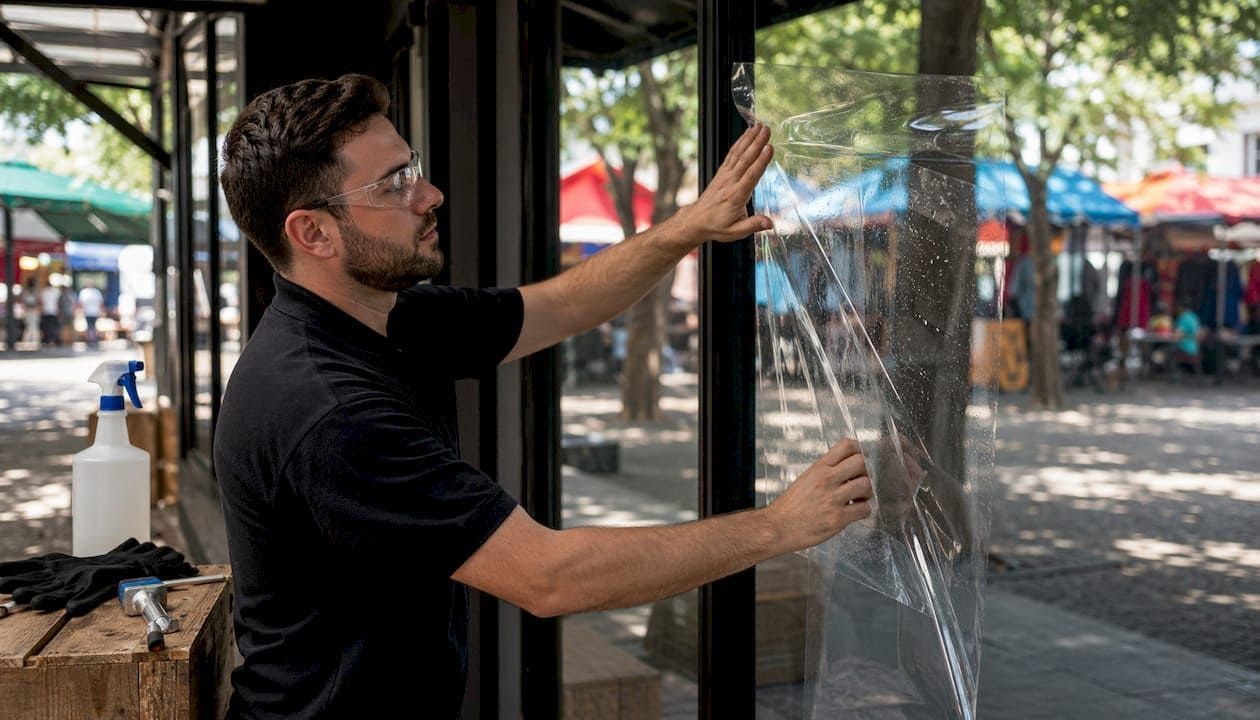
Installing skylight window film on a flat, accessible skylight is a manageable DIY project. On sloped or roof-mounted skylights, professional installation is the safer and more durable choice. Either way, the process follows the same core steps.
Tools and materials you need
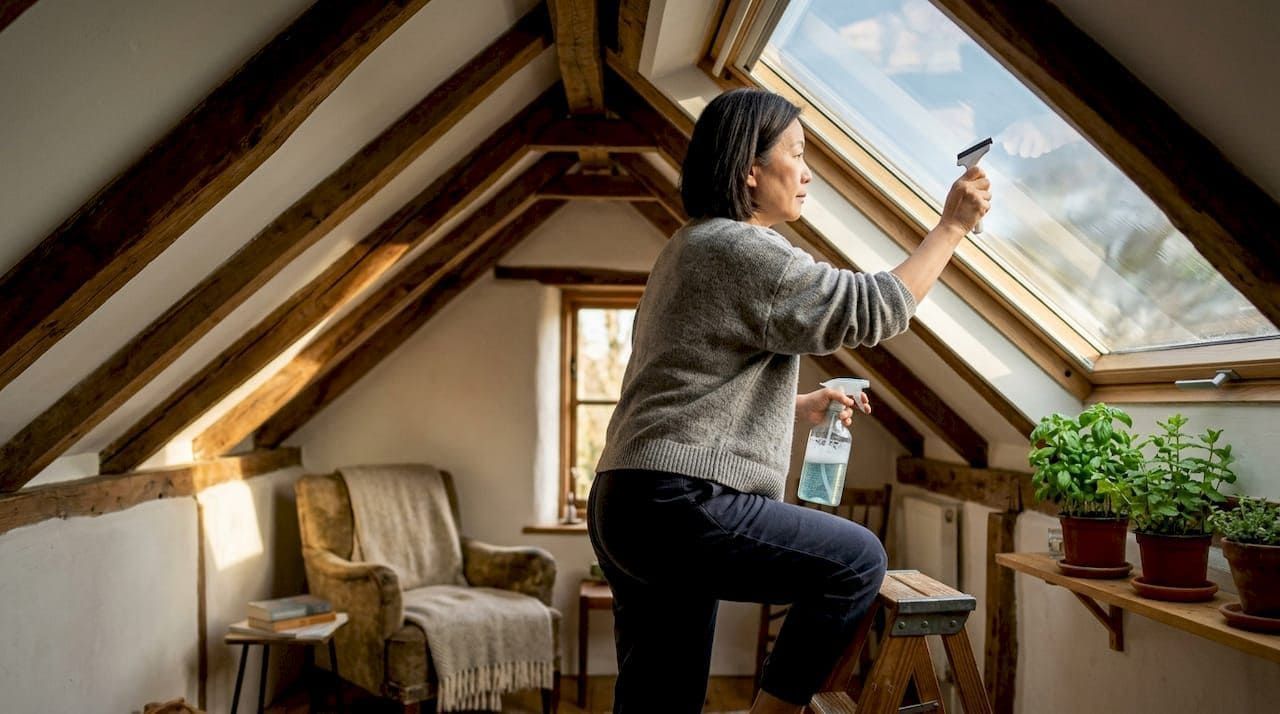
Gather these before you start: a spray bottle with a soapy water solution, a squeegee, a sharp utility knife, a lint-free cloth, a tape measure, and the film itself. Clean hands and a dust-free environment matter more than most people expect.
Step-by-step installation process
- Clean the glass thoroughly. Remove all dust, grease, and residue. Any particle trapped under the film will create a permanent bubble. Use a razor blade scraper on stubborn spots, then wipe with a lint-free cloth.
- Measure and cut the film. Measure the skylight pane and cut the film about one inch larger on each side. You will trim the excess after application.
- Wet the glass. Spray the glass surface generously with the soapy water solution. This lets you reposition the film during application.
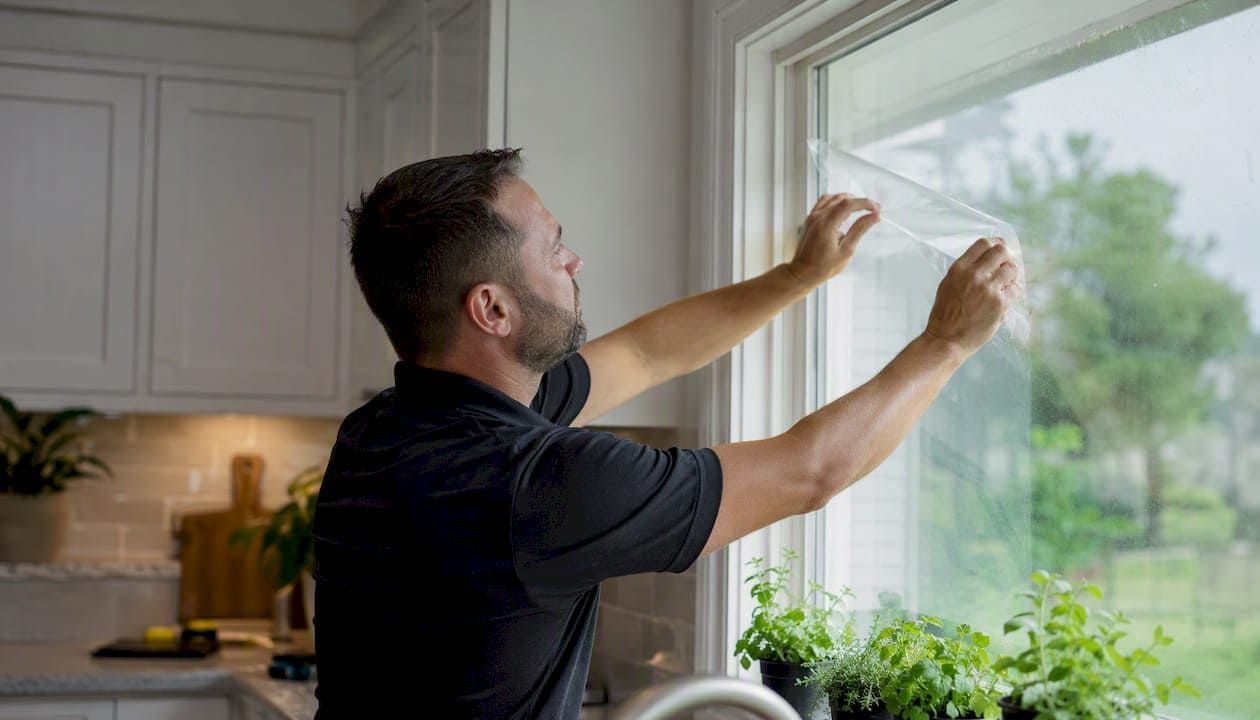
- Peel and apply. Peel the film backing while spraying the adhesive side with the solution. Lay the film onto the wet glass and slide it into position.
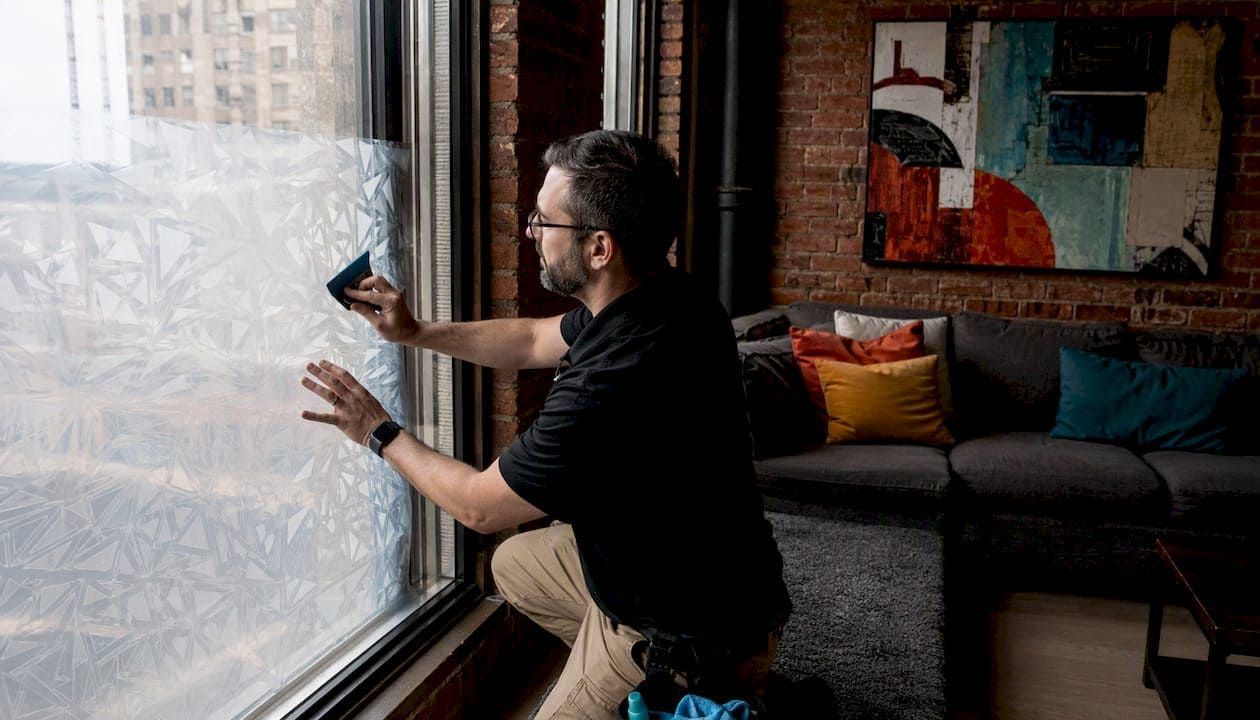
- Squeegee out the water. Work from the center outward in firm, overlapping strokes. Push all water and air to the edges.
- Trim the edges. Use the utility knife to trim the film flush with the frame. A straight edge gives a clean cut.
- Final squeegee pass. Go over the entire surface one more time to remove any remaining moisture.
Pro Tip: Freshly applied film looks hazy for up to 30 days while the adhesive cures and residual water evaporates. Do not judge the final result until the curing period is complete.
Common installation challenges
| Challenge | Cause | Fix |
|---|---|---|
| Persistent bubbles | Trapped air or debris | Re-squeegee from center outward; remove debris before reapplying |
| Film won't stick | Coated or dirty glass | Clean again; check for self-cleaning coating |
| Wrinkles at edges | Film cut too large | Trim closer to the frame and re-squeegee |
| Film slides during application | Too much water | Reduce spray and work faster |
For a detailed look at what professional installation involves, Surfacetint covers what to expect during installation on their site.
How do you maintain and troubleshoot skylight film?
Skylight film lasts longer when you clean it correctly. Use a soft cloth or rubber squeegee with a mild, non-abrasive cleaner. Avoid ammonia-based products like standard glass cleaners. Ammonia breaks down the film's adhesive layer over time, causing early peeling.
Watch for these signs that your film needs attention:
- Peeling at the edges. This usually means the adhesive has failed, often from incompatible coatings or cleaning products.
- Bubbling across the surface. Small bubbles during the first 30 days are normal. Bubbles that appear after curing signal adhesive failure or trapped moisture.
- Discoloration or purple tint. Older dye-based films fade and shift color. This is a sign the film has reached the end of its life.
- Haze that won't clear. Persistent haze after the curing period points to a contaminated surface during installation.
Thermal stress is a serious risk specific to skylights. Non-rated films on horizontal glass degrade quickly from thermal stress, causing peeling or even glass seal failure. Always use a film rated for horizontal or sloped glass applications. Surfacetint's LLumar Vista Films are rated for these conditions, which is why professional installation from a qualified dealer matters on skylight projects.
When peeling covers more than a small edge area, replacement is more cost-effective than repair. A professional can assess whether the glass itself has been affected and recommend the right film for a second installation.
Key Takeaways
Window film for skylights delivers the best results when you match film type, glass compatibility, and installation method to your specific property.
| Point | Details |
|---|---|
| Heat and UV performance | Quality films cut heat transfer by up to 78% and block up to 99.9% of UV rays. |
| Film type selection | Spectrally selective films give the best balance of heat rejection and natural light for skylights. |
| Glass compatibility | Curved, domed, or coated skylights require specialty films or internal installation only. |
| Installation method | External installation performs better; internal is required when self-cleaning coatings are present. |
| Maintenance matters | Use non-ammonia cleaners and choose films rated for horizontal glass to prevent early failure. |
Why I always recommend spectrally selective film for skylights
The most common mistake I see homeowners make is choosing a film based on heat rejection alone. They pick the highest TSER number on the spec sheet, install it, and then wonder why their living room feels like a cave. Heat rejection and brightness are not opposites. The right film technology handles both.
Spectrally selective films changed the game for skylight applications. They filter out infrared heat while letting visible light pass at a high rate. The room stays bright. The heat stays out. That is the result you are paying for.
The second thing I push back on is the assumption that DIY installation on a skylight is always fine. On a vertical window, a small mistake is easy to fix. On a sloped or roof-mounted skylight, a bad install means water infiltration risk, adhesive failure from thermal stress, and a film that peels within a season. If your skylight is on the roof and not easily accessible from inside, get a professional. The cost difference is small compared to replacing the film twice.
One more thing worth saying: check your glass before you buy anything. I have seen homeowners order premium film, prep the surface, and then discover their skylight has a factory self-cleaning coating that makes exterior adhesion impossible. That is a wasted afternoon and a return shipping label. Two minutes with your skylight's documentation saves all of it.
The sun protection benefits of a well-chosen skylight film are real and lasting. Get the film type right, confirm your glass compatibility, and the results will hold for years.
Professional skylight tinting from Surfacetint
Getting skylight film right the first time saves you from early failure, wasted product, and repeat installations. Surfacetint installs LLumar Vista Solar Control Films rated for horizontal and sloped glass across Southern New Hampshire and the Greater Boston Area.
Every installation comes with a professional assessment of your skylight type, glass coating, and the best film match for your heat and light goals. Surfacetint is an exclusive LLumar SelectPro Dealer, which means the films carry manufacturer-backed performance warranties. You can also use the residential film viewer tool to preview how different films look on your windows before committing. Ready to get started? Request a free estimate and get a recommendation specific to your property.
FAQ
What is the best window film for skylights?
Spectrally selective films are the best choice for most skylights because they reject infrared heat while keeping visible light transmission high. They prevent overheating without darkening the room.
Can window film block UV rays through a skylight?
Yes. High-quality skylight films block up to 99.9% of UV rays, protecting furniture, flooring, and artwork from fading caused by sun exposure.
Can you put window film on a curved or domed skylight?
Standard solar films cannot adhere properly to curved or domed skylights and will bubble and peel. Flat glass skylights are the only surface where traditional film installation works reliably.
How long does skylight window film last?
Quality films rated for horizontal glass typically last 10–15 years with proper care. Using ammonia-free cleaners and choosing a film rated for sloped applications extends the lifespan significantly.
Is external or internal skylight film installation better?
External installation performs better because it blocks solar heat before the glass absorbs it. Internal installation is required when the skylight has a self-cleaning exterior coating that prevents adhesive bonding.
Recommended