
UV Protection Film Examples for Homeowners in 2026
TL;DR:
- UV protection films, available in clear, ceramic, reflective, and dual-reflective types, block up to 99% of UV rays, protecting interiors without altering appearance. Selecting the right film depends on your goals, window orientation, and performance metrics like TSER and VLT, with ceramic films offering balanced benefits for most homes. Professional installation ensures durability and optimal performance, while evaluating full specifications rather than UV rejection alone guarantees true comfort and effectiveness.
UV protection film is a thin polyester layer applied directly to window glass that blocks up to 99% of ultraviolet rays, protecting your skin, furniture, and flooring without changing how your home looks from the inside. The industry term for this product category is solar control window film, and it covers everything from completely clear UV-blocking options to ceramic tinted and dual-reflective films. Whether you manage a rental property in Boston or own a sun-drenched home in Southern New Hampshire, the right UV protection film examples covered here will help you match the product to your specific goals. Leading product lines like the Concord ComforTech Ceramic Series and LLumar Vista Solar Control Films prove that high performance and good looks are not mutually exclusive.
1. What are the main types of UV protection films?
UV protection films fall into four primary categories, each built around a different technology and suited to different homeowner priorities.
- Clear UV films are completely transparent and block 99% UV rays without adding any tint or color shift. They are the go-to choice when you want invisible protection, particularly on decorative windows or in rooms where natural light is non-negotiable.
- Ceramic tinted films use non-metallic ceramic particles to reject heat and UV rays simultaneously. The Concord ComforTech Ceramic Series, for example, ranges from 45% to 7% visible light transmission (VLT) while blocking over 99% of UV. Ceramic films do not interfere with cell signals or electronics, which matters in home offices and smart-home setups.
- Reflective films incorporate a thin metallic layer that bounces solar energy away from the glass. They deliver strong heat rejection but give windows a mirror-like appearance from outside. Silver 15 is a widely recognized example, offering aggressive solar control for utility rooms or west-facing windows where aesthetics are secondary.
- Dual-reflective films combine a reflective exterior coating with a lower-reflectivity interior surface. The Flexfilmstore Dual Reflective Film blocks 99% UV rays while providing daytime privacy and reducing the indoor mirror effect that standard metallic films create at night.
Pro Tip: If you are unsure which type fits your space, start with a ceramic film at 35% VLT. It covers most homeowner goals: UV blocking, heat control, glare reduction, and a neutral appearance that works in living rooms, bedrooms, and kitchens.
2. How UV film performance metrics actually work
Every film manufacturer publishes a spec sheet, but comparing SHGC, TSER, VLT, and IR rejection gives you a far more complete picture than any single number. Here is what each metric means for your daily comfort.
Visible Light Transmission (VLT) measures the percentage of daylight that passes through the film. A film rated at 45% VLT lets in nearly half of available daylight, while a 7% VLT film creates a very dark interior. Higher VLT keeps rooms bright; lower VLT reduces glare more aggressively.
Total Solar Energy Rejected (TSER) measures the percentage of total solar energy the film keeps out, including UV, visible light, and infrared heat. A higher TSER directly lowers your cooling load. The ComforTech Ceramic Series rejects between 51% and 82% total solar energy depending on shade, which translates to measurable reductions in summer air conditioning use.
Solar Heat Gain Coefficient (SHGC) is the flip side of TSER. It expresses how much solar heat actually enters the room. A lower SHGC means less heat gain, which is what you want on south- and west-facing windows.
U-value measures how quickly heat transfers through the glass assembly in either direction. Films with low U-value improve year-round insulation, cutting both summer cooling and winter heating costs. Most homeowners overlook U-value entirely, focusing only on summer heat rejection.
| Film type | VLT | TSER | UV rejection |
|---|---|---|---|
| Clear UV film (Concord 2 Mil) | ~90% | ~25% | 99% |
| Ceramic 45 (ComforTech) | 45% | 51% | >99% |
| Ceramic 20 (ComforTech) | 20% | 72% | >99% |
| Ceramic 07 (ComforTech) | 7% | 82% | >99% |
| Dual-reflective (Flexfilmstore) | ~15% | ~70% | 99% |
Pro Tip: Do not choose a film based on UV rejection alone. Nearly every quality film hits 99%. The real differentiator is TSER and VLT combined, because those two numbers determine how comfortable and bright your room actually feels.
3. Popular UV protection film examples and their best home applications
Understanding the product options in concrete terms makes the selection process far less overwhelming. Here are the most relevant UV protection film examples for residential use, along with where each one performs best.
- Concord 2 Mil Clear UV Film. This film is completely transparent yet blocks 99% UVA and UVB rays. It suits art studios, sunrooms, and any room where you want maximum daylight with zero color change. It does not significantly reduce heat, so pair it with interior shading in very hot climates.
- Concord ComforTech Ceramic 45. At 45% VLT and 51% TSER, this film is the lightest shade in the ceramic series. It works well in living rooms and dining areas where you want a bright, open feel while still cutting UV and moderate heat. The ceramic construction means no signal interference with smart home devices.
- Concord ComforTech Ceramic 20. Dropping to 20% VLT pushes TSER to 72%, making this the right choice for home offices and bedrooms on south-facing walls. Glare on screens drops noticeably, and the room stays cooler without heavy curtains.
- Concord ComforTech Ceramic 07. The darkest option in the series at 7% VLT and 82% TSER. This is a specialty film for garages, utility rooms, or west-facing windows in very sunny regions. It is not practical for living spaces where natural light matters.
- Silver 15 Reflective Film. A metallic film with a strong mirror effect on the exterior. It delivers aggressive heat and glare control and suits commercial-style applications in residential settings, such as a home gym or workshop with large windows. The mirror appearance limits its use in front-facing windows where curb appeal matters.
- Flexfilmstore Dual Reflective Film. This film solves the biggest complaint about standard reflective films: the indoor mirror effect at night. Ceramic films reduce interior reflectivity compared to metallic options, and dual-reflective designs take that further by engineering a lower-reflectivity interior layer. It is the best fit for bedrooms and living rooms where privacy during the day and a clear view at night both matter.
- LLumar Vista Solar Control Films. Surfacetint installs LLumar Vista films as an exclusive LLumar SelectPro Dealer. These solar control films cover the full range from clear UV protection to high-performance ceramic options, all backed by manufacturer warranties and independent performance testing.
4. How to choose the right film for your home
Selecting the best UV blocking film comes down to matching your primary goals to the right performance profile. Work through these steps before you buy or schedule an installation.
- Define your primary goal. UV rays cause approximately 40% of indoor fading on furniture and floors. If fading prevention is your top concern, any 99% UV-blocking film works. If heat reduction is the priority, focus on TSER above 60%.
- Map your window orientation. South- and west-facing windows receive the most direct sun and benefit most from higher TSER films. North-facing windows rarely need more than a clear UV film.
- Consider your existing glass type. Low-E glass already provides some solar control. Adding a high-TSER film to existing Low-E glass can over-restrict light and create thermal stress. Check with a professional before applying film to specialty glass.
- Check for independent certification. IWFA accreditation and testing procedures verify that a film's published performance numbers match real-world results. Films certified through recognized testing programs give you reliable data rather than marketing claims.
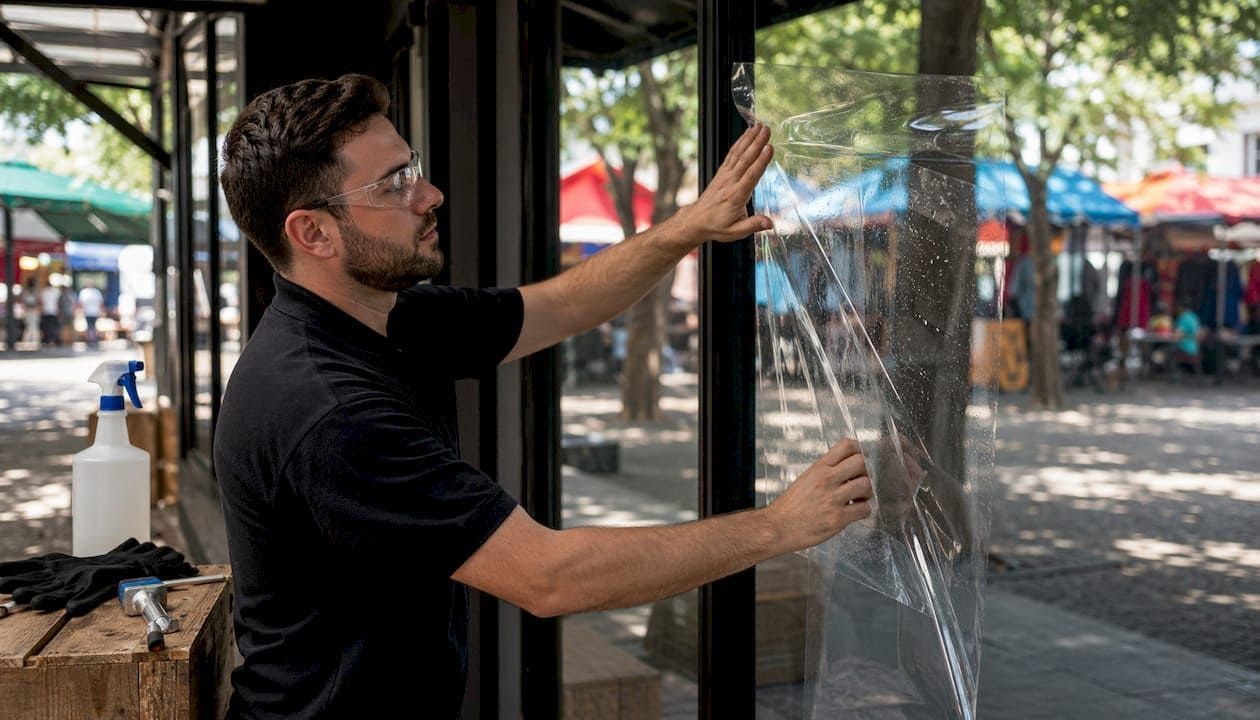
- Weigh DIY against professional installation. DIY installation requires skill to avoid bubbles and to maximize performance. Professional installation protects your warranty and guarantees the film seats correctly on every pane.
Pro Tip: Request physical samples from your installer and tape them to your windows for a few days before committing. Lighting changes throughout the day, and what looks neutral at noon can feel dark by late afternoon.
5. Comparing UV film types: benefits, drawbacks, and cost
Choosing between film types means weighing real trade-offs, not just picking the highest-performing spec sheet.
| Film type | Key benefit | Main drawback | Relative cost |
|---|---|---|---|
| Clear UV film | Invisible protection, max daylight | Minimal heat rejection | Low |
| Ceramic tinted | Balanced UV, heat, and glare control | Darker shades reduce natural light | Medium to high |
| Reflective (metallic) | Strong heat rejection, low cost | Mirror appearance, indoor glare at night | Low to medium |
| Dual-reflective | Daytime privacy, reduced night glare | Less daylight than clear films | Medium to high |
Clear films cost the least and suit preservation-focused applications. Ceramic films carry a higher price but deliver the most balanced performance for everyday living spaces, which is why they dominate residential installations. Reflective metallic films are the most affordable heat-control option, but reflective films may produce mirror effects indoors especially at night, limiting their appeal in bedrooms and living rooms. Dual-reflective films sit at a similar price point to ceramics and solve the night-glare problem, making them a strong choice for property managers who need a single film that works across multiple room types.
Longevity varies by product quality and installation method. Professionally installed ceramic and dual-reflective films from brands like LLumar typically carry warranties of 10 to 15 years. Budget reflective films installed without professional guidance often degrade within five years, peeling at the edges and losing adhesion. The cost difference between a budget film and a professional-grade ceramic film is usually recovered within a few cooling seasons through reduced energy bills.
Key takeaways
UV protection films that block 99% of UV rays are available in clear, ceramic, reflective, and dual-reflective types, and matching the film to your room's orientation and use determines how much comfort and protection you actually gain.
| Point | Details |
|---|---|
| All quality films block 99% UV | UV rejection is the baseline, not the differentiator. Focus on TSER and VLT for real comfort gains. |
| Ceramic films suit most living spaces | ComforTech Ceramic Series balances UV blocking, heat rejection, and daylight across shades from 45 to 07. |
| Clear films preserve aesthetics | Concord 2 Mil Clear UV Film blocks UV without any tint, ideal for art rooms and sunrooms. |
| Dual-reflective solves night glare | Flexfilmstore Dual Reflective Film provides daytime privacy without the indoor mirror effect at night. |
| Professional installation protects investment | Certified installers like Surfacetint ensure warranty coverage and correct application on specialty glass. |
What I've learned after years of watching homeowners choose the wrong film
Most homeowners walk into a film selection conversation focused entirely on how dark the tint looks. That is the wrong starting point. The visible light transmission number tells you almost nothing about how comfortable a room will feel, because two films with identical VLT ratings can have TSER values that differ by 20 percentage points.
The metric I watch most closely is TSER combined with U-value. A film that rejects 70% of solar energy but has a poor U-value will still let heat bleed through on cold nights, which means your heating system works harder in January. The best films for year-round comfort address both directions of heat flow, not just summer sun.
My honest recommendation for most living spaces is a ceramic film in the 20% to 35% VLT range. It handles UV, heat, and glare without making rooms feel like a cave, and it avoids the night-glare problem that metallic reflective films create. For property managers handling multiple units, a single ceramic film specification applied consistently across all south- and west-facing windows is the most defensible choice for tenant comfort and reduced HVAC complaints.
One warning I give every client: be skeptical of any film sold purely on UV rejection percentage. Nearly every film on the market hits 99%. If a salesperson leads with that number and nothing else, ask for the full spec sheet with TSER, VLT, SHGC, and U-value. A reputable product will have all four figures available, tested by an independent lab.
See how the right film looks on your home before you commit
Surfacetint serves homeowners and property managers across Southern New Hampshire and the Greater Boston Area as an exclusive LLumar SelectPro Dealer. Before scheduling an installation, use the residential film viewer tool to preview how different film types look on your actual windows. When you are ready to move forward, the professional installation process covers everything from glass assessment to final inspection, with warranty-backed results. Request a free home tinting estimate to get specific product recommendations and pricing for your property. Browse the completed project gallery to see real results across a range of home styles and window configurations.
FAQ
Do clear UV films actually block UV without tinting windows?
Yes. Clear UV films like the Concord 2 Mil use UV-blocking compounds in the adhesive layer, blocking 99% of UVA and UVB rays with no visible tint or color change.
What is the difference between TSER and UV rejection?
UV rejection measures only ultraviolet rays, while TSER measures total solar energy rejected including UV, visible light, and infrared heat. A film can block 99% UV but still allow significant heat gain if its TSER is low.
Which UV protection film is best for reducing furniture fading?
Any film blocking 99% UV addresses the UV portion of fading, but UV causes roughly 40% of indoor fading. Ceramic films with high TSER also reduce heat and visible light, which together cover the remaining fading causes more completely.
Can I install UV window film myself?
DIY installation is possible on flat, standard glass, but bubbles and improper adhesion reduce performance and void most manufacturer warranties. Professional installation by a certified dealer like Surfacetint guarantees correct application and full warranty coverage.
How long do UV protection films last?
Professional-grade ceramic and dual-reflective films installed by certified dealers typically carry warranties of 10 to 15 years. Budget films or improperly installed products often degrade within five years, showing peeling and adhesion failure at the edges.
Recommended