
Why Secure Glass in Businesses Matters for Safety
TL;DR:
- Secure glass enhances commercial building defenses by delaying forced entry and preventing injury through fragment retention. Laminated glass outperforms tempered glass by holding together under attack, providing critical time for security response. It integrates into layered security strategies, supporting detection, surveillance, and environmental design for comprehensive protection.
Secure glass is specialized commercial glazing engineered to resist forced entry, absorb impacts, and retain fragments after breakage, providing continuous protection for people and assets without requiring power or staff intervention. Standard commercial glass shatters on impact and falls away, leaving your building open in seconds. Security glazing, by contrast, holds together under attack, buying critical time for alarms to trigger and law enforcement to respond. Technologies like laminated security glazing, ionoplast interlayers such as SentryGlas, and retrofit security films from LLumar Vista Films have made it practical for businesses of every size to upgrade their glass without a full window replacement.
Why secure glass in businesses outperforms standard commercial glazing
The core difference between secure glass and ordinary commercial glass comes down to what happens after the first impact. Standard annealed glass breaks into large, sharp shards. Tempered glass shatters into small pieces and falls away entirely, clearing the opening for an intruder within moments. Laminated glass holds together after cracking, forcing anyone attempting entry to contend with a tough interlayer membrane rather than an open hole.
That behavioral difference is the foundation of commercial glass security. Fragment retention does two things simultaneously: it prevents injury from flying shards, and it denies fast, quiet access. A smash-and-grab attempt on a standard storefront window takes under ten seconds. The same attempt on a laminated security unit can take several minutes of loud, visible effort, which is exactly the kind of deterrence that changes criminal decision-making.
Security glass delays forced entry and vandalism attempts by creating noisy, time-consuming barriers that increase the chances of deterrence and law enforcement intervention. The goal is not to make glass impenetrable. The goal is to make breaking through it take long enough that the attempt fails or gets interrupted.
Pro Tip: When evaluating secure glass products, ask specifically about post-breakage behavior, not just impact resistance ratings. A product that cracks but stays in the frame is far more valuable than one that resists the first blow but collapses on the second.
Here is what separates secure glazing from standard options at a glance:
- Fragment retention: Laminated units keep broken glass bonded to the interlayer, preventing injury and maintaining the barrier.
- Forced-entry delay: Security glazing resists forced entry against theft, riots, smash-and-grab attacks, and storm debris with always-on defense.
- Noise generation: Repeated impact on a laminated unit creates significant noise, attracting attention and discouraging continued attack.
- No power dependency: Unlike electronic access controls, secure glass works continuously without electricity, network connectivity, or staff presence.
What secure glass options are available for commercial use?
The term "secure glass" covers several distinct product categories, and choosing the wrong one for your threat profile wastes money without improving protection. Here is how the main options compare.
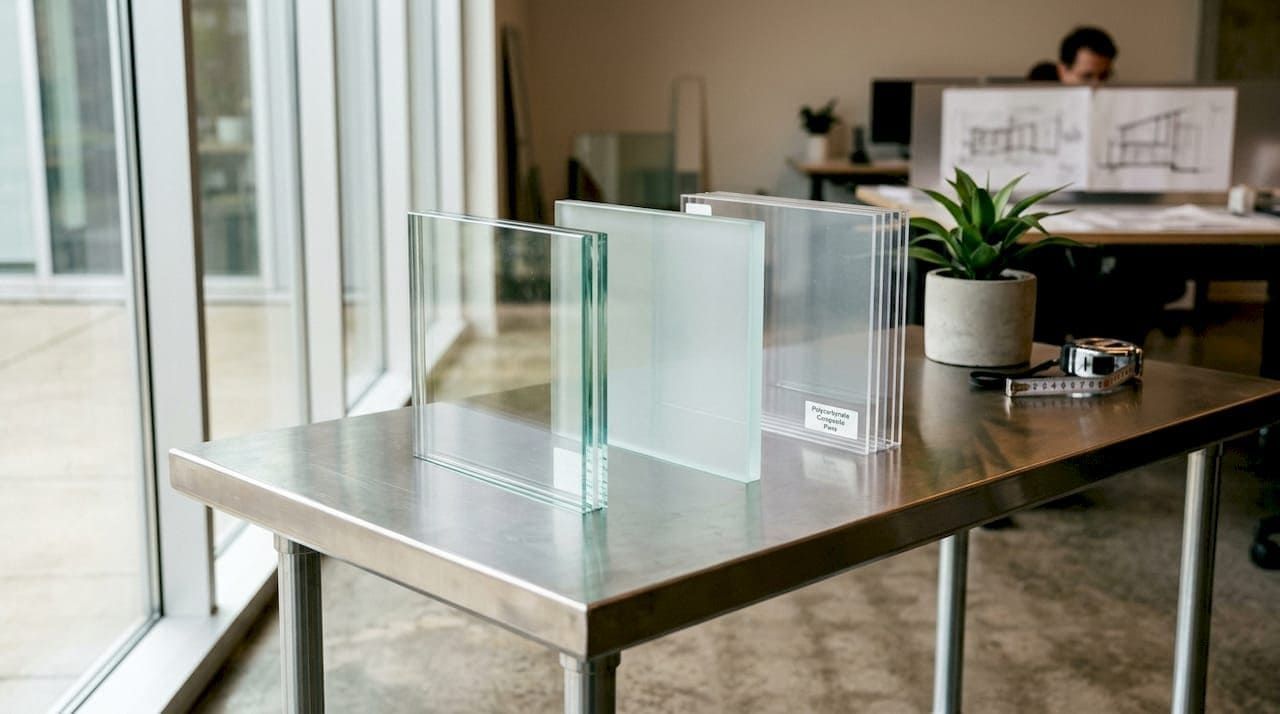
Laminated glass bonds two or more glass panes around a polyvinyl butyral (PVB) or ionoplast interlayer. Ionoplast interlayers like SentryGlas provide significantly higher tear strength and stiffness than standard PVB, improving blast resistance and post-breakage behavior. Laminated glass is the gold standard for storefronts, ground-floor offices, and any opening that faces a public street.
Tempered glass is heat-treated to increase surface strength, making it roughly four times harder to break than annealed glass. However, when it does break, it shatters completely. This makes it a strong safety product but a weak security product. It belongs in interior applications and overhead glazing, not in perimeter openings where forced entry is a concern.
Polycarbonate composite glazing layers polycarbonate with glass to create extremely high impact resistance. Products in this category, including systems from RiOT Glass, are used in high-risk retail environments, financial institutions, and government facilities. The trade-off is cost and, in some products, slight optical distortion.
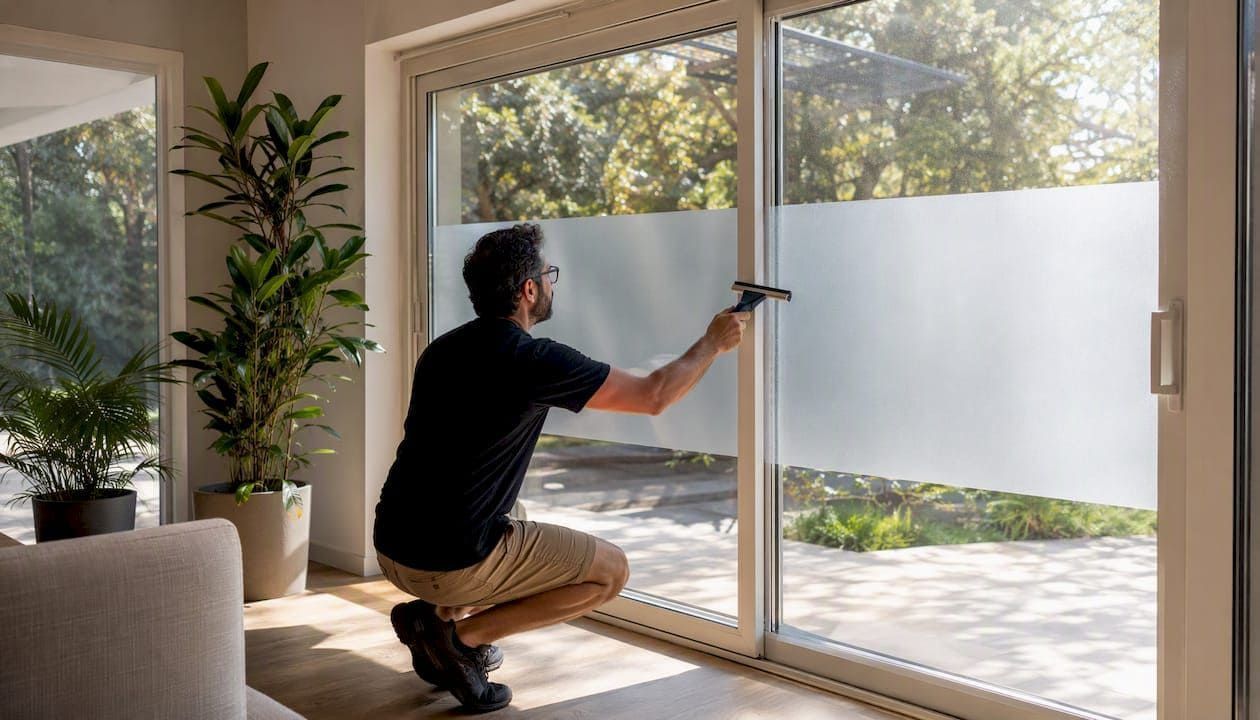
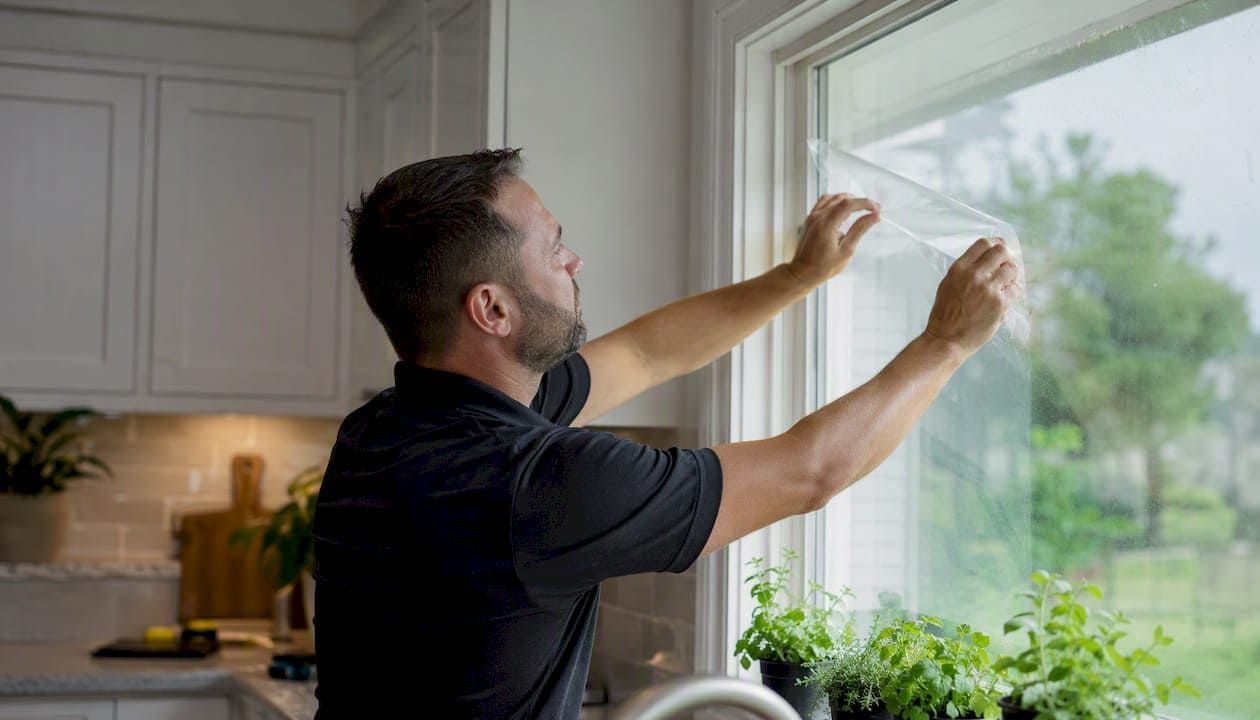
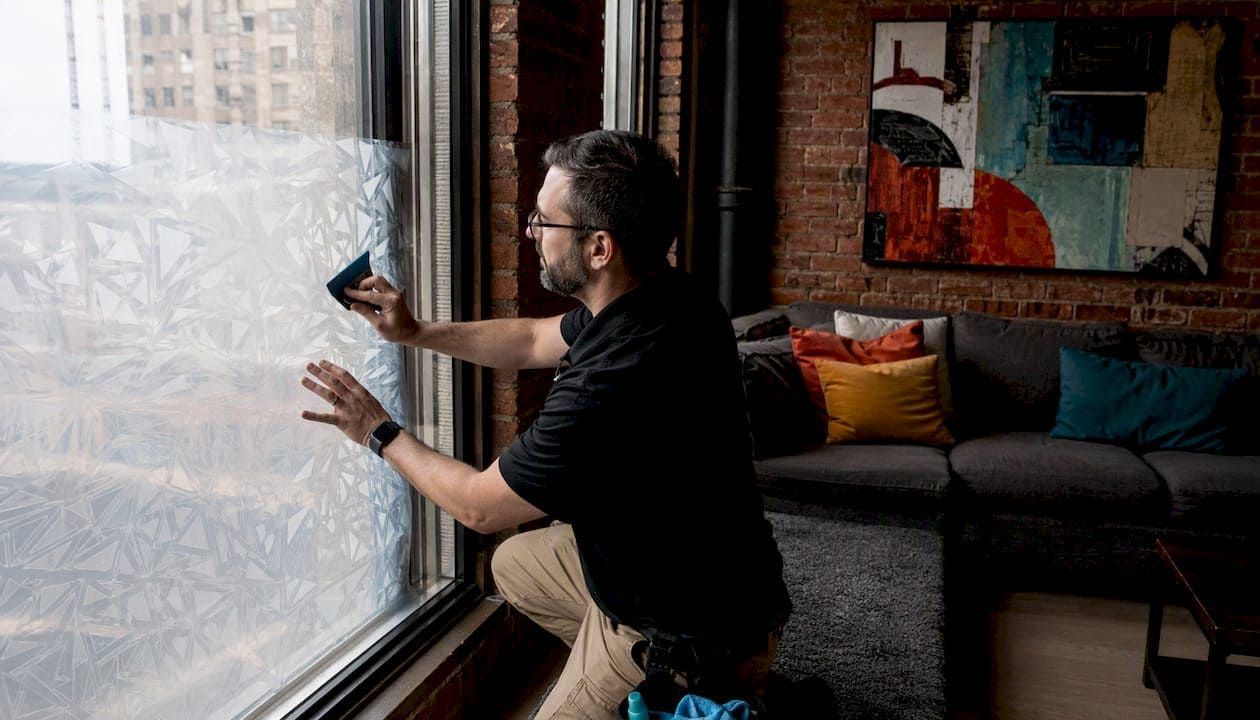
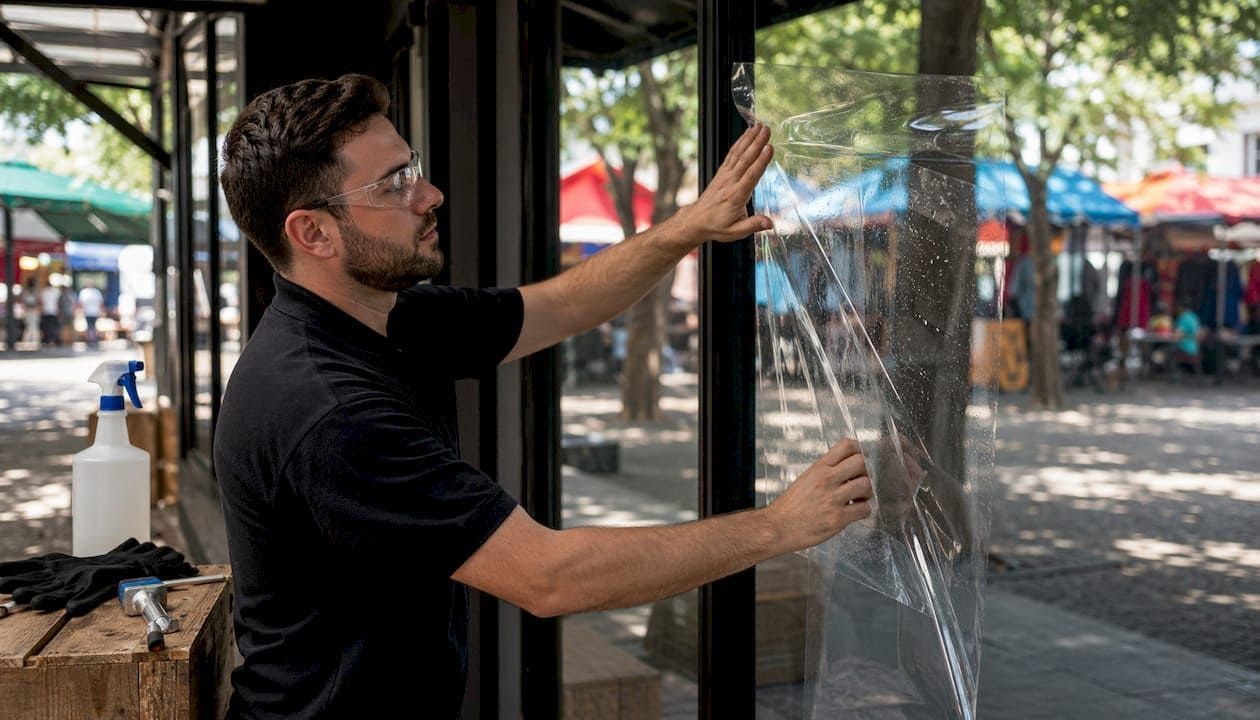
Retrofit security films apply directly to existing glass and hold shards in place after breakage. Security films improve fragment retention on existing glass, but true forced-entry delay depends on both the glazing and the frame anchorage. Film alone will not stop a determined intruder if the frame fails. That said, for occupied buildings where full replacement is not feasible, a quality security film from a provider like Surfacetint is a cost-effective first step that delivers measurable improvement.
| Option | Security level | Optical clarity | Retrofit ease | Typical use |
|---|---|---|---|---|
| Laminated glass (PVB) | High | Excellent | Low (full replacement) | Storefronts, lobbies |
| Laminated glass (SentryGlas) | Very high | Excellent | Low (full replacement) | High-risk retail, government |
| Tempered glass | Medium (safety only) | Excellent | Low (full replacement) | Interior partitions |
| Polycarbonate composite | Very high | Good | Low (full replacement) | Banks, jewelry stores |
| Retrofit security film | Medium | Excellent | High (over existing glass) | Occupied buildings, budget upgrades |
Pro Tip: For most retail and office environments in 2026, a LLumar Vista safety and security film applied to existing frames delivers 80% of the protection of a full laminated replacement at a fraction of the cost and with zero operational downtime.
How does secure glass fit into a broader security strategy?
Secure glass is not a standalone solution. It is the physical layer of a layered security strategy that combines barriers, detection, and response. Understanding where it fits helps you specify the right product and avoid over-investing in glass while under-investing in the systems around it.
Forced-entry resistant glazing helps build time barriers, supporting layered security and emergency response. The practical implication: your glass does not need to stop an intruder permanently. It needs to delay entry long enough for your alarm to trigger, your monitoring center to respond, and law enforcement to arrive. In most U.S. markets, average police response times to commercial alarms range from four to eight minutes. Your glazing needs to hold for that window.
Here is how secure glass integrates with the rest of your security program:
- Perimeter detection: Motion sensors and glass-break detectors trigger the moment an attack begins. Secure glass buys the time those systems need to generate a response.
- CCTV coverage: Cameras positioned at glazed openings document the attack in progress, deterring continuation and supporting prosecution. Security glass that stays in the frame keeps the camera field of view intact.
- Access control: Electronic locks and card readers secure interior doors, but they depend on the building envelope staying intact. A broken storefront window bypasses every interior access control system you have.
- Environmental design: Principles from Crime Prevention Through Environmental Design (CPTED) recommend clear sightlines and visible deterrents. Security glass that maintains natural light and visibility supports CPTED goals without the visual barrier of bars or grilles.
- Physical asset protection: Lockable storage and secure display cases complement glazing by protecting high-value inventory even if an intruder does eventually breach the perimeter. Lockable office storage adds a secondary layer of physical protection for assets inside the building.
What facility managers need to know before installation
Selecting the right product is only half the job. Installation quality determines whether that product actually performs under attack. Several practical factors separate a secure glazing project that works from one that looks right on paper but fails in the field.
- Frame integrity is non-negotiable. Effective secure glazing requires compatible frames and anchoring systems to withstand shear loads and maintain building envelope integrity. A premium laminated unit installed in a deteriorated aluminum frame will fail at the frame, not the glass. Assess frame condition before specifying glazing.
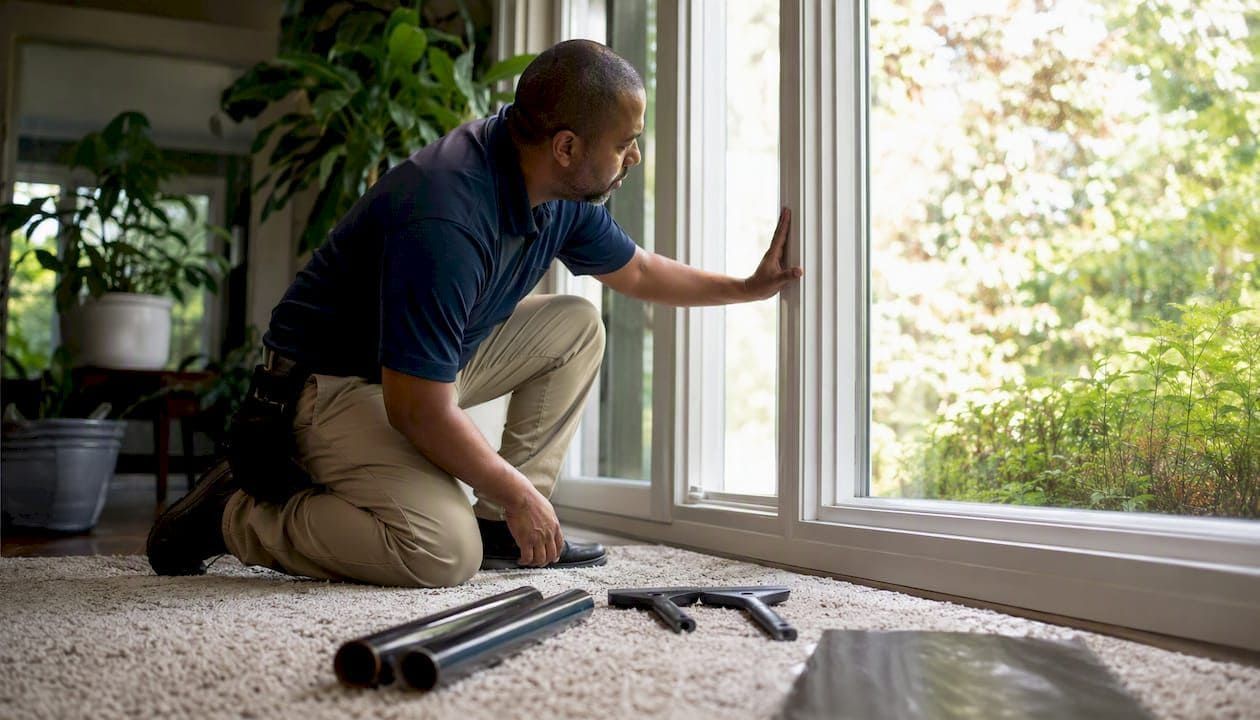
- Retrofit options reduce disruption significantly. Retrofitting secure glass over existing glazing can drastically reduce costs and downtime compared to full window replacements, making security upgrades feasible for occupied commercial spaces. For multi-tenant buildings or businesses that cannot close during installation, retrofit film or over-glazing systems are the practical path forward.
- Performance tiers matter more than thickness. Damage and post-breakage behavior define security value, not only thickness or static strength. A thicker pane of standard glass is still standard glass. Specify products by performance tier and test standard, such as ASTM F1233 or UL 972, not by millimeter measurement.
- Optical quality affects your brand. Security glass that distorts the view into a retail display or creates color shifts in a hospitality setting undermines the customer experience. LLumar Vista Films and high-quality laminated units maintain near-perfect optical clarity, which matters for businesses where appearance drives revenue.
- Bioinspired composites are entering the commercial market. Nacre-inspired laminated composites can be two to three times more impact resistant than standard laminated or tempered glass while maintaining stiffness and transparency. These materials are not yet mainstream, but they represent the direction the industry is heading for high-security commercial applications.
Key takeaways
Secure glass is the only physical security layer that operates continuously, requires no power, and maintains building aesthetics while delaying forced entry long enough for alarm response to succeed.
| Point | Details |
|---|---|
| Fragment retention is the key metric | Glass that stays in the frame after impact denies access and prevents injury simultaneously. |
| Laminated glass outperforms tempered for security | Tempered glass shatters and clears the opening; laminated glass holds together under repeated attack. |
| Frame quality determines system performance | Even the best glazing fails if the frame cannot withstand shear loads during a forced-entry attempt. |
| Retrofit film is a viable first step | Security film from providers like Surfacetint improves fragment retention with no operational downtime. |
| Secure glass supports, not replaces, other measures | Glazing buys time for alarms, CCTV, and law enforcement. It works best as part of a layered strategy. |
The case for treating glass as your first line of defense
Most facility managers I speak with think about glass last. They budget for cameras, access control, and monitoring services, then treat the windows as a fixed cost that does not change. That thinking gets reversed the first time a smash-and-grab hits a property they manage.
The uncomfortable reality is that every unprotected glass opening in your building is a faster entry point than any door. Doors have frames, locks, and hinges that all need to be defeated. A standard storefront window has none of that. One strike and the opening is clear.
What I have found actually works is treating the glazing specification the same way you treat the lock specification. You would not install a residential deadbolt on a commercial entry door. You should not install standard commercial glass on a ground-floor storefront facing a public street. The threat assessment drives the specification, not the other way around.
The other misconception worth addressing: security glass does not look like security glass. The best laminated units and security films are visually indistinguishable from standard glazing. Your customers do not see bars. Your staff does not feel like they are working in a vault. You get the protection without the institutional aesthetic that signals distrust to the people you are trying to serve.
The emerging bioinspired composites are genuinely exciting for high-risk applications, but for most commercial properties in Southern New Hampshire and the Greater Boston Area, the practical answer is already available. A properly specified security film or laminated unit, installed with attention to frame integrity, solves the problem today at a cost that makes sense.
Protect your business with professional security film installation
If your commercial property still has standard glass on ground-floor openings, storefronts, or lobby windows, the gap between your current protection and what is possible is smaller than you think.
Surfacetint installs LLumar Vista safety and security films on commercial properties across Southern New Hampshire and the Greater Boston Area, with minimal disruption to your operations. As an exclusive LLumar SelectPro Dealer, Surfacetint brings professional-grade film and certified installation to retrofit projects that most businesses can complete without closing for a single day. Explore your options with the commercial window film viewer or get started with a free on-site estimate to find the right solution for your property. Learn more about commercial security window films and what they can do for your building.
FAQ
What is the main reason to use secure glass in a business?
Secure glass provides continuous, power-free resistance against forced entry, smash-and-grab attacks, and vandalism by retaining fragments and delaying intruder access long enough for alarms and law enforcement to respond.
Is laminated glass better than tempered glass for commercial security?
Yes. Laminated glass holds together after cracking, maintaining the barrier and delaying entry. Tempered glass shatters completely on impact, clearing the opening and offering no meaningful forced-entry resistance.
Can security film replace laminated glass for a storefront?
Security film improves fragment retention on existing glass and is a cost-effective retrofit option, but full forced-entry delay requires both quality glazing and a structurally sound frame. Film alone is a meaningful upgrade, not a complete substitute for laminated security glazing.
How does secure glass support other security systems?
Secure glass creates a time barrier that allows motion sensors, glass-break detectors, CCTV systems, and monitoring centers to generate a response before an intruder gains access. It is the physical layer that makes every electronic security system more effective.
Does security glass change the appearance of a commercial building?
No. High-quality laminated units and security films like LLumar Vista maintain near-perfect optical clarity and are visually indistinguishable from standard commercial glass, preserving natural light and customer-facing aesthetics.
Recommended