
What is safety film and how it protects your property
Many property owners assume their windows are secure until an accident or break-in proves otherwise. Safety film is a transparent protective layer that reinforces glass, holding shattered pieces together to reduce injury and delay forced entry. Beyond security, it blocks harmful UV rays and cuts cooling costs by rejecting solar heat. If you manage a home or commercial building in Southern New Hampshire or Greater Boston, understanding how safety film works can transform your approach to property protection and energy efficiency.
Table of Contents
- Key takeaways
- What is safety film and how does it work?
- Installation process and standards compliance
- Benefits of safety film for Southern NH and Greater Boston properties
- Choosing the right safety film and installation approach
- Safeguard your property with expert window film installation
- Frequently asked questions
Key Takeaways
| Point | Details |
|---|---|
| Glass reinforcement | Safety film holds shattered glass together to reduce injuries and slow down break ins. |
| Energy savings | It blocks UV rays and reduces solar heat gain, lowering cooling costs. |
| Professional installation | Expert installation guarantees performance and preserves warranties by meeting required safety and security standards. |
| Standards compliance | Certified professionals follow strict protocols to ensure films meet safety security and blast resistance ratings. |
What is safety film and how does it work?
Safety film is a polyester (PET) or polyurethane (TPU) film applied to glass surfaces to hold shards together upon breakage, reducing injury risk and enhancing security. When glass breaks, the film acts like a net, keeping fragments adhered to the surface instead of scattering across the floor. This simple mechanism dramatically reduces cuts and lacerations during accidents, storms, or forced entry attempts.
The film's effectiveness comes from its material composition and thickness. Polyester films offer excellent tensile strength, often reaching 25,000 psi, which allows them to absorb impact energy without tearing. Polyurethane variants provide even greater flexibility for specialized applications. Thickness ranges correspond with different protection levels: 4 to 7 mils for basic safety, 8 to 14 mils for security against forced entry, and 15 to 25+ mils for blast mitigation in high-risk environments. A mil equals one thousandth of an inch, so even thick films remain nearly invisible.
Key features of safety film include:
- Strong adhesive layers that bond permanently to glass
- Scratch-resistant coatings that maintain clarity over years
- UV inhibitors that prevent film degradation from sunlight
- Clear or lightly tinted options that preserve building aesthetics
When an intruder strikes a window protected by security-grade film, the glass may crack but stays in the frame. This delays entry by several minutes, giving occupants time to respond and alerting neighbors or security systems. For homeowners in Southern New Hampshire and Greater Boston, this added time can make the difference between a thwarted break-in and a successful intrusion.
Safety film doesn't make glass unbreakable, but it transforms how glass fails. Instead of shattering into dangerous shards, it holds together like a spiderweb, maintaining a barrier even after impact.
Beyond security, safety film addresses everyday hazards. Children playing near patio doors, employees working in ground-floor offices, and elderly residents navigating hallways all face lower injury risks when glass is reinforced. The film also protects against storm debris, a critical concern during New England's severe weather seasons. By enhancing home security with window film, property owners gain peace of mind without installing bars or heavy shutters.
Installation process and standards compliance
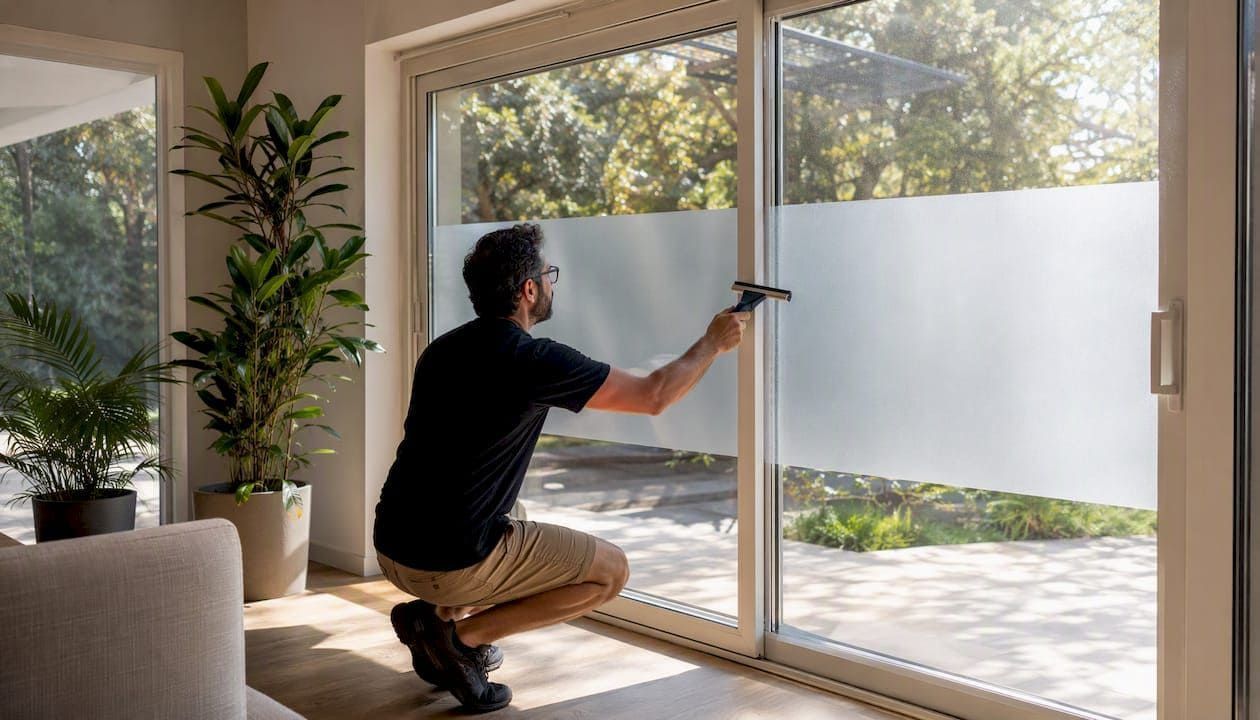
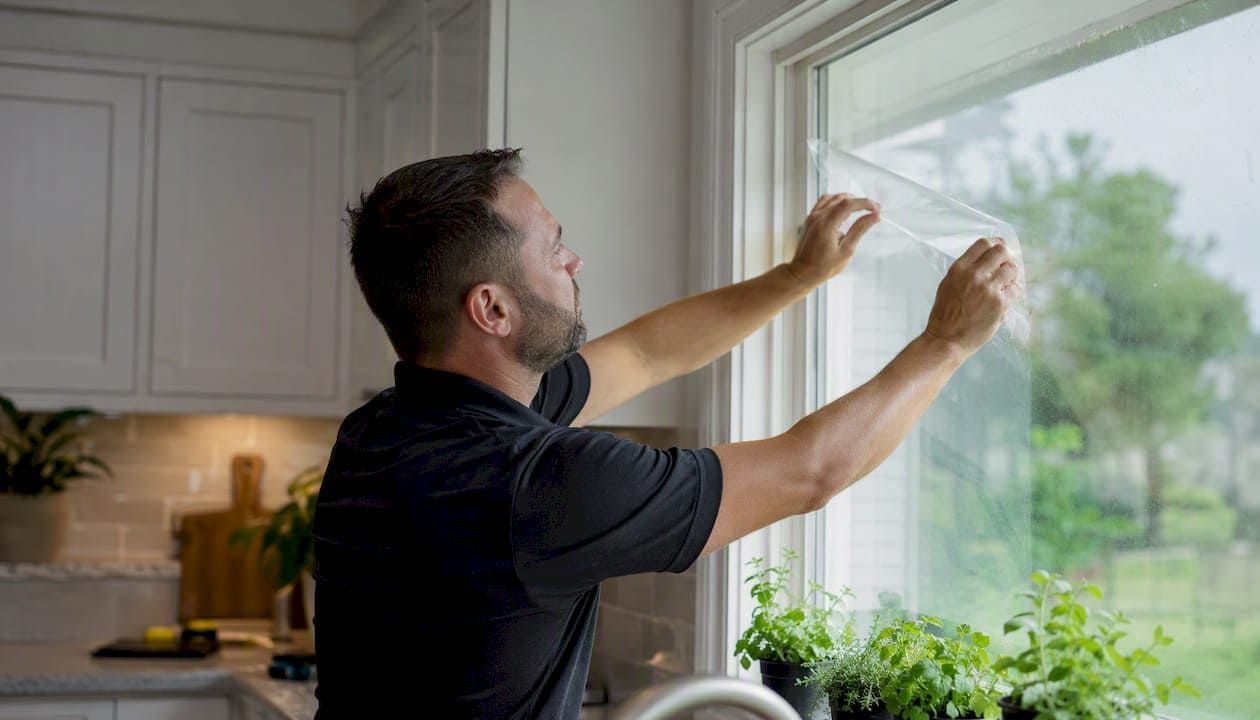
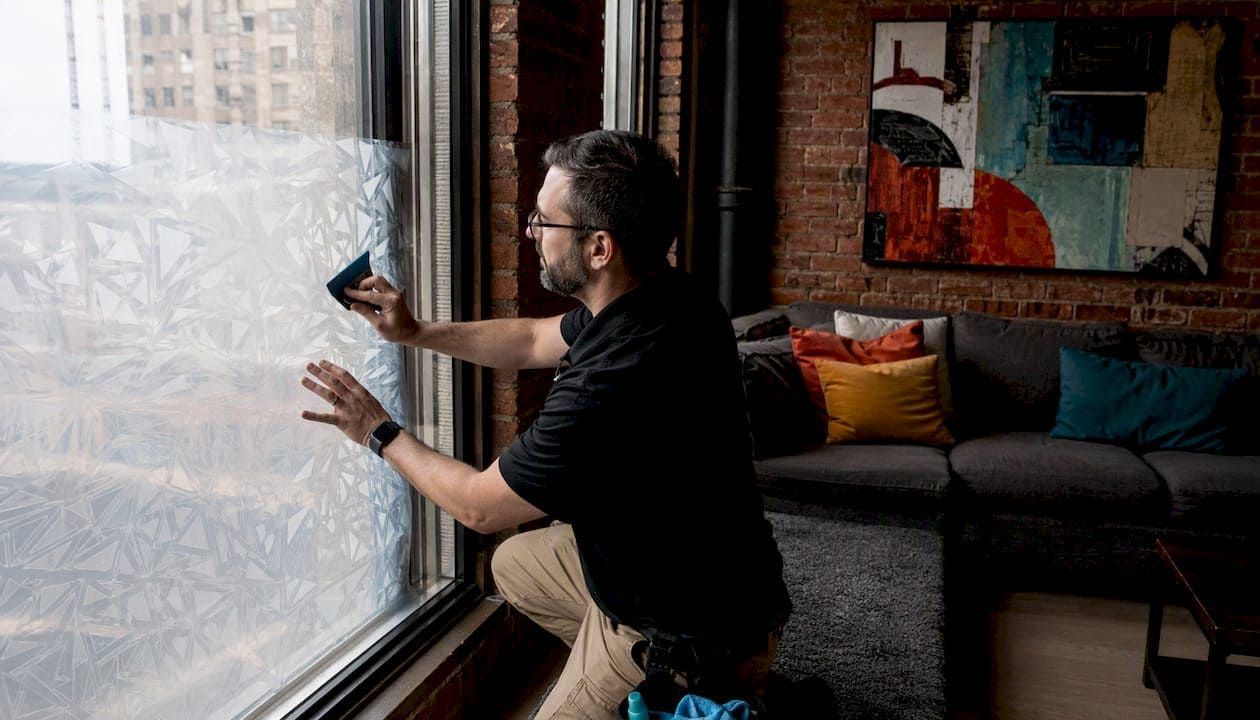
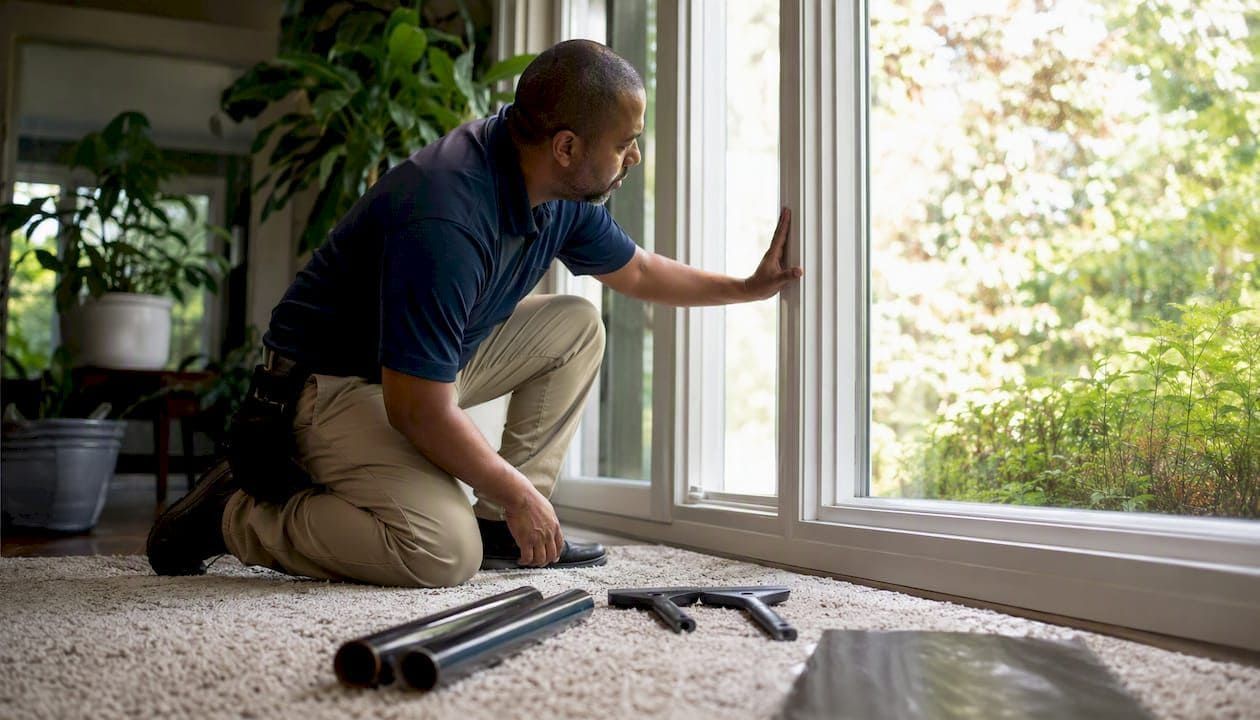
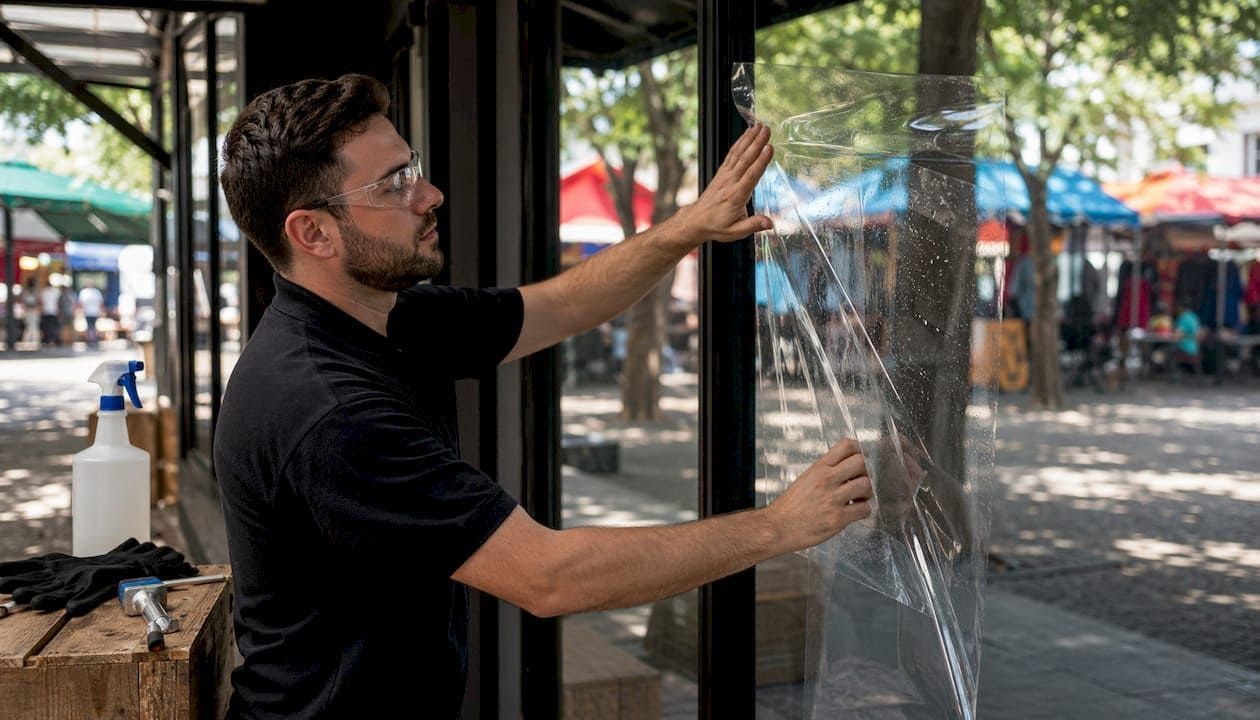
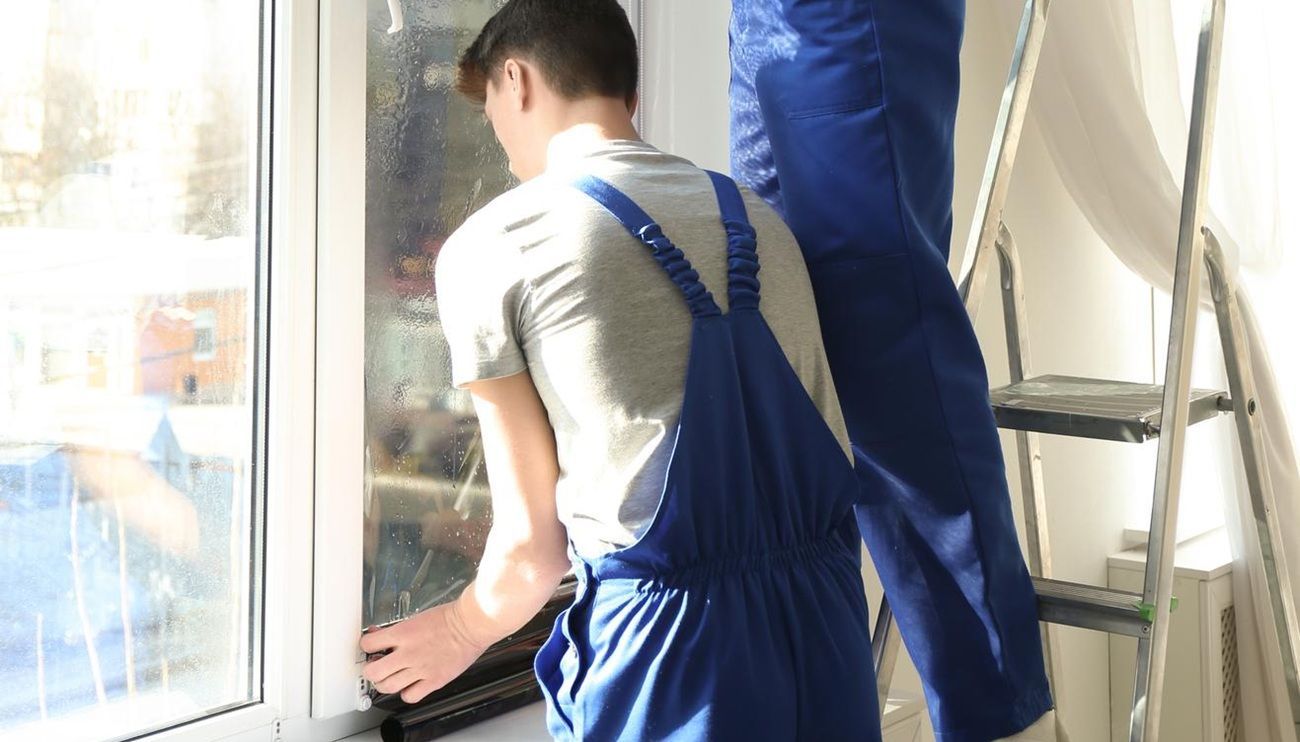
Professional installation involves thorough glass cleaning, precise cutting, wet application with slip solution, squeegeeing for bubble-free adhesion, and often 3M IPA Sealant or mechanical anchors. Each step matters because improper technique compromises performance and voids manufacturer warranties. Certified installers follow strict protocols to ensure films meet their rated protection levels.
The installation process unfolds in these stages:
- Surface preparation: Clean glass thoroughly to remove dirt, oils, and residues that prevent adhesion
- Film cutting: Measure and cut film to exact window dimensions, accounting for edge treatments
- Wet application: Spray slip solution on glass and film to allow repositioning during placement
- Squeegeeing: Remove water and air bubbles by pressing film firmly from center to edges
- Edge sealing: Apply IPA sealant or mechanical anchors to secure film perimeter and enhance security
- Curing period: Allow 30 days for adhesive to fully bond before testing or cleaning
Edge treatments deserve special attention for security applications. IPA (isopropyl alcohol-based) sealants create a chemical bond between film edges and window frames, preventing peeling. Mechanical anchors use aluminum or steel bars screwed into frames to physically lock film in place. These attachments make it nearly impossible for intruders to peel film away from glass, a common defeat method for unsecured installations.
| Standard | Purpose | Performance Metric |
|---|---|---|
| ANSI Z97.1 | Safety glazing impact resistance | Withstands 400 ft-lbs impact without hazardous fragments |
| UL 972 | Burglary-resistant glazing | Resists forced entry for 5+ minutes under sustained attack |
| ASTM E1886/E1996 | Hurricane impact and cycling | Survives windborne debris and pressure cycling |
| GSA TS01 | Blast mitigation | Protects against explosive shock waves in government facilities |
Films meet ANSI Z97.1, UL 972, ASTM E1886/E1996 standards for impact, blast, and burglary resistance, with UV rejection of 99%. These certifications aren't marketing claims. They represent rigorous laboratory testing where films face simulated hurricanes, explosions, and forced entry attempts. For commercial properties in Massachusetts and New Hampshire, compliance with these standards often satisfies building codes and insurance requirements.
Pro Tip: Request certification documents from your installer showing that films meet specific standards for your application. Generic claims about "security film" mean nothing without test data backing them up.
Many safety films also offer high visible light transmission, allowing 70% to 90% of natural light through while blocking heat and UV radiation. This balance maintains bright interiors without the dark appearance of heavily tinted windows. For home security and safety window film installation, professional application ensures optimal clarity and performance.
New England's temperature swings and humidity variations demand expert installation. Films applied in winter may experience different curing rates than summer installations. Local installers familiar with regional conditions adjust their techniques accordingly, preventing common problems like edge lifting or adhesive failure. For commercial safety and security film for windows, this expertise becomes critical when protecting large storefronts or office complexes.
Benefits of safety film for Southern NH and Greater Boston properties
Safety film delivers multiple advantages that protect occupants, reduce operating costs, and maintain property value. For homeowners worried about break-ins or families with young children, the injury prevention aspect alone justifies the investment. Commercial property managers appreciate how films address liability concerns while improving tenant comfort and satisfaction.
The primary benefits include:
- Injury prevention: Holds glass fragments during breakage, reducing lacerations by up to 90% in accidents
- Forced entry delay: Reinforced windows resist kicks, strikes, and tool attacks for 5+ minutes
- Energy cost reduction: Blocks solar heat gain, cutting cooling expenses by 20% to 30% during summer
- UV protection: Eliminates 99% of ultraviolet radiation that fades furniture, carpets, and artwork
- Storm protection: Keeps wind-driven debris from penetrating windows during severe weather
- Privacy options: Frosted or reflective films provide daytime privacy without blocking light
Safety film enhances building code compliance, cuts energy costs via heat rejection (up to 30%), and improves aesthetics with clear options, suited for New England weather. This combination of benefits makes safety film one of the most cost-effective property improvements available. A typical residential installation pays for itself through energy savings within 5 to 7 years, while providing immediate security and safety advantages.
For commercial buildings, liability reduction represents a significant value. When glass breaks in a retail store or office lobby, injuries can lead to expensive lawsuits and workers' compensation claims. Safety film minimizes this risk by containing shards even during major impacts. Insurance carriers often recognize this protection with premium discounts for properties using certified security films.
Energy efficiency matters year-round in New England. During summer, solar window tint for residential homes rejects infrared radiation that heats interior spaces, reducing air conditioning loads. In winter, low-emissivity films reflect interior heat back into rooms, improving insulation. Combined safety and solar films deliver both security and efficiency in a single application.
Pro Tip: Measure your current cooling costs before installation, then track savings over the first summer. Most property owners see 25% to 35% reductions in rooms with significant sun exposure, validating the investment quickly.
Aesthetics remain important for both residential and commercial properties. Clear safety films maintain the original appearance of windows while adding protection. For businesses concerned about window film building code compliance in NH and MA, modern films meet energy codes without the dark, reflective look of older tinting products. This allows architects and designers to specify safety features without compromising building aesthetics.
Local installer expertise ensures films perform well in New England's challenging climate. Temperature extremes, coastal humidity, and freeze-thaw cycles all stress window films. Installers familiar with these conditions select adhesives and application techniques that prevent common failures like edge peeling or hazing. For properties near the coast or in mountain regions, this regional knowledge proves invaluable.
Choosing the right safety film and installation approach
Selecting appropriate film thickness and features depends on your specific security needs, budget, and aesthetic preferences. Residential applications typically use thinner films focused on accident prevention and basic security. Commercial properties often require thicker films with enhanced attachment systems to meet insurance requirements and protect high-value assets.
Consider these factors when choosing safety film:
- Threat level: Basic safety for accident prevention, security for forced entry resistance, or blast protection for high-risk facilities
- Light transmission: Clear films maintain views and brightness, while tinted options reduce glare
- Solar heat rejection: Dual-purpose films combine safety with energy efficiency
- Attachment method: Daylight-only coverage for basic protection, or edge-to-edge with mechanical anchors for maximum security
- Warranty coverage: Manufacturer warranties range from 5 to 15 years depending on film quality and installation method
| Application | Recommended Thickness | Key Features | Typical Cost per Sq Ft |
|---|---|---|---|
| Residential safety | 4 to 7 mils | Clear, UV blocking, accident prevention | $8 to $12 |
| Commercial security | 8 to 14 mils | Forced entry delay, edge sealing, impact resistance | $12 to $18 |
| High-security facilities | 15+ mils | Mechanical anchors, blast resistance, GSA compliance | $18 to $30+ |
| Solar + safety combo | 4 to 8 mils | Heat rejection, UV blocking, shatter resistance | $10 to $15 |
Thicker films with attachments are optimal for commercial security; balancing with solar films maximizes efficiency; DIY risks void warranties and reduce performance. Professional installation costs more upfront but ensures proper adhesion, maintains warranty coverage, and delivers rated performance. The price difference between DIY and professional installation typically amounts to 30% to 40% of total project cost, but the performance gap is much larger.
DIY installation seems attractive for budget-conscious property owners, but it creates serious problems. Without proper training and tools, achieving bubble-free application proves nearly impossible. Dust particles trapped under film create weak spots where tears can start. Improper edge sealing allows moisture intrusion that degrades adhesive over time. Most critically, manufacturer warranties require certified installer signatures, meaning DIY applications receive no coverage for defects or failures.
Pro Tip: Request multiple quotes from certified installers, but don't choose based solely on price. Ask about their experience with your specific application, warranty terms, and maintenance requirements. The cheapest bid often signals shortcuts that compromise long-term performance.
Combining safety films with solar control films creates comprehensive window protection. Outer solar films reject heat and glare while inner safety films provide security and shatter resistance. This layered approach works particularly well for security window film investment value calculations, as it addresses multiple building performance issues simultaneously.
For commercial safety and security film for commercial buildings, code compliance becomes a critical selection factor. Massachusetts and New Hampshire enforce strict requirements for safety glazing in specific locations like doors, sidelights, and low windows. Certified films meeting ANSI Z97.1 standards satisfy these codes while providing additional security benefits. Always verify that your installer understands local building codes and can provide documentation for inspectors.
Maintenance requirements vary by film type and location. Most safety films need only periodic cleaning with mild soap and water. Avoid abrasive cleaners or squeegees with metal edges that can scratch protective coatings. Inspect edges annually for signs of peeling or moisture intrusion, addressing problems immediately to prevent expansion. With proper care, quality safety films maintain their protective properties for 15+ years.
Safeguard your property with expert window film installation
Protecting your Southern New Hampshire or Greater Boston property requires more than just choosing quality safety film. Professional installation ensures optimal performance, maintains warranty coverage, and delivers the security and energy savings you expect. Surface Dynamics Window Tinting specializes in LLumar SelectPro safety and security films engineered for New England's demanding climate.
Our certified installers assess your specific needs, recommend appropriate film solutions, and complete installations using industry-leading techniques. Whether you need basic safety film for a residential sunroom or high-security protection for a commercial storefront, we customize solutions that balance protection, aesthetics, and budget. Every installation includes thorough surface preparation, precision application, and proper edge sealing to ensure years of reliable performance.
We offer free window tinting estimates for all property types throughout our service area. Our team evaluates your windows, discusses your security and energy efficiency goals, and provides detailed proposals showing costs, expected performance, and warranty terms. For homeowners exploring home security and safety window films or businesses investigating solar window films for homes, we explain options clearly without pressure or confusing technical jargon. Contact us today to schedule your consultation and discover how professional window film installation protects your property investment.
Frequently asked questions
What is safety film made of?
Safety film consists of polyester (PET) or polyurethane (TPU) layers bonded with strong adhesives. These materials provide excellent tensile strength and flexibility, allowing films to absorb impact energy without tearing. Multiple layers increase thickness and protection level, with scratch-resistant coatings protecting the outer surface from daily wear.
How effective is safety film at preventing injuries during glass breakage?
Safety film holds glass fragments together when windows break, reducing laceration injuries by up to 90% compared to unprotected glass. The film acts as a containment barrier, keeping shards adhered to the surface instead of scattering across floors and furniture. For forced entry attempts, security-grade films delay intruders by 5+ minutes, providing critical time for emergency response.
Can I install safety film myself or should I hire a professional?
Professional installation avoids bubbles, wrinkles, and ensures security standards are met. DIY installation risks voiding manufacturer warranties and compromising film performance through improper surface preparation or edge sealing. Certified installers possess specialized tools and training that deliver bubble-free application and proper adhesion, critical factors for both safety and longevity.
Does safety film help reduce energy costs in New England climates?
Many safety films block up to 99% of UV rays and reduce solar heat gain by up to 30%. This significantly cuts cooling expenses during warmer months by rejecting infrared radiation before it heats interior spaces. Combined safety and solar films provide year-round window film energy savings while maintaining natural light and views, making them ideal for New England's variable climate.
Recommended