
Window film industry terms explained: the complete guide
TL;DR:
- Understanding key terms like U-Factor and SHGC helps homeowners make informed window film choices.
- Certifications like NFRC ratings ensure product specifications are standardized and trustworthy.
- Proper knowledge of film types and installation terminology protects investments and enhances performance.
Window film shopping should be straightforward, but the moment a contractor starts throwing around terms like SHGC, VT, and spectrally selective, most homeowners and property managers hit a wall. That confusion is not just frustrating. It can cost you real money. Choosing the wrong film because you misunderstood a spec sheet means paying for performance you never get, or worse, installing a product that damages your glass. This guide breaks down every major window film industry term in plain language so you can walk into any estimate conversation with confidence, ask the right questions, and make a purchase decision you will not regret.

Table of Contents
- Why industry terms matter when choosing window film
- Breaking down the most common window film industry terms
- Specialized window films: Security, decorative, and spectrally selective
- Understanding application, installation, and maintenance terminology
- Our take: The hidden power of mastering window film language
- Get expert guidance for your next window film project
- Frequently asked questions
Key Takeaways
| Point | Details |
|---|---|
| Decode window film jargon | Understanding industry terms empowers better purchase and installation choices. |
| Compare key metrics | U-Factor, SHGC, and VT are vital numbers for energy efficiency and comfort. |
| Specialized films explained | Security, decorative, and spectrally selective films have unique specs and applications. |
| Ask the right questions | Knowing the lingo helps you interview installers and avoid hidden costs. |
Why industry terms matter when choosing window film
Window film is not a one-size-fits-all product. There are solar control films, security films, decorative films, and spectrally selective films, each with its own performance profile and specification language. When you understand what those specs actually mean, you stop comparing apples to oranges and start making genuinely informed choices.
The real risk shows up when you request estimates without knowing the terminology. Two proposals might both claim to "reduce heat" but use films with dramatically different Solar Heat Gain Coefficients. Without knowing what SHGC means and how to compare values, you might choose the cheaper option and end up with a film that barely moves the needle on your energy bills. Understanding the benefits of window film starts with understanding what the numbers behind those benefits actually represent.
Here are the core rating metrics you will encounter on virtually every spec sheet:
- U-Factor : Measures how well the film and glass system insulates against heat loss. Lower is better.
- SHGC (Solar Heat Gain Coefficient) : Measures how much solar heat passes through. Lower means less heat entering your space.
- VT (Visible Transmittance) : The percentage of visible light that passes through. Higher means brighter interiors.
- AL (Air Leakage) : Relevant to window system performance, measuring unintended air movement.
- CR (Condensation Resistance) : Rates resistance to condensation forming on interior surfaces. Higher is better.
These metrics are not invented by manufacturers trying to confuse you. The NFRC window film ratings system standardizes all of them, covering U-Factor, SHGC, VT, AL, and CR through specific testing procedures. That standardization is what makes comparisons meaningful.
Always ask for NFRC-certified ratings when reviewing proposals. Sales language like "blocks 99% of UV" tells you one thing, but a certified spec sheet tells you everything.
Pro Tip: When comparing proposals, ask each contractor to provide the NFRC-rated spec sheet for the exact film being recommended, not just the product brochure. This also matters for window film energy code compliance in New Hampshire and Massachusetts, where energy performance documentation may be required.
Now that we've set the context for why this terminology matters, let's break down the essential terms you'll encounter.
Breaking down the most common window film industry terms
With the importance of these terms established, let's look closely at what each actually means and how to compare them.
Each metric on a window film spec sheet tells a specific story about how that product will perform in your building. Understanding the story behind the numbers turns a confusing document into a decision-making tool.
U-Factor is expressed in BTU/hr-ft²-°F. A lower number means better insulation. For window film applications, this matters most in colder climates like Southern New Hampshire and Greater Boston, where heat retention through winter months directly affects energy costs.
SHGC runs on a scale from 0 to 1. A film with an SHGC of 0.25 blocks 75% of solar heat. A film with an SHGC of 0.60 only blocks 40%. For west-facing commercial windows in summer, that difference is enormous. Use the window tinting energy savings calculator to see how SHGC changes your actual cooling load.
VT also runs from 0 to 1. A VT of 0.70 means 70% of visible light passes through, keeping rooms bright. A VT of 0.30 creates a noticeably darker interior. Balancing VT with SHGC is where spectrally selective films shine, but more on that shortly.
Here is a comparison of how U-Factor, SHGC, and VT values typically look across different film categories:
| Film type | U-Factor | SHGC | VT |
|---|---|---|---|
| Clear glass (baseline) | 1.04 | 0.86 | 0.9 |
| Standard solar control | 0.85 | 0.35 | 0.45 |
| Spectrally selective | 0.82 | 0.28 | 0.62 |
| Security film (clear) | 1 | 0.82 | 0.88 |
| Decorative/privacy film | 0.95 | 0.6 | 0.3 |
A few practical takeaways from this table:
- Security films prioritize strength over solar control, so their SHGC stays high.
- Spectrally selective films achieve low SHGC without sacrificing much VT, which is ideal for offices and living rooms where natural light matters.
- Decorative films trade light transmission for privacy, making VT the most relevant metric for those applications.

Specialized window films: Security, decorative, and spectrally selective
Beyond the core performance metrics, there are also specialized terms you'll see for safety, design, and comfort films.
Once you move past solar control basics, the terminology gets more specific. Each film category has its own language, and knowing it helps you request exactly what your property needs.
Mil is one of the most important specialized terms. It refers to film thickness, where one mil equals one-thousandth of an inch. Standard solar films are typically 1.5 to 2 mil. Security films start around 4 mil and go up significantly from there. Thicker films hold shattered glass in place longer, which matters for both safety and forced-entry resistance.
Here is a breakdown of specialized film categories and their key terms:
| Film category | Key term | What it means |
|---|---|---|
| Security | Mil thickness | 4 mil for basic impact; 12 mil for blast resistance |
| Security | Attachment system | Anchors film to frame for maximum hold |
| Decorative | Opacity level | How much visibility the film blocks |
| Spectrally selective | IR rejection | Percentage of infrared heat blocked |
| Spectrally selective | UV rejection | Typically 99% across all quality films |
Here is what to know before specifying each type:
- Security films : Thicker films rated for blast or forced entry resistance require professional installation and proper frame anchoring. Security window film for homes is measured by how long it delays entry, not just whether it holds glass together.
- Low-E and heat-absorbing glass : Applying film to these glass types requires careful review. Films on Low-E glass can cause thermal stress, which may crack the glass. Always disclose your glass type to your installer before any film is selected.
- Spectrally selective films : These filter out infrared and UV wavelengths while allowing visible light through. They are specified by their IR rejection percentage and are the right choice when you want heat control without darkening the space.
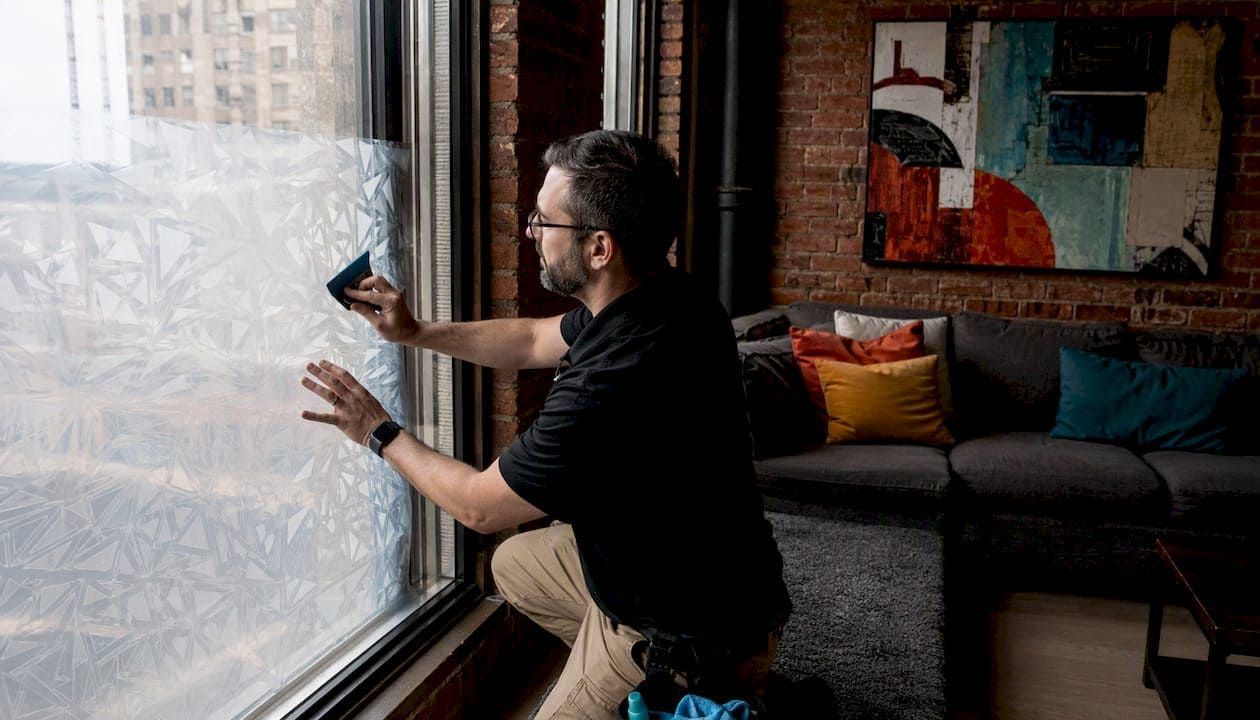
- Decorative films : These are specified by opacity, pattern, and light transmission. They serve privacy and branding purposes more than energy performance.
Pro Tip: Before signing any contract, confirm whether your existing glass is Low-E or heat-absorbing. This single detail changes which films are safe to install and can enhance security with window film without voiding your glass warranty.
Understanding application, installation, and maintenance terminology
A full understanding of window film terms includes knowing what happens during installation and how to talk with your installer.
The spec sheet gets you to the right product. The installation vocabulary gets you through the project without surprises. Here are the terms that matter most.
Cure time is the period after installation during which the film adhesive fully bonds to the glass. During this time, you may notice small water bubbles or a slightly hazy appearance. This is normal and typically resolves within 30 to 60 days depending on temperature and humidity. Do not attempt to press out bubbles or clean the film during this period.
Edge sealant is applied around the perimeter of security and heavy-duty films to prevent peeling and moisture intrusion. Not all films require it, but for exterior-facing installations or high-humidity environments, it significantly extends film life.
Coverage refers to the total square footage of glass being filmed. Accurate coverage measurement affects both material cost and the accuracy of your warranty documentation.
Contamination in installation language means any dust, debris, or residue trapped between the film and glass during application. Professional installers work in controlled conditions to minimize contamination, which can cause bubbling and reduce adhesion over time.
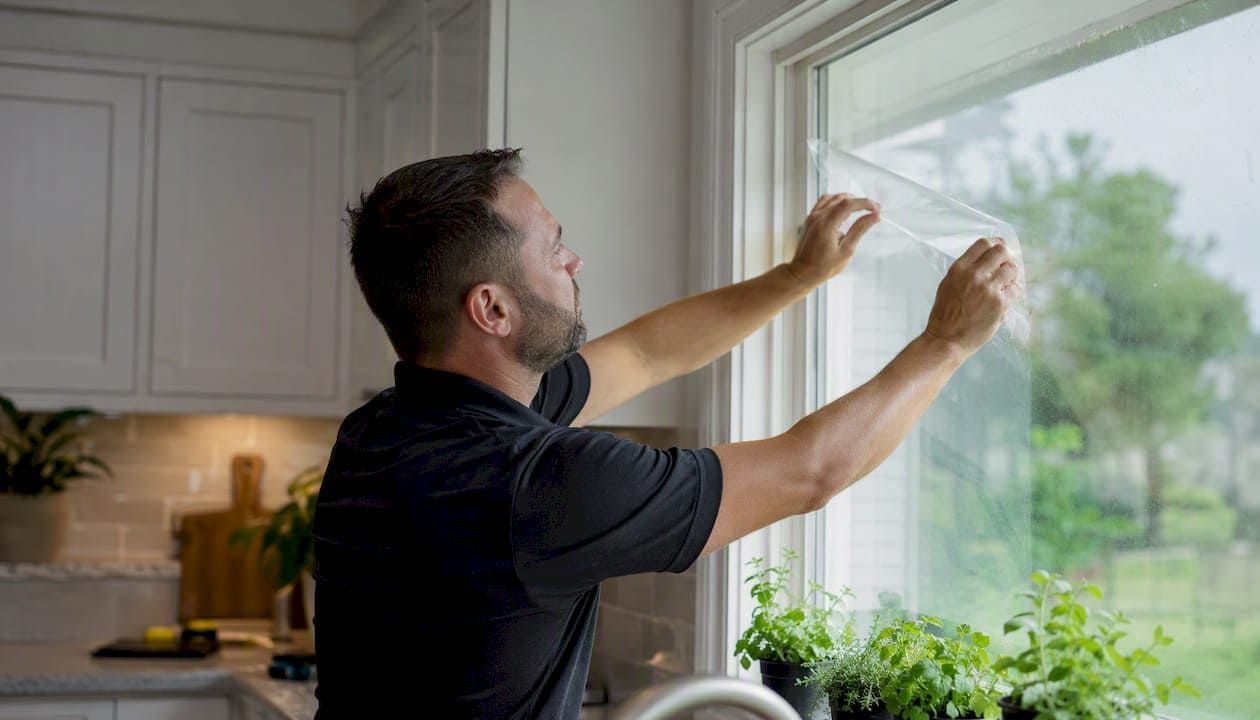
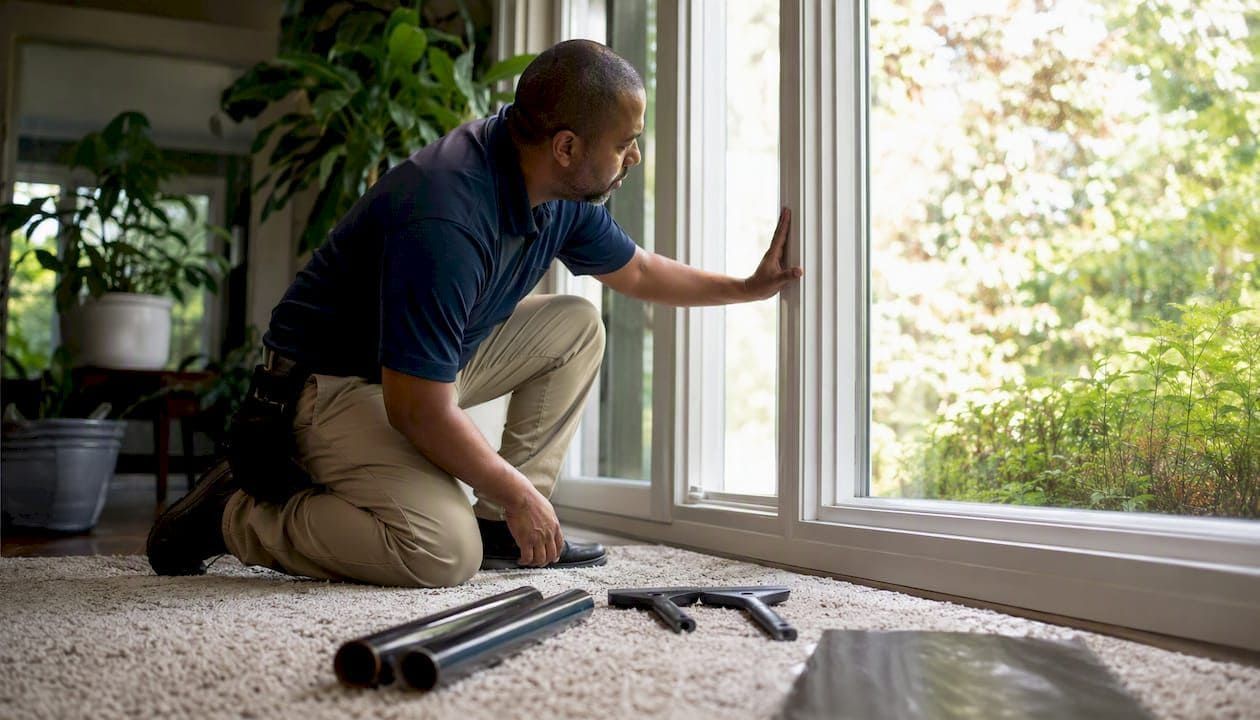
Here is what a professional window film installation typically looks like from start to finish:
- Site assessment and glass type verification
- Accurate measurement and coverage calculation
- Glass cleaning and surface preparation
- Film cutting and fitting
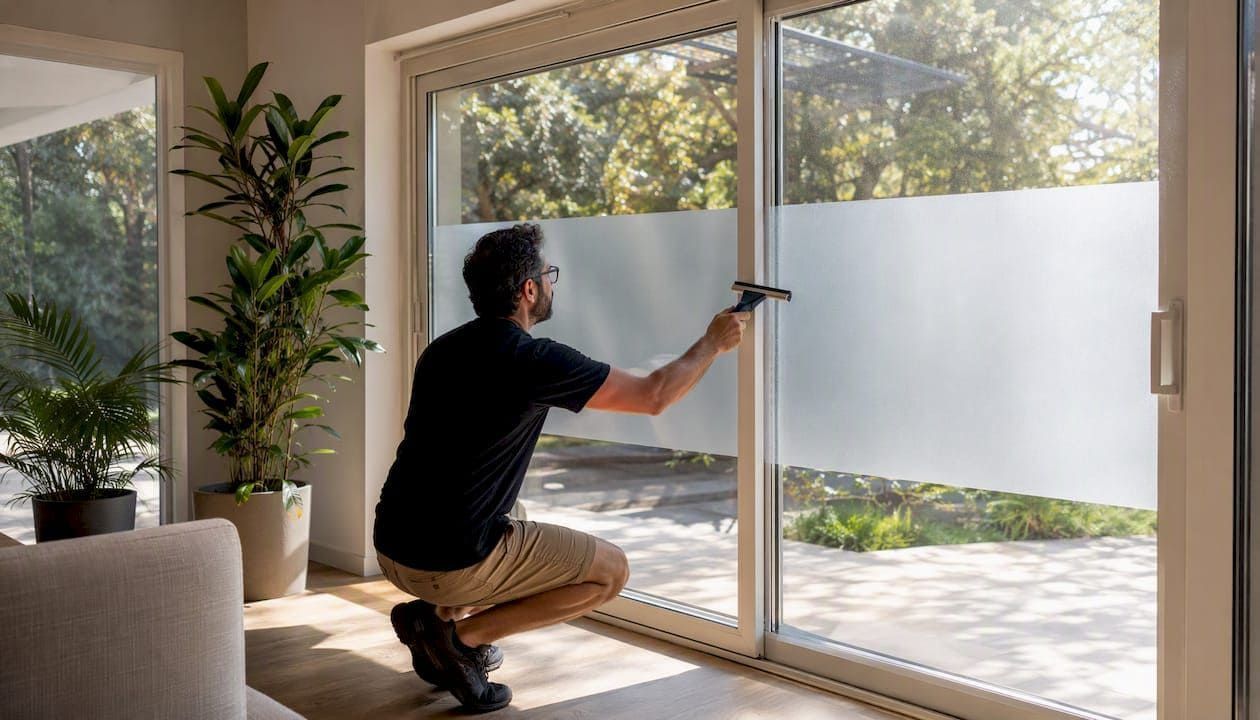
- Wet application and squeegee technique to remove air and water
- Edge trimming and sealant application where required
- Final inspection and cure time guidance
Pro Tip: Ask your installer whether their NFRC application procedures are followed on every job. Standardized installation technique is what ensures the certified ratings on the spec sheet actually match real-world performance.
A few maintenance myths worth clearing up: window film does not require special cleaning products. Standard glass cleaner and a soft cloth work fine after the cure period. Avoid abrasive scrubbers, which can scratch the film surface and void your warranty.
Our take: The hidden power of mastering window film language
Here is something most contractors will not tell you. The moment you use the right terminology in a conversation, the entire dynamic shifts. When you ask for the SHGC rating instead of "how much heat does it block," you get a number you can verify. When you ask about mil thickness instead of "how strong is it," you get a specification you can compare.
We have seen property managers in Greater Boston spend thousands on films that underperformed simply because they accepted vague sales language. One commercial client came to us after a competitor installed a film with a VT of 0.28 on their open-plan office. The space became so dim that they had to run overhead lighting all day, wiping out any energy savings. A spectrally selective film with a VT of 0.60 and similar SHGC would have solved the heat problem without killing the natural light.
Knowing the why window film knowledge matters is not just academic. It is financial protection. It means you can hold any installer accountable to documented, certified performance standards rather than promises.
Get expert guidance for your next window film project
You now have the vocabulary to evaluate any window film proposal with confidence. But knowing the terms is only half the equation. Applying them to your specific windows, glass type, and performance goals is where real expertise comes in.
At Surface Dynamics Window Tinting, we walk every client through the spec sheets, explain the ratings in plain language, and recommend LLumar Vista Films matched to your exact needs. Whether you are ready for a free window tinting estimate or want to start with a residential window tint estimate , we make the process straightforward. You can also browse recent window film projects to see real installations across Southern New Hampshire and Greater Boston.
Frequently asked questions
What is the most important window film metric to consider?
Both U-Factor and SHGC are critical. U-Factor governs insulation performance while SHGC measures solar heat entering your space, and together they determine your comfort and energy savings.
What does 'mil' mean in window film specs?
Mil is a thickness measurement equal to one-thousandth of an inch. Thicker films, such as 12 mil for blast resistance, offer significantly more impact protection than standard solar films.
Can all films be installed on any type of glass?
No. Certain glass types require special consideration. Films on Low-E glass can cause thermal stress and potential cracking, so your glass type must be confirmed before any film is selected.
What is the difference between spectrally selective and decorative window films?
Spectrally selective films block IR/UV without significantly reducing visible light, while decorative films prioritize privacy and aesthetics over heat or UV performance.
How do I know if my window film meets industry standards?
Look for NFRC certification on the product spec sheet. NFRC rates films for U-Factor, SHGC, VT, AL, and CR using standardized testing procedures that make performance claims verifiable and comparable.
Recommended