
Window Tint Certifications: Your Guide to Safer, More Efficient Homes
TL;DR:
- Building window tint certifications involve multiple organizations measuring performance and safety standards.
- Certified films improve energy efficiency and safety without restrictions like auto tint VLT limits.
- Proper installation and verifying certifications ensure optimal performance and compliance in local climates.
Many homeowners and property managers in
Southern New Hampshire and Greater Boston assume that
auto tint laws governing vehicles also apply to buildings. They don't. New Hampshire's 35% VLT rule for car windows has nothing to do with your home or office glass. Building window films operate under a completely different set of performance and safety standards, and understanding those standards is what separates a film that actually delivers from one that just looks good on paper. This guide walks you through what certifications really mean, how they affect energy savings and safety, and what to look for when choosing a certified installer in our region.

Table of Contents
- How window tint certifications work: The essentials
- What certifications mean for energy efficiency
- Meeting safety and security standards
- Certification nuances: What most guides skip
- Our take: What actually matters for certification
- Certified window tinting solutions for every project
- Frequently asked questions
Key Takeaways
| Point | Details |
|---|---|
| No building restrictions | Residential and commercial window films are not subject to auto tint laws in Southern NH and Greater Boston. |
| Energy savings potential | Certified window films can cut energy costs by up to 30% while boosting comfort and UV protection. |
| Safety standards matter | The right film certifications ensure impact, forced entry, and blast resistance for your property. |
| Choosing the right film | Ceramic and NFRC/IWFA-aligned films deliver year-round performance and minimal signal interference. |
| Verification is key | Always request test reports from ISO-accredited labs and choose certified installers for best results. |
How window tint certifications work: The essentials
Window tint certifications for buildings are not a single stamp of approval. They are a layered system involving multiple organizations, each measuring different aspects of film performance. Once you understand who does what, the process becomes much clearer.
The main certifying and standards bodies you'll encounter include:
- IWFA (International Window Film Association): Sets performance benchmarks and offers accreditation testing for professional installers, ensuring they can correctly apply films to meet rated specifications.
- NFRC (National Fenestration Rating Council): Rates the thermal performance of window systems, including films, using standardized metrics like U-factor and Solar Heat Gain Coefficient (SHGC).
- ANSI (American National Standards Institute): Governs safety glazing standards, particularly for glass breakage and human impact.
- UL (Underwriters Laboratories): Tests films for forced entry resistance and other security applications.
- ASTM International: Provides testing protocols for blast resistance, hurricane impact, and structural performance.
There are two broad categories of certification: performance certifications and safety certifications . Performance certifications focus on energy metrics like heat rejection and UV blocking. Safety certifications test how well a film holds glass together under impact, forced entry, or explosive pressure.
Installer accreditation matters just as much as film certification. A film rated to block up to 99% of UV radiation only performs as advertised when it's installed correctly. Bubbles, edge lifting, or improper surface preparation can compromise the film's rated performance. IWFA-accredited installers go through standardized testing to prove they can deliver consistent results.
For homeowners and commercial property managers, understanding window film building code compliance is a practical first step before selecting any product. Certified films also contribute directly to comfort and energy efficiency across all seasons, which is especially relevant in New England's variable climate.
What certifications mean for energy efficiency
Certifications aren't just paperwork. They translate directly into measurable improvements in how your building performs year-round. In a region like Greater Boston and Southern NH, where winters are cold and summers can be surprisingly intense, those numbers matter.
Here are the key metrics to understand:
- SHGC (Solar Heat Gain Coefficient): Measures how much solar heat passes through the glass. A lower SHGC means less heat enters in summer. For south-facing windows in winter, a higher SHGC can actually help with passive heating.
- TSER (Total Solar Energy Rejected): The percentage of total solar energy blocked by the film. Higher TSER means better heat rejection overall.
- U-factor: Measures how well the window resists heat flow. Certified low-E films can improve a single-pane window's U-factor by 75 to 120%.
- UV Transmittance: The percentage of ultraviolet radiation that passes through. Most certified films block 99% of UV, protecting furnishings and occupants.
| Film type | Best for | TSER range | UV block |
|---|---|---|---|
| Ceramic | Mixed climates, year-round | 40-60% | Up to 99% |
| Low-E | Cold climates, heat retention | 35-55% | Up to 99% |
| Metallic | High heat rejection | 50-70% | Up to 99% |
| Dyed | Budget, glare control | 20-40% | 95-99% |
Certified films reduce overall energy use by 10 to 30%, with heat loss reductions of 30 to 50% and cooling savings of 15 to 30%. For a commercial building with significant glass exposure, that's a meaningful reduction in operating costs.
Pro Tip: In Southern NH and Greater Boston, ceramic and low-E films tend to outperform metallic options because they balance summer heat rejection with winter heat retention. Metallic films reject heat in both directions, which can work against you when you want passive solar warmth in January.
For homeowners exploring options, home tinting benefits cover a wide range of film types suited to residential needs. Commercial property managers will find that commercial tinting benefits address the scale and performance demands of larger glass installations.
Meeting safety and security standards
Energy performance is one side of the certification equation. Safety and security are the other, and they operate under a distinct set of standards with real consequences for how your property handles threats.
The main safety and security certifications for window films include:
- ANSI Z97.1: Tests glazing materials for human impact safety, ensuring glass doesn't shatter into dangerous shards.
- CPSC 16 CFR 1201: A federal consumer product safety standard for glazing in hazardous locations like doors and low windows.
- UL 972: Specifically tests for burglary resistance, measuring how long a film-protected window resists forced entry.
- ASTM E1886/E1996: Governs hurricane and windborne debris impact resistance, relevant for coastal and storm-prone areas.
- GSA/Blast standards: Apply to government and high-security facilities requiring protection against explosive pressure waves.
Film thickness plays a critical role. Thinner films (1.5 to 2 mil) are typically solar control products. Security-grade films start at 4 mil and go up to 14 mil or more for blast applications. Thicker films hold glass fragments together longer under sustained force.
"A properly certified security film doesn't stop a determined intruder indefinitely, but it dramatically increases the time needed to breach a window, which is often enough to deter the attempt entirely."
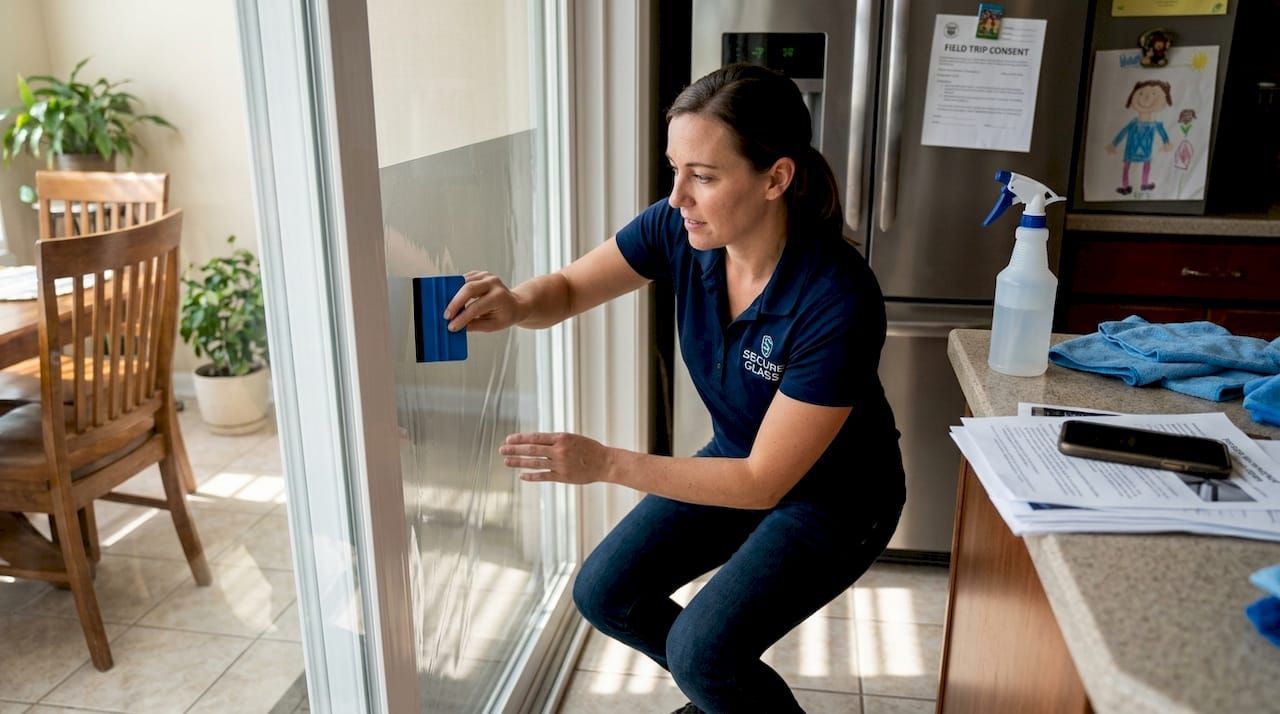
For homeowners, safety window film for homes addresses everyday risks like accidental breakage, storm damage, and opportunistic break-ins. Commercial property managers dealing with storefronts or office buildings will find that security film for commercial windows covers the specific standards required for those environments.
If you want to protect your home with safety film or specifically enhance home security, the certification level of the film you choose should match the actual risk profile of your property.
Certification nuances: What most guides skip
Most articles stop at the basics. But the details that actually affect your results are often buried in the fine print of test reports and installation specs. Here's what you need to know that most guides leave out.
TSER vs. SHGC: Why the difference matters
TSER measures total solar energy rejected, including visible light, infrared, and UV. SHGC measures only the fraction of solar heat that enters. A film with a high TSER but moderate SHGC might be ideal for east or west-facing windows that get intense morning or afternoon sun. For south-facing windows in cold climates, a slightly higher SHGC can actually help by allowing passive solar gain during winter months when you want free heat.
Glass type changes certified results
A film certified on clear single-pane glass will perform differently on tinted, tempered, or insulated glass units (IGUs). Always ask your installer for test data that matches your actual glass type. This is not a minor detail. The NFRC ratings on a film's spec sheet are only valid when the film is applied to the specific glass type used in testing.
- Identify your existing glass type before selecting a film.
- Request NFRC test data for that specific glass and film combination.
- Confirm the installer is familiar with your glass type's thermal stress limits.
- Verify the test report comes from an ISO 17025-accredited laboratory.
No VLT or SHGC limits for buildings in our region
Here's the clarification most people need: no building regulations in Southern NH or Greater Boston restrict the VLT or SHGC of window films applied to residential or commercial buildings. The auto tint laws that specify minimum VLT percentages for vehicles simply don't apply to your home or office. You have significant flexibility in choosing film darkness and performance levels.
Pro Tip: Always request a copy of the film's test report from an ISO 17025 lab before committing to an installation. Reputable suppliers of residential window films and commercial films will provide this without hesitation. If they can't, that's a red flag.
For deeper context on how these variables interact with local energy codes, building code compliance resources are a useful reference.
Our take: What actually matters for certification
After working with homeowners and property managers across Southern NH and Greater Boston, we've seen a consistent pattern: people focus on the wrong metrics. They ask about darkness level first and performance ratings second. That's backwards.
The certifications that genuinely move the needle are NFRC-rated SHGC and U-factor for energy performance, and ANSI Z97.1 or UL 972 for safety. Everything else is secondary. Films that align with IWFA standards and carry NFRC ratings give you a verifiable baseline that you can actually compare across products.
Ceramic films consistently outperform metallic options in mixed climates because they reject infrared heat without blocking radio signals or interfering with electronics. That matters in modern homes and offices. Installation quality is equally critical. A premium film installed poorly will underperform a mid-grade film installed correctly every time.
Security films are often dual-purpose. A 7 mil safety film can simultaneously meet ANSI Z97.1 impact standards and provide meaningful forced entry resistance. You don't always need separate products. For deeper insight into how these choices affect your daily comfort and efficiency, the performance data tells a clear story.
Certified window tinting solutions for every project
Understanding certifications is the first step. Applying them to your specific windows, orientation, and goals is where the real value comes in.
At
Surface Dynamics Window Tinting, we install LLumar SelectPro and Vista Films that carry verified NFRC, IWFA, ANSI, and UL certifications for both energy and safety applications. Whether you're a homeowner ready to reduce heat and protect your family or a property manager looking to cut operating costs across a commercial building, we make the process straightforward. Start with a
free window tinting estimate or request a
residential window tinting estimate specific to your home. You can also browse our
commercial project gallery to see certified installations across Greater Boston and
Southern NH.
Frequently asked questions
Are window tint certifications required by law for homes in New Hampshire and Massachusetts?
No specific regulations restrict VLT or SHGC for residential or commercial window films in Southern NH or Greater Boston, but energy codes may reference certified ratings for new construction compliance.
What are the main standards for safety window films?
Safety window films are certified to ANSI Z97.1, UL972, ASTM, CPSC 16 CFR 1201, and GSA/Blast standards, each targeting a specific type of impact or security threat.
How much can certified window film save on energy bills?
Certified films can reduce overall energy use 10-30%, with heat loss reductions up to 50% and cooling savings between 15 and 30% depending on film type and glass orientation.
Do thicker security films affect natural light?
Thicker security films may reduce VLT, but ceramic security options are designed to maintain good light transmission while still meeting impact and forced entry standards.
Recommended