
How to enhance glass privacy: expert steps for homes & offices
TL;DR:
- Modern window films provide privacy while preserving natural light and adding UV protection.
- Proper assessment, professional installation, and selecting the right film type are key for lasting results.
- Decorative, reflective, and hybrid films offer versatile options suited to different privacy and aesthetic needs.
You love the natural light pouring through your windows, but you hate the feeling that anyone walking by can see straight into your living room, bathroom, or conference room. That tension is real, and it's one of the most common complaints we hear from homeowners and property managers across Southern New Hampshire and the Greater Boston Area. The good news is that modern window film solutions let you keep the light while eliminating the exposure. This guide walks you through every step, from assessing your needs to choosing the right film and getting it installed correctly, so you end up with results you'll actually be happy with long term.
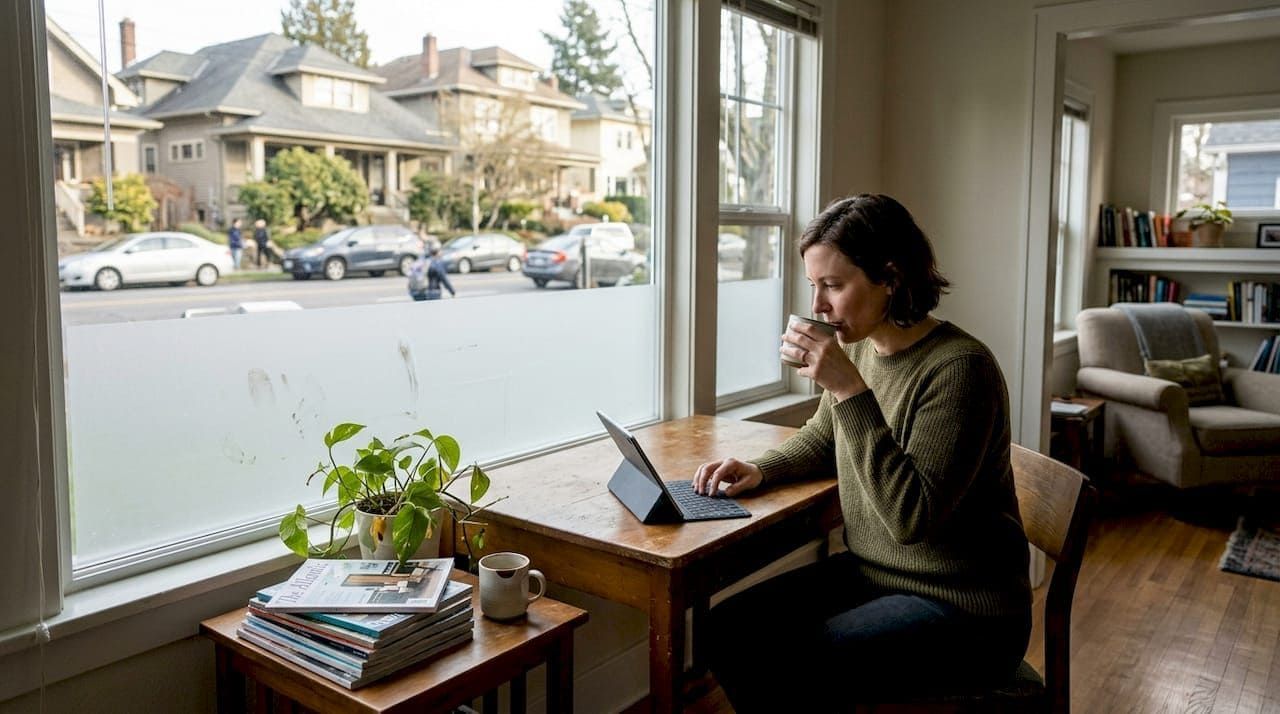
Table of Contents
Key Takeaways
| Point | Details |
|---|---|
| Start with assessment | Identify your specific privacy needs room-by-room for the best results. |
| Window films outperform | Professional window films offer flexible, attractive privacy without sacrificing daylight. |
| Certified pros matter | Professional installers ensure flawless application and warranty protection. |
| Customization available | Choose from frosted, mirrored, or decorative window films to match style and function. |
| Next steps are easy | Getting an expert consultation or quick estimate is the simplest way to upgrade your privacy. |
Evaluate your glass privacy needs
Before you spend a dollar on any solution, take a honest look at your property. Not every window needs the same level of privacy, and jumping straight to a product without mapping your actual problem areas is a fast way to waste money.
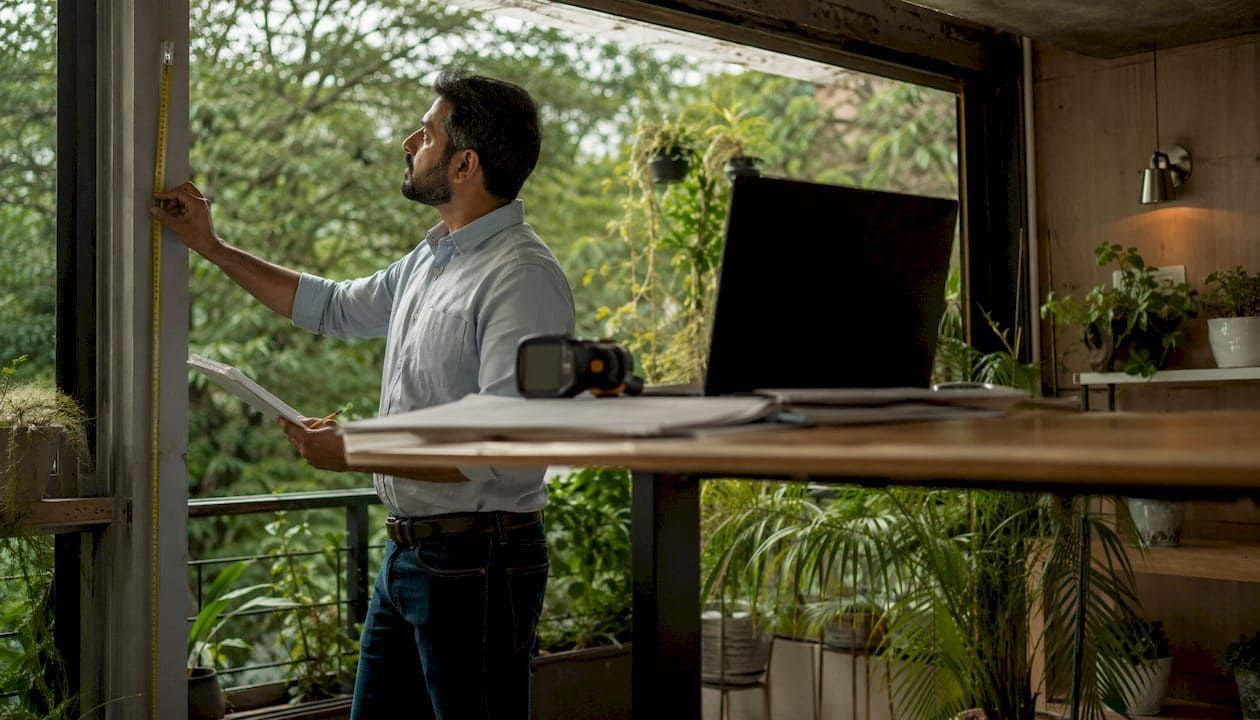
Start by walking through each room and asking one simple question: who can see in, and when? A bathroom window facing a neighbor's yard is a high-priority concern. A second-floor bedroom window facing a quiet backyard might be low priority. Entryways, street-level living rooms, and ground-floor conference rooms typically sit at the top of the list.
Here's a quick framework for rating your spaces:
- Identify every window with an exterior view.
- Note whether visibility is a daytime issue, a nighttime issue, or both.
- Flag windows where screen glare or fading furnishings are also a problem.
- Rank each window as high, medium, or low priority.
- Photograph each window from the outside at different times of day.
Pro Tip: Take photos from the street or sidewalk in the morning, afternoon, and evening. You'll often discover privacy gaps you never noticed from inside the house.
As professional installers can help identify the right solution for unique privacy needs, a quick consultation can save you from over-buying or missing a critical area entirely.
Use the table below to benchmark your spaces:
| Room type | Privacy priority | Common concern |
|---|---|---|
| Street-level living room | High | Visibility from passersby |
| Bathroom | High | Neighbor sightlines |
| Conference room | High | Client and competitor visibility |
| Kitchen | Medium | Partial street or yard exposure |
| Second-floor bedroom | Low to medium | Occasional visibility |
| Basement office | Medium | Ground-level exposure |
Once you have this map, you're in a much stronger position to explore window tinting benefits that match each specific zone. You can also start browsing residential window films to get a feel for what's available before your consultation.
Compare glass privacy solutions
After understanding your privacy priorities, it helps to know how each solution stacks up so you can make an informed decision. There are four main options most homeowners and property managers consider, and they are not created equal.
Curtains and blinds are the most familiar choice. They're inexpensive upfront, easy to find, and require no installation expertise. The downside is significant: they block light entirely when closed, collect dust and allergens, and require constant adjustment throughout the day. They also do nothing for UV protection or heat control.
Frosted glass looks clean and modern, but it's a permanent change. Replacing or modifying frosted glass panels is expensive and disruptive. It also offers no flexibility if your privacy needs change.
Window films are the most versatile option. They're customizable, maintain natural light, and can be tailored to your exact privacy level. They also deliver bonus performance benefits like UV blocking and solar heat reduction.
Tinted or reflective glass is sometimes considered for new construction, but it's cost-prohibitive for retrofits and lacks the adaptability of film.
Key features to compare before deciding:
- Privacy level (one-way vs. full opacity)
- Natural light transmission
- Installation cost and disruption
- Reversibility and flexibility
- Maintenance requirements
- Additional benefits like UV and heat control
| Solution | Privacy level | Light transmission | Cost | Reversible |
|---|---|---|---|---|
| Curtains/blinds | High when closed | Blocked | Low | Yes |
| Frosted glass | High | Diffused | High | No |
| Window film | Adjustable | Maintained | Moderate | Yes |
| Tinted glass | Medium | Reduced | Very high | No |
Pro Tip: For conference rooms or street-level windows, decorative film gives you both a polished aesthetic and real privacy without making the space feel closed off.
Certified dealers like Surface Dynamics offer trusted window film installation across Southern NH and Greater Boston, backed by professional-grade products. If you're still weighing options, comparing solar vs privacy film is a useful next step, and clear privacy film is worth exploring if you want maximum light with minimal visual exposure.
Choose the right window film for your space
With a clear understanding of your options, selecting the best film becomes a targeted process. The right choice depends on where the window is located, how much privacy you need, and what else you want the film to do.
Here are the main film types available:
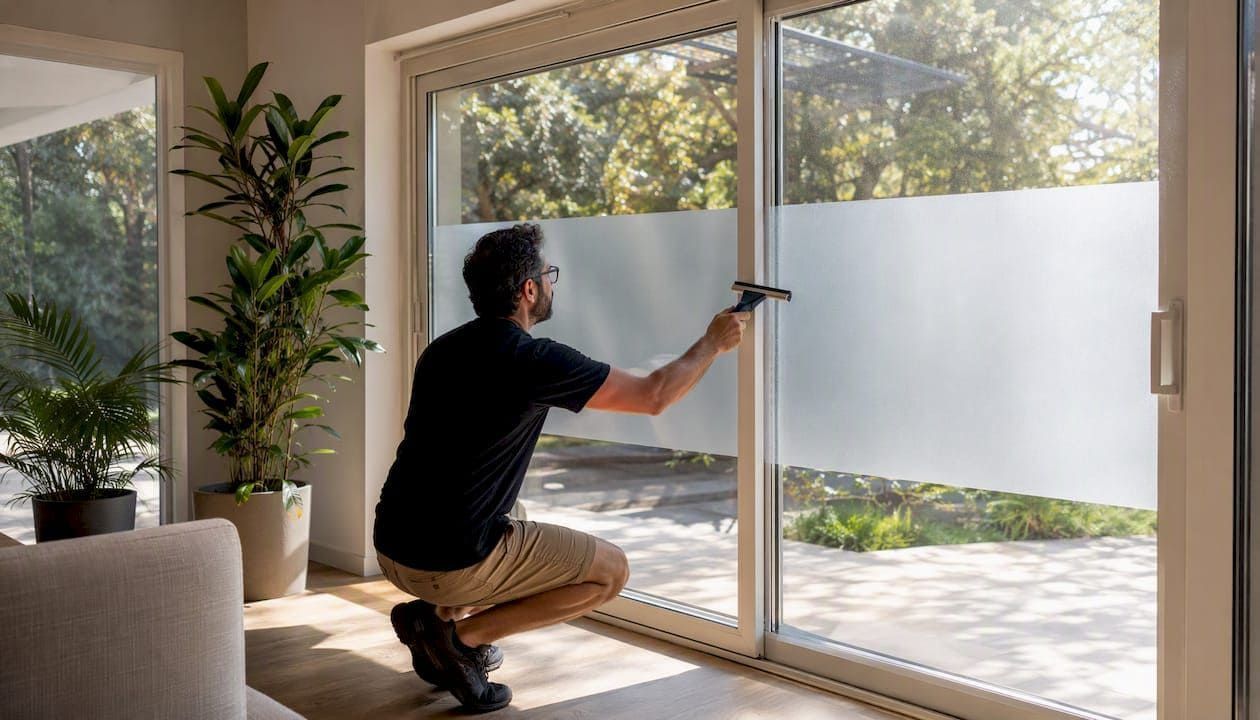
- Frosted or etched films: Mimic the look of sandblasted glass. Great for bathrooms, sidelights, and interior partitions.
- Mirrored or reflective films: Provide one-way daytime privacy. People outside see a reflection; you see out clearly.
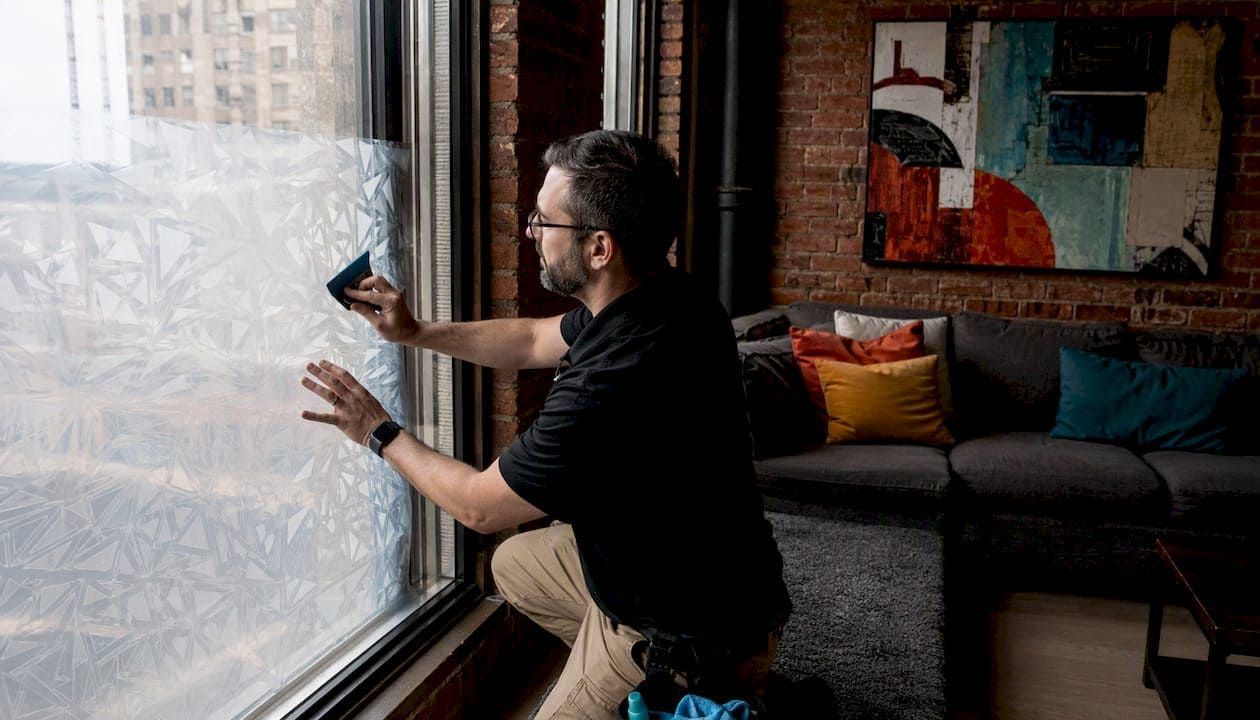
- Decorative films: Come in patterns, textures, and colors. Ideal for adding style while controlling visibility.
- Solar-privacy hybrid films: Combine heat and glare reduction with privacy. Best for south and west-facing windows.
Factors to weigh when choosing:
- Does the window need privacy during the day, at night, or both?
- How much natural light do you want to preserve?
- Is UV protection and fade resistance a priority for furnishings or artwork?
- What appearance fits your home or office design?
- Do you need the film to perform double duty on energy costs?
Over 60% of homeowners who invest in privacy film report that style and security were equally important factors in their decision, which is why decorative and hybrid options have grown in popularity.
Pro Tip: For bathrooms, opaque decorative films provide maximum privacy without blocking light. You get a frosted glass look at a fraction of the cost and without the permanent commitment.
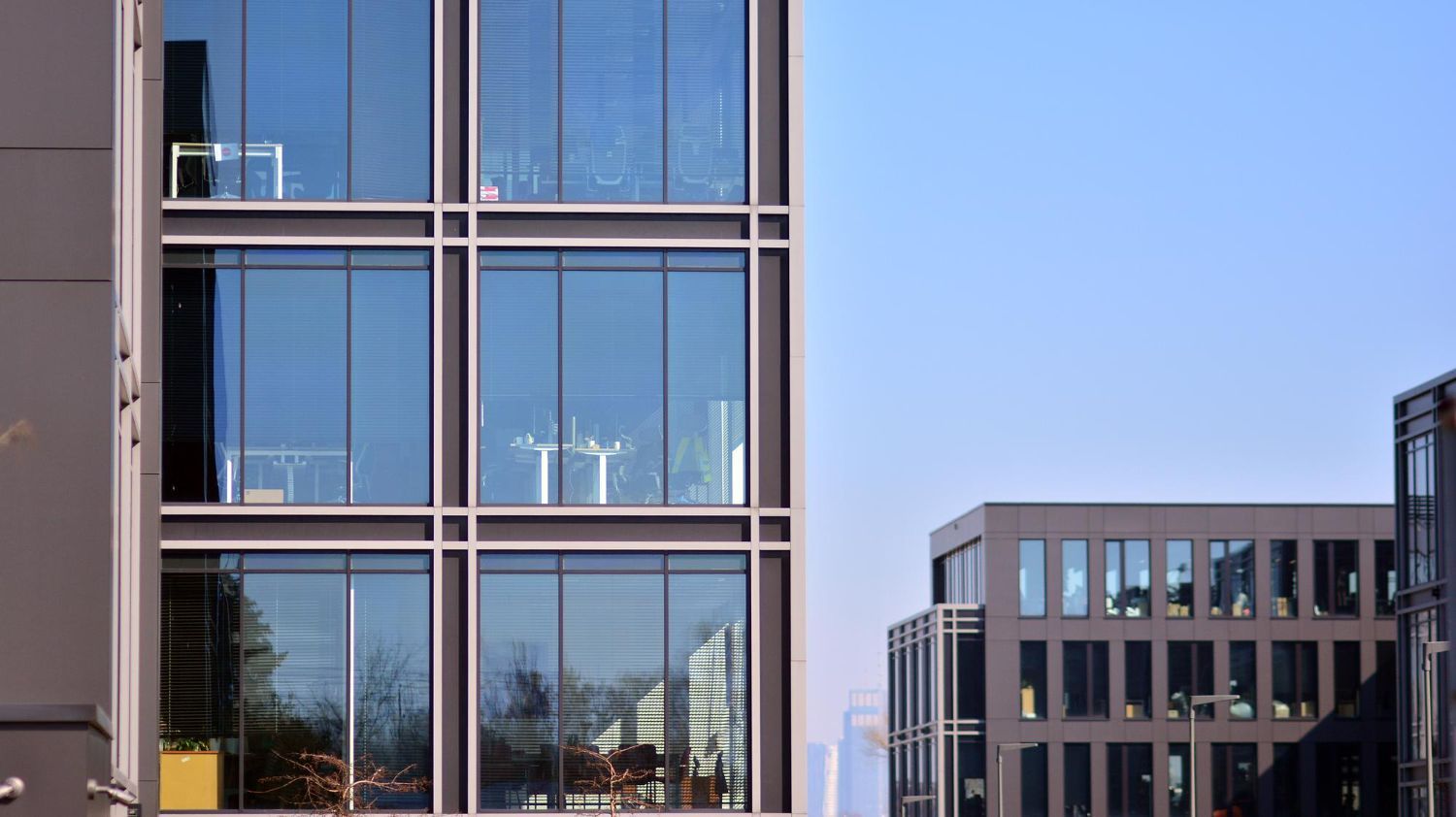
For home applications, decorative window films offer a wide range of design-forward choices. For offices and commercial spaces, commercial window films are engineered for higher-traffic environments. You can also review the full range of commercial film benefits to see how privacy film supports productivity and security in business settings.
Local certified dealers like LLumar SelectPro provide warranty-backed professional installations, which matters when you're making a long-term investment in your property.
Professional installation: How to get flawless results
You've selected your perfect film. Now it's time for installation. Here's how to set yourself up for lasting results.
The professional installation process follows a clear sequence:
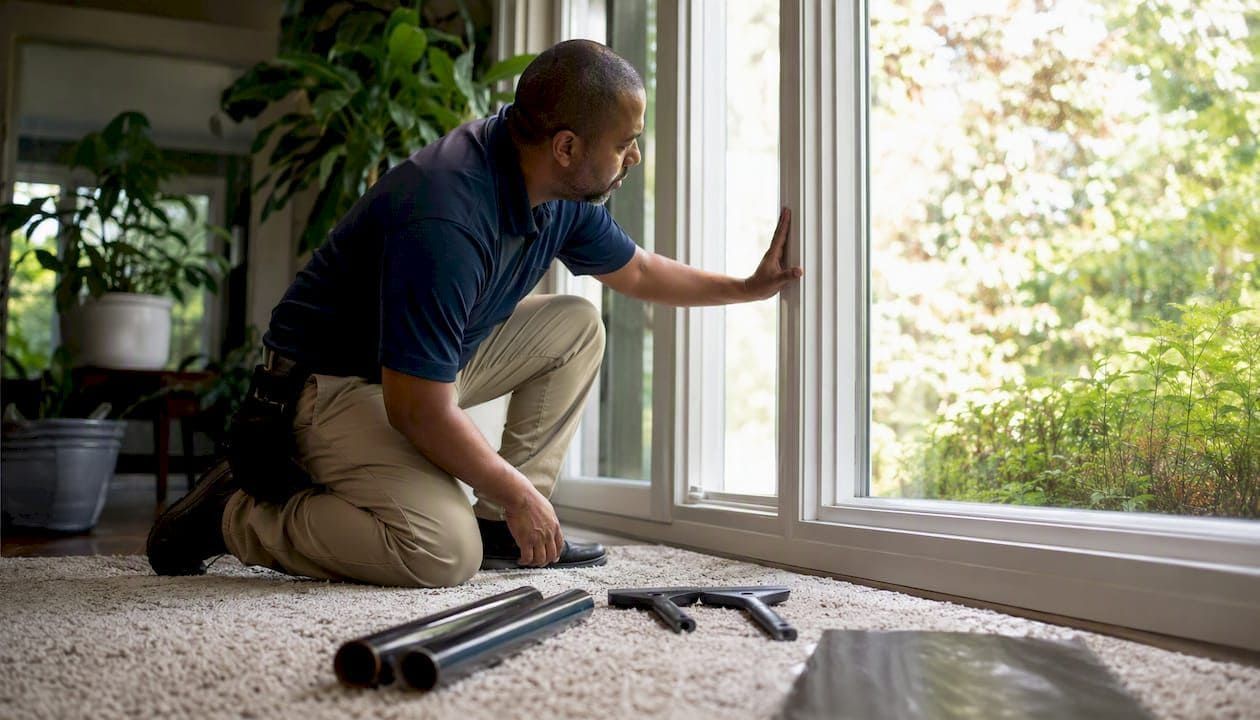
- Consultation: A certified installer assesses your windows, discusses your privacy goals, and recommends the right film type and opacity.
- Measurement: Every window is measured precisely to minimize waste and ensure seamless coverage.
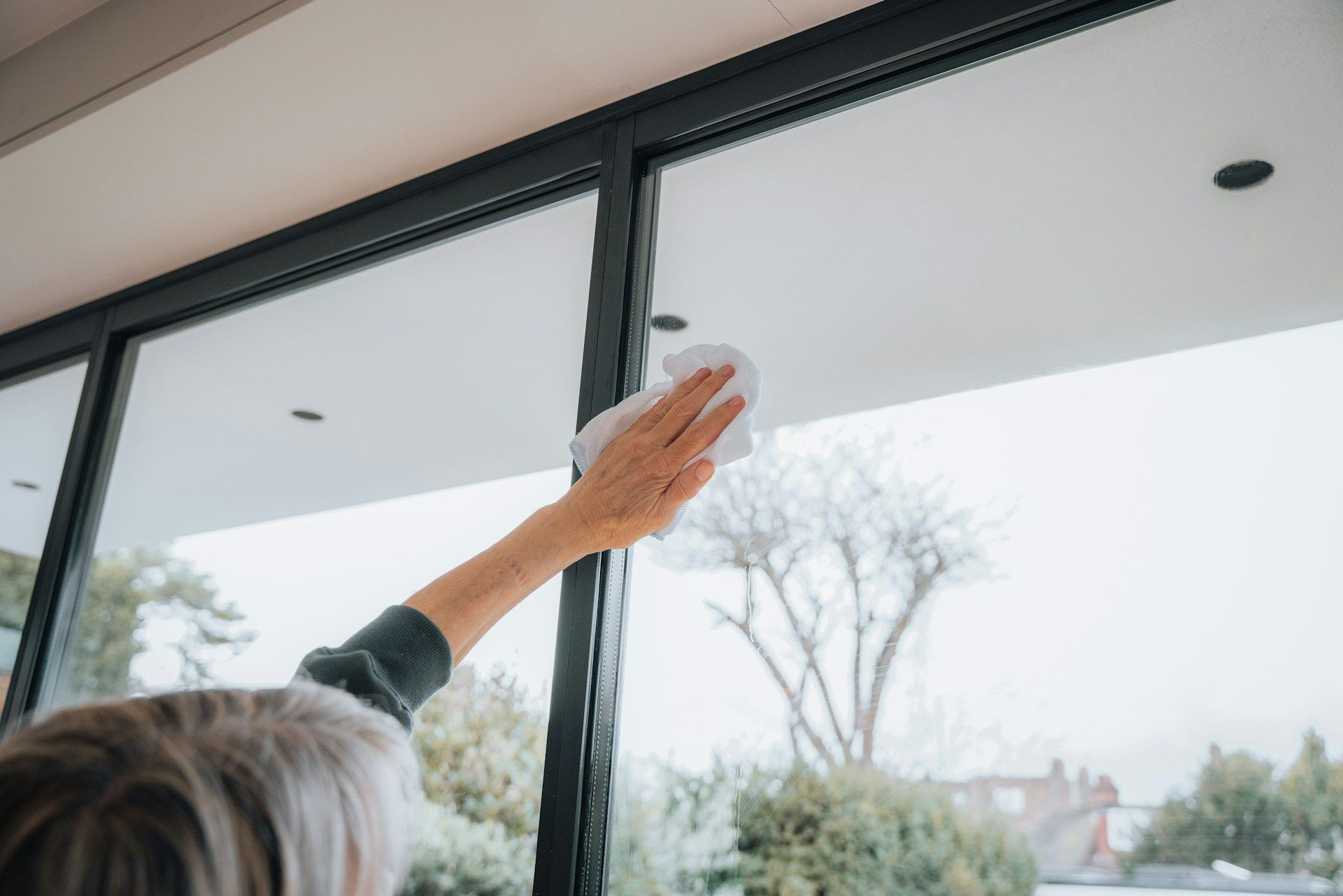
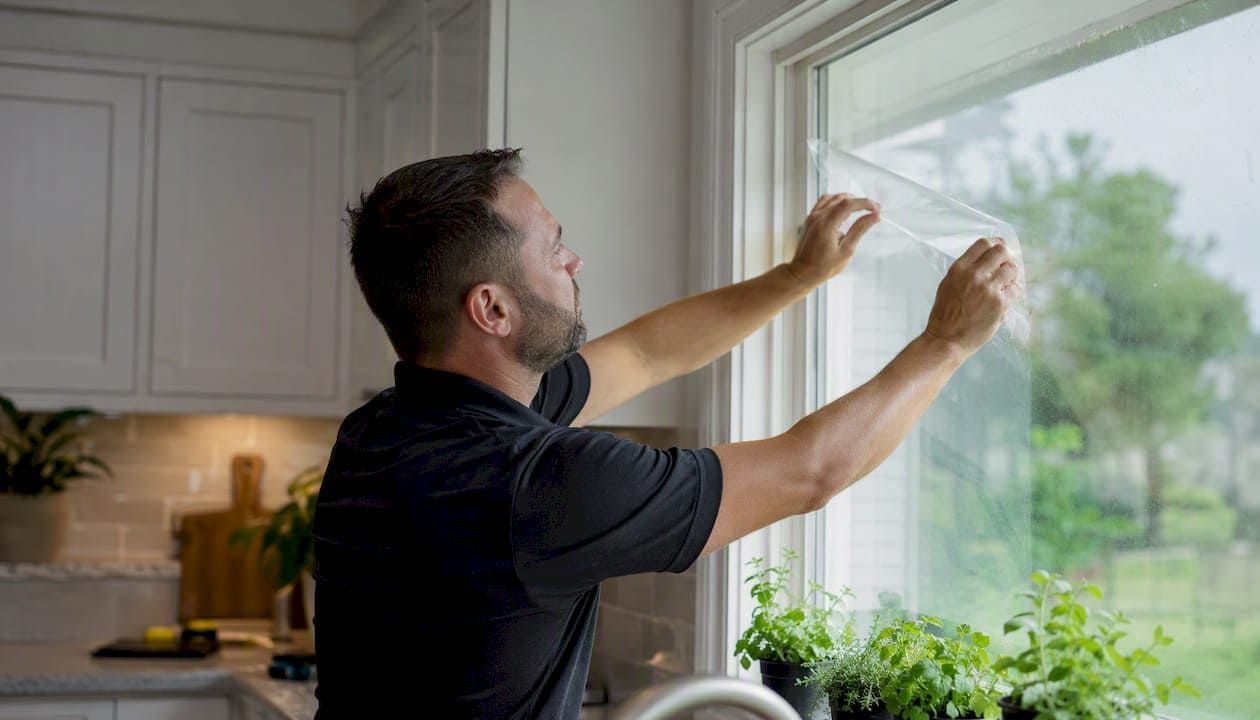
- Surface preparation: Glass is cleaned thoroughly to remove dust, oils, and debris. Any contamination left behind causes bubbles or adhesion failure.
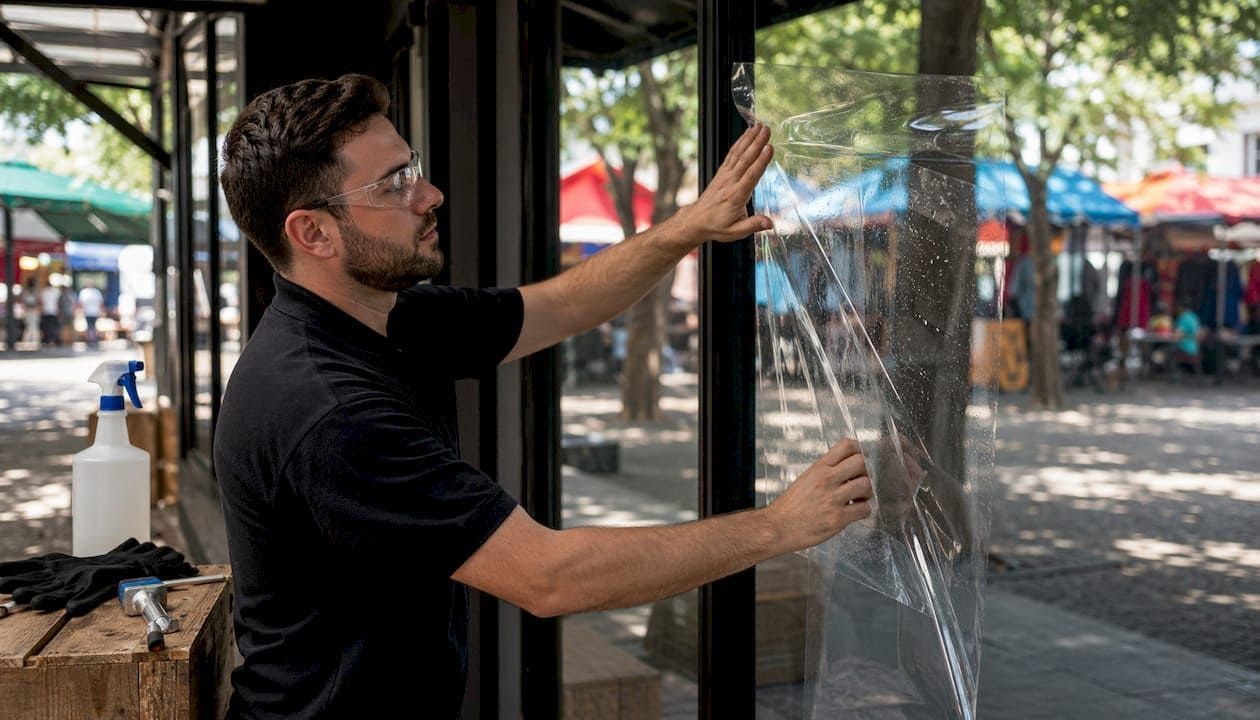
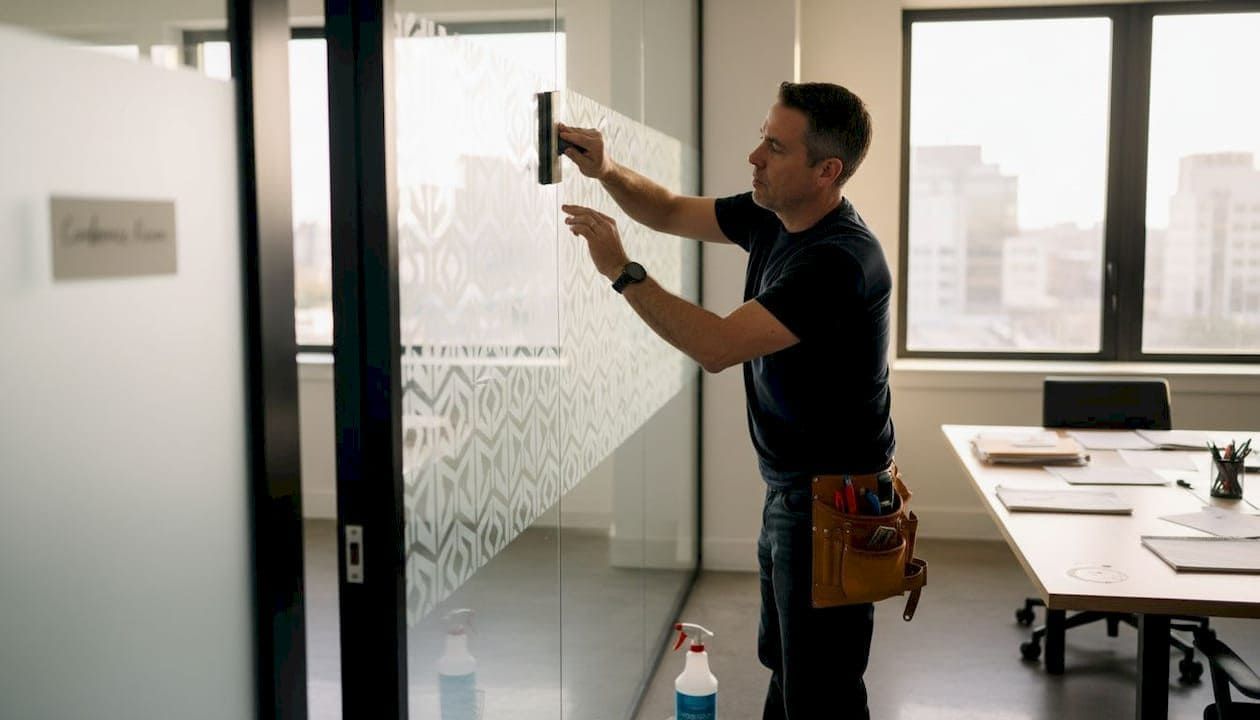
- Film application: The film is cut to size, wet-applied to the glass, and squeegeed smooth to eliminate air pockets.
- Final inspection: The installer checks every panel for bubbles, edges, and alignment before signing off.
DIY installation sounds appealing until you're standing in front of a bubbled, wrinkled film on a $400 window. Even small errors in surface prep or application technique lead to peeling, clouding, or premature failure. Worse, improper installation can void the manufacturer's warranty.
Safety warning: Incorrect film application on thermally stressed glass, such as dual-pane or low-e windows, can cause cracking or seal failure. Always verify compatibility with a certified professional before applying any film.
For complex jobs and full warranty protection, certified pros are strongly recommended. When choosing an installer, look for verified reviews, clear service guarantees, and manufacturer certification. You can learn more about what sets qualified installers apart by visiting about Surface Dynamics. For specific guidance on bathroom applications, the bathroom window tint tips page covers common questions in detail.
Our expert take: What most privacy upgrades miss
Here's something we see regularly: a homeowner invests in a privacy solution and ends up regretting it within a year. Not because the product failed, but because they optimized for one thing and ignored everything else.
The biggest myth in this space is that privacy automatically means a darker, heavier interior. That belief pushes people toward thick curtains or overly dark films that turn a bright room into a cave. Modern window tinting expert tips consistently show that the right film blocks sightlines without meaningfully reducing visible light.
What most people also miss is the compounding value of UV protection. A film that delivers privacy and blocks 99% of UV radiation protects your furniture, flooring, and artwork from fading. That's a real financial benefit that pays back over years.
The other overlooked factor is night privacy. Reflective films that work beautifully during the day flip completely at night when interior lights are on. If you need around-the-clock privacy, frosted or opaque films are the correct choice, not reflective ones. Getting this wrong is a common and frustrating mistake that a quick expert consultation would have prevented.
Ready to upgrade your privacy? Get started today
Putting these steps into practice is easier when you have a local expert in your corner.
Surface Dynamics Window Tinting serves homeowners and property managers across
Southern New Hampshire and the Greater Boston Area with certified LLumar SelectPro installations backed by real warranties.
Start with a free window tint estimate to get a clear picture of your options and costs. Browse real projects in the home window tinting gallery to see what's possible for your space. You can also use the window film viewer tool to visualize how different films look on your actual windows before committing. When you're ready, our team is here to help you get it right the first time.
Frequently asked questions
Will privacy window film make my rooms too dark?
No. Quality privacy films are engineered to block outside views while maintaining natural light transmission, so your rooms stay bright and comfortable.
How long does professional privacy film installation take?
Most residential and office jobs are completed in a single day. Certified pros work efficiently and minimize disruption to your daily routine.
Can privacy film be removed or replaced later?
Yes. Professional-grade films can be safely removed or upgraded with minimal risk to the glass surface, giving you flexibility as your needs change.
Is there a warranty for privacy window films?
Yes. Films installed by certified professionals typically come with extensive warranties that cover performance, adhesion, and in some cases removal and replacement.
Recommended