
Window Film for Airport Terminals: A Facility Manager's Guide
TL;DR:
- Window film for airport terminals improves energy efficiency, passenger comfort, and security through targeted solar control and safety features. Different zones require specific film types, and proper installer qualification ensures long-term performance and warranty adherence. Planning must account for operational constraints, zone mapping, and post-installation reviews to optimize results.
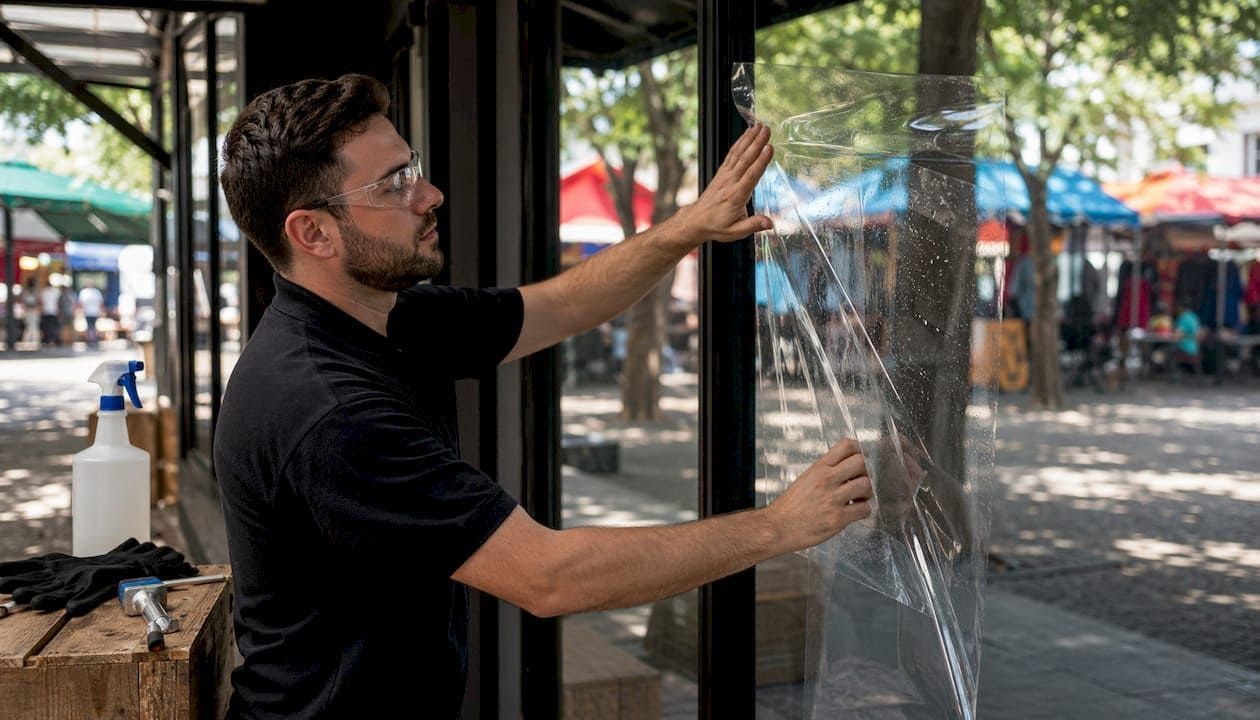
Window film for airport terminals is a high-performance glazing enhancement that controls solar heat gain, blocks UV radiation, strengthens glass safety, and improves passenger comfort across large, glass-heavy aviation environments. The industry term for this category is "solar control and safety glazing film," and facility managers use it to address four simultaneous demands: energy efficiency, occupant comfort, security, and terminal aesthetics. Solar heat gain from large glass areas significantly increases cooling loads, making thermal window film one of the most cost-effective retrofits available to airport facilities teams. Surfacetint, an exclusive LLumar SelectPro Dealer, supplies and installs LLumar Vista Films calibrated to meet exactly these demands in commercial and institutional settings.
Airport terminals present a unique challenge. Their vast glazed facades admit natural light but also drive up HVAC costs, expose passengers to glare, and create security vulnerabilities at ground level. A well-specified film addresses all of these at once, without replacing existing glass.
How do window films improve thermal management and energy efficiency in airport terminals?
Thermal window film reduces cooling loads by reflecting and absorbing solar infrared radiation before it enters the building. The two metrics that govern this performance are Solar Heat Gain Coefficient (SHGC) and Visible Light Transmittance (VLT). SHGC measures how much solar energy passes through the glazing system; a lower SHGC means less heat enters. VLT measures how much visible light passes through; facility managers want enough daylight for passenger comfort without the heat penalty.
Low-emissivity coatings combined with window films calibrated for optimal SHGC reduce HVAC load measurably. That reduction translates directly into lower utility bills and smaller mechanical system strain, which extends equipment life. For a terminal running HVAC around the clock across hundreds of thousands of square feet, the savings compound quickly.
Energy-efficient window films work best as part of a layered facade strategy. They complement passive elements like Low-E coatings already present in insulated glazing units, roof overhangs, and exterior shading fins. Film alone is not a complete solution, but it is often the fastest and least disruptive upgrade available to an existing terminal.
Key thermal performance benefits of airport window tinting include:
- SHGC reduction without replacing glass, preserving capital budgets
- Glare control that reduces eye strain in gate areas and check-in halls
- Infrared rejection that keeps floor-level seating zones cooler
- HVAC load reduction that lowers peak demand charges on utility bills
- Daylight retention through high-VLT films that avoid darkening interiors
Window film installation cost is a fixed one-time expenditure, and savings on energy bills start immediately. Warranty periods typically run 10–20 years, meaning the return on investment grows as utility rates rise.
Pro Tip: Specify film with a VLT above 40% for gate areas and passenger lounges. This preserves the connection to natural light that passengers value while still delivering meaningful heat rejection.
What security benefits do window films provide in airports?
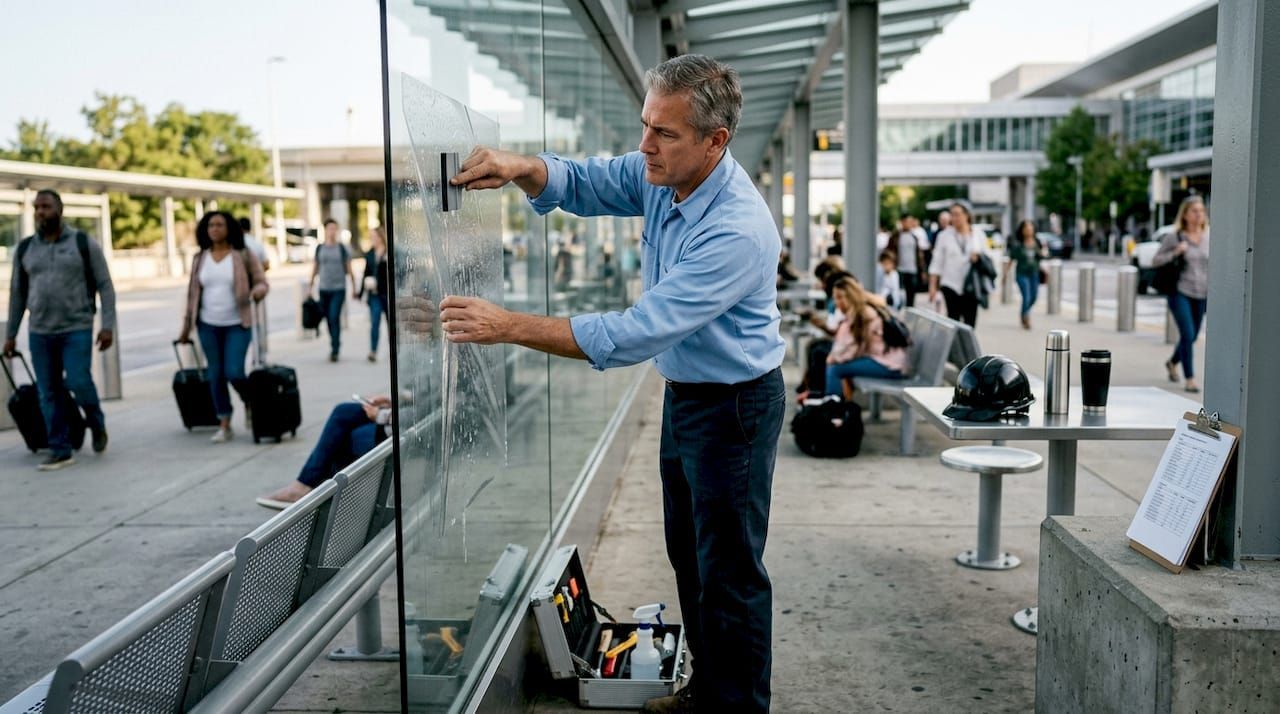
Security window films protect occupants by holding shattered glass within the frame after impact. This single property addresses multiple threat categories: forced entry, windborne debris, accidental impact, and low-level blast events. Safety and security films engineered to retain glass fragments improve occupant protection by preventing the secondary injuries caused by flying shards.
At the structural level, laminated glass with high-performance polymer interlayers combined with structural silicone glazing helps glass panels absorb blast energy and remain intact. Security film applied to existing monolithic glass replicates part of this behavior at a fraction of the cost of full glazing replacement. The film bonds to the glass surface and, when combined with an anchoring system attached to the frame, keeps the entire pane in place under load.
Airport-specific security threats that window film addresses include:
- Forced entry at ground-level perimeter glazing and retail storefronts
- High-wind events and windborne debris during severe weather
- Blast overpressure from incidents near the terminal exterior
- Accidental impact from baggage carts, ground vehicles, and crowds
- Smash-and-grab attempts at retail and currency exchange counters
Security film is not a substitute for blast-rated glazing systems in high-threat zones, but it provides a meaningful upgrade to standard commercial glass in areas where full replacement is not feasible. Pairing film with structural framing anchors and rigorous performance mock-up testing assures resilience under the conditions airports actually face.
Surfacetint's commercial safety and security films are specified to address these scenarios in institutional settings, with film thickness and adhesive systems selected for the threat level of each zone.
Which types of window films suit specific airport terminal zones?
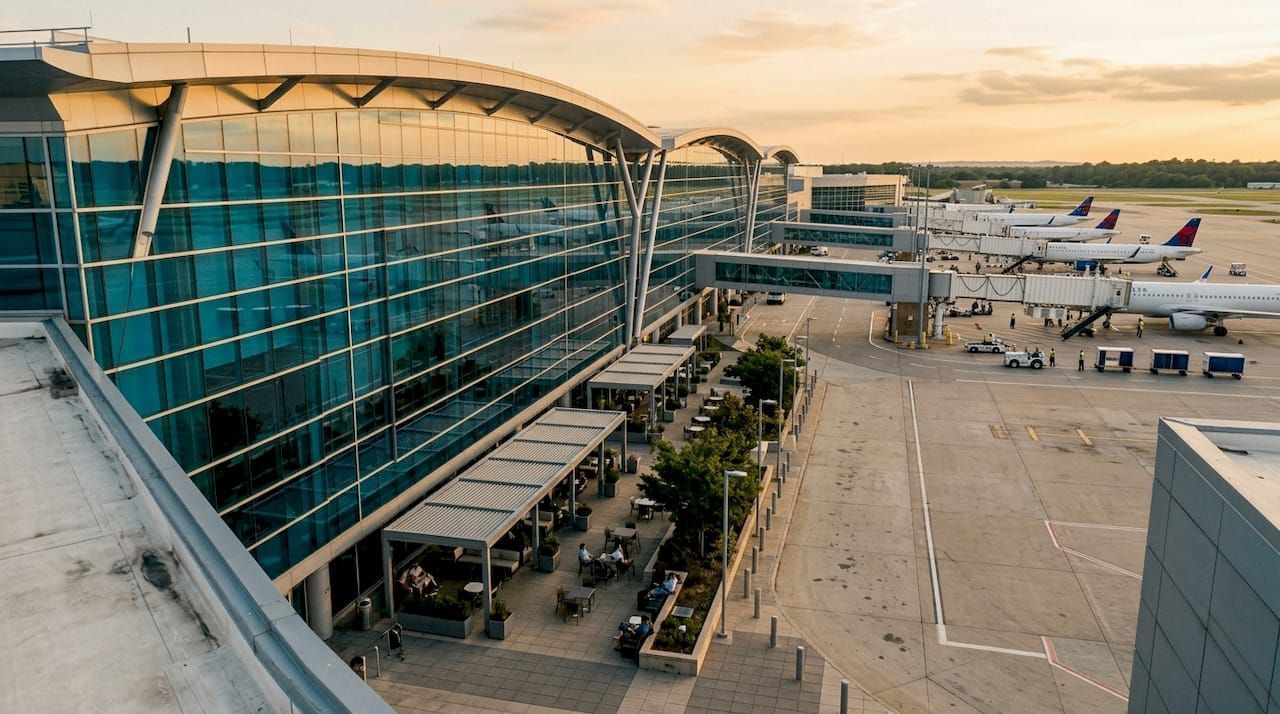
Airport terminals contain distinct functional zones, and each zone has different film requirements. A single film specification across the entire terminal is almost always the wrong answer.
| Film Type | Primary Benefit | Best Terminal Zone | Key Tradeoff |
|---|---|---|---|
| Solar control film | Heat and glare rejection | Gate areas, check-in halls, lounges | May reduce outward visibility at night |
| Dual-reflective film | Daytime view preservation | Concourses, observation areas | Higher cost per square foot |
| Security/safety film | Glass retention after impact | Perimeter glazing, retail, customs | Minimal solar benefit on its own |
| Privacy/decorative film | Visual separation and branding | Offices, conference rooms, partitions | Blocks natural light if overused |
| UV protection film | Fade prevention, occupant health | Retail displays, art installations | Often combined with solar control |
Dual-reflective window films balance solar energy rejection with preserving outward views and reducing interior night-time reflectivity. They provide high exterior reflectivity during the day while maintaining lower interior reflectivity to minimize the "fishbowl effect" that passengers find disorienting after dark.
UV protection window film deserves specific attention in retail concessions and food and beverage areas. Films can block over 99% of UV radiation while reducing glare without significantly darkening interiors. That level of UV rejection protects merchandise, seating upholstery, and flooring from fading, which reduces replacement costs over the terminal's service life.
Surfacetint's LLumar Vista Film line covers all four categories. Facility managers can specify solar control, safety and security, and decorative privacy films from a single authorized dealer, which simplifies procurement and warranty management.
Pro Tip: Map your terminal by zone before specifying film. Gate areas, retail concessions, security checkpoints, and administrative offices each have different light, privacy, and security requirements. A zone map prevents costly over-specification in low-risk areas and under-specification in high-risk ones.
What logistical considerations must airport facilities address for film installation?
Airport film installation is operationally different from standard commercial work. The constraints are significant, and underestimating them is the most common reason projects run over budget or over schedule.
- Security clearance for all installers. Every technician working airside or in secured zones requires background checks and airport-issued credentials. This process takes weeks and must be initiated before the project schedule is finalized.
- Night-shift scheduling. Airport installations often necessitate night shifts to minimize passenger disruption. Facility managers must coordinate with operations teams to identify work windows that do not conflict with early morning departures or late-night arrivals.
- Prevailing wage documentation. Many airport authorities require contractors to comply with prevailing wage laws. Installers must provide certified payroll records, which adds administrative overhead that general commercial contractors are not always prepared to handle.
- Phased installation planning. Large terminals cannot be filmed in a single mobilization. Work must be phased by concourse or zone, with each phase planned around gate assignments and terminal traffic patterns.
- Compliance documentation. Airport authorities require material safety data sheets, product certifications, and installer credentials before work begins. Assembling this package takes time and requires a contractor with institutional project experience.
- Coordination with airport management. Facilities teams must brief airport operations, security, and concession managers before each work phase. Unannounced work in a terminal creates security alerts and operational delays.
Installer experience in airport-scale and security-sensitive deployments is more critical than general commercial experience. A contractor who has filmed office buildings but never worked in an active terminal will underestimate every one of these constraints.
How to select, specify, and maintain window film for long-term terminal performance
Selecting the right film starts with defining performance targets before contacting any installer. Facility managers who skip this step end up specifying by price rather than by outcome.
Selection criteria to establish first:
- Define energy goals: target SHGC range, expected cooling load reduction, and payback period acceptable to the capital budget.
- Define security requirements by zone: identify which areas need glass retention, which need blast mitigation, and which need standard solar control only.
- Define aesthetic constraints: confirm whether the airport authority has facade appearance guidelines that restrict reflectivity or tint color.
- Confirm warranty requirements: most institutional projects require a minimum 10-year manufacturer warranty backed by an authorized dealer.
- Verify installer qualifications: selecting authorized and trained window film dealers ensures installation quality and eligibility for manufacturer warranties.
Installation best practices:
- Schedule installation during low-humidity periods to improve film adhesion and curing time.
- Allow a full cure period (typically 30–60 days) before cleaning treated glass.
- Use only manufacturer-approved cleaning solutions after installation to avoid adhesive degradation.
Maintenance guidelines to preserve long-term performance:
- Inspect film annually for bubbling, peeling edges, or discoloration.
- Clean with a soft cloth and ammonia-free solution on a regular schedule.
- Document any damage promptly and contact the installer for warranty assessment.
- Re-evaluate film performance against current energy benchmarks every five years.
Pro Tip: Request a post-installation thermal scan of treated zones six months after completion. Infrared imaging reveals any areas where film adhesion has failed or where solar gain remains higher than specified. Catching these early keeps the warranty claim process simple.
Surfacetint's approach to energy-saving window film strategies applies directly to large commercial glazing systems, including the phased specification and post-installation review process that airport projects require.
Key Takeaways
Window film for airport terminals delivers measurable gains in energy efficiency, passenger comfort, and security only when film type, zone requirements, and installer qualifications are matched precisely before procurement begins.
| Point | Details |
|---|---|
| Zone-specific specification | Map terminal zones first; gate areas, retail, and perimeter glazing each require different film types. |
| Thermal film reduces HVAC costs | Solar control film lowers SHGC and reduces cooling loads, with savings accruing over a 10–20 year warranty period. |
| Security film retains glass | Safety films hold shattered glass in the frame, reducing injury risk from impact, forced entry, and blast events. |
| Airport logistics require planning | Security clearances, night-shift scheduling, and prevailing wage compliance must be addressed before installation begins. |
| Installer credentials matter | Authorized, experienced dealers ensure warranty eligibility and compliance with airport authority documentation requirements. |
Window film is one layer, not the whole wall
I have reviewed a lot of airport glazing projects where facility managers treated window film as a complete facade solution. It never is. Film performs best when it works alongside Low-E glazing, exterior shading, and properly sized HVAC. When those elements are absent or undersized, film carries more load than it was designed for, and the energy savings fall short of projections.
The second mistake I see consistently is underestimating installer vetting. Airport projects are not standard commercial jobs. The administrative requirements alone, including security clearances, certified payroll, and compliance documentation, eliminate most general contractors before the first roll of film is cut. Facility managers who treat installer selection as a procurement exercise rather than a qualification exercise end up managing schedule failures mid-project.
My honest advice: start with a zone-by-zone performance audit before you write a single specification. Identify where heat gain is highest, where security risk is greatest, and where passenger complaints about glare are concentrated. That audit shapes every film decision that follows, and it gives you a baseline to measure actual post-installation performance against. Film that cannot be measured cannot be managed.
Surfacetint's approach to airport-scale window film projects
Airport facility managers need a film partner who understands both the product and the operational environment. Surfacetint brings both to institutional projects, from zone-specific film specification to coordinating installation schedules that respect terminal operations.
As an exclusive LLumar SelectPro Dealer, Surfacetint supplies LLumar Vista Films across the full range of commercial window film types, including solar control, safety and security, and decorative privacy options. The team supports facility managers through compliance documentation, phased installation planning, and post-installation performance review. Contact Surfacetint at surfacetint.com to request a consultation and zone-specific film assessment for your terminal.
FAQ
What is window film for airport terminals?
Window film for airport terminals is a high-performance glazing film applied to existing glass to control solar heat gain, block UV radiation, improve security, and enhance passenger comfort. It is also called solar control and safety glazing film in the industry.
How much UV radiation does airport window film block?
Quality UV protection window film blocks over 99% of UV radiation while maintaining visible light transmittance. This level of protection reduces passenger UV exposure and prevents fading of interior finishes and retail merchandise.
Does window film meet airport security requirements?
Security window films hold shattered glass within the frame after impact, addressing forced entry, windborne debris, and low-level blast threats. For high-threat zones, film should be combined with structural framing anchors and blast-rated glazing systems.
How long does airport window film installation take?
Installation timelines depend on terminal size, zone phasing, and security clearance processing. Large terminals typically require phased installation over multiple nights to avoid disrupting passenger operations, with each phase planned around gate assignments.
How do I choose the right film for different terminal zones?
Match film type to zone function: solar control or dual-reflective film for gate areas and lounges, security film for perimeter and retail glazing, and privacy or decorative film for administrative spaces. A zone-by-zone performance audit before specification prevents mismatched film selection.
Recommended