
Commercial Property Sun Protection Tips That Cut Costs
TL;DR:
- Effective commercial sun protection involves layering exterior shading, solar films, and proper glazing to reduce heat gain and energy costs. Prioritizing facade-specific solutions and integrating measures into building codes enhances comfort and compliance while preserving aesthetics. External shading and reflective roof coatings provide significant cost-effective benefits, especially when tailored to building orientation and climate conditions.
Solar heat streaming through unprotected glass and across unshielded rooftops is one of the most overlooked drivers of high energy bills in commercial buildings. These practical commercial property sun protection tips give you a layered framework to evaluate your building's exposure, choose the right combination of solutions, and protect your occupants, furnishings, and HVAC budget. Whether you manage a single-story retail strip or a multi-floor office building, the right approach depends on building science, not guesswork.

Table of Contents
- Key takeaways
- Commercial property sun protection tips: start with the right criteria
- 1. Use external shading as your first line of defense
- 2. Install high-performance solar window films
- 3. Select glazing with the right SHGC for each facade
- 4. Apply cool roof coatings to cut rooftop heat load
- 5. Prioritize orientation-specific solutions for each facade
- 6. Integrate shading into building energy code compliance
- 7. Protect outdoor commercial spaces from direct sun
- My perspective on what actually moves the needle
- How Surfacetint helps you put these tips into action
- FAQ
Key takeaways
| Point | Details |
|---|---|
| Layer your protection | Combining exterior shading, solar films, and quality glazing outperforms any single solution. |
| Orientation matters | East and west facades need the most aggressive solar control due to low-angle sun exposure. |
| Cool roofs save real money | Reflective roof coatings can reduce cooling costs by up to 30% in hot climates. |
| Films block UV effectively | Quality solar window films block up to 99% of UV radiation while preserving views. |
| Match SHGC to climate | Hot-zone buildings should target an SHGC of 0.25 or lower for code compliance and comfort. |
Commercial property sun protection tips: start with the right criteria
Before you spend a dollar on shade structures or window treatments, you need a clear way to evaluate what actually works. Not all sun protection is created equal, and the wrong choice for your climate or building orientation can cost more than it saves.
The two most critical performance metrics are Solar Heat Gain Coefficient (SHGC) and U-value . SHGC measures how much solar radiation passes through a window as heat. The lower the number, the less heat enters. U-value measures how well the window resists heat transfer overall. Together, they tell you how a glazing system performs under real conditions.
Building orientation shapes your entire strategy. South-facing facades in northern climates can actually benefit from some solar gain in winter, so you want flexible solutions there. East and west facades, however, receive direct low-angle sun that is brutal in summer and nearly impossible to block with interior treatments alone. North-facing windows rarely drive heat gain but still transmit UV radiation.
Here is how to frame your evaluation:
- Thermal barrier priority: Intercept solar radiation before it hits the glass. External shading outperforms glazing upgrades, which outperform internal shading.
- Code compliance: Verify your building against ASHRAE 90.1 and IECC requirements. In hot climate zones, maximum SHGC is often 0.25 and always check NFRC whole-window labels, not center-of-glass ratings.
- Layered strategy: No single product does everything. Plan for exterior shading plus glazing control plus interior management.
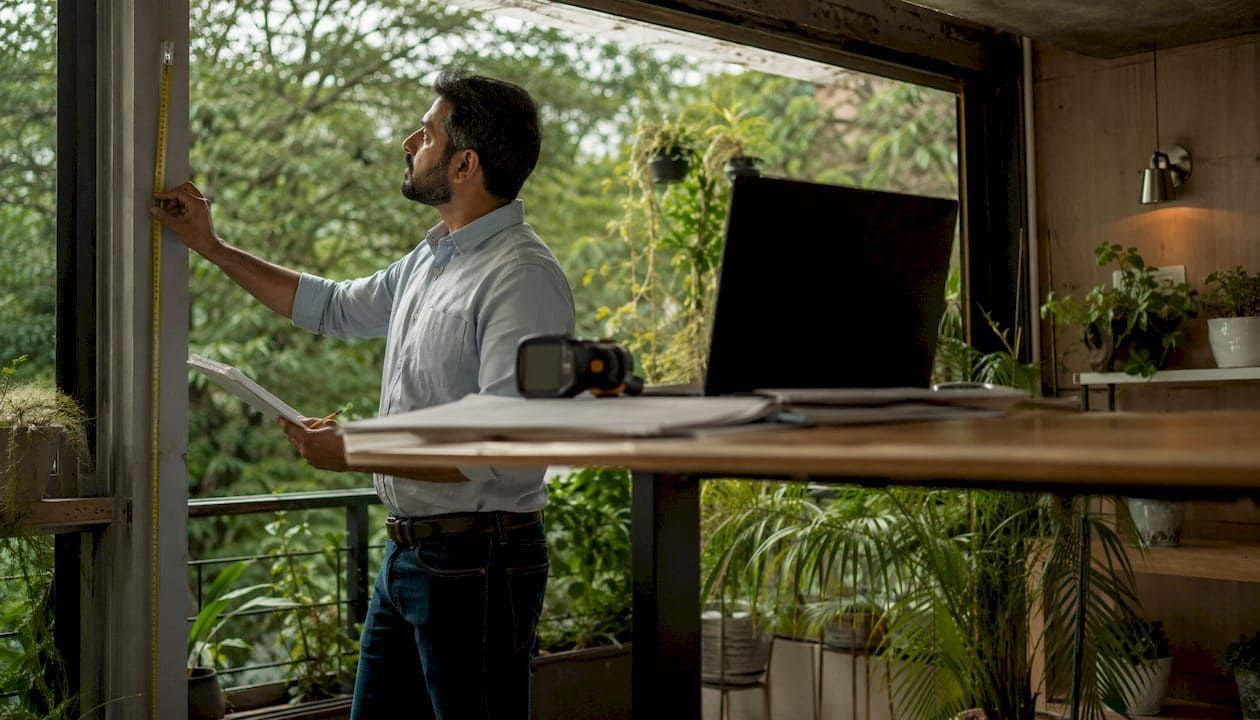
Pro Tip: Run a simple orientation audit before requesting any bids. Walk your building at 9 a.m. and 3 p.m. on a clear summer day and note which facades and which floors get direct sun. That data will drive every decision that follows.
1. Use external shading as your first line of defense
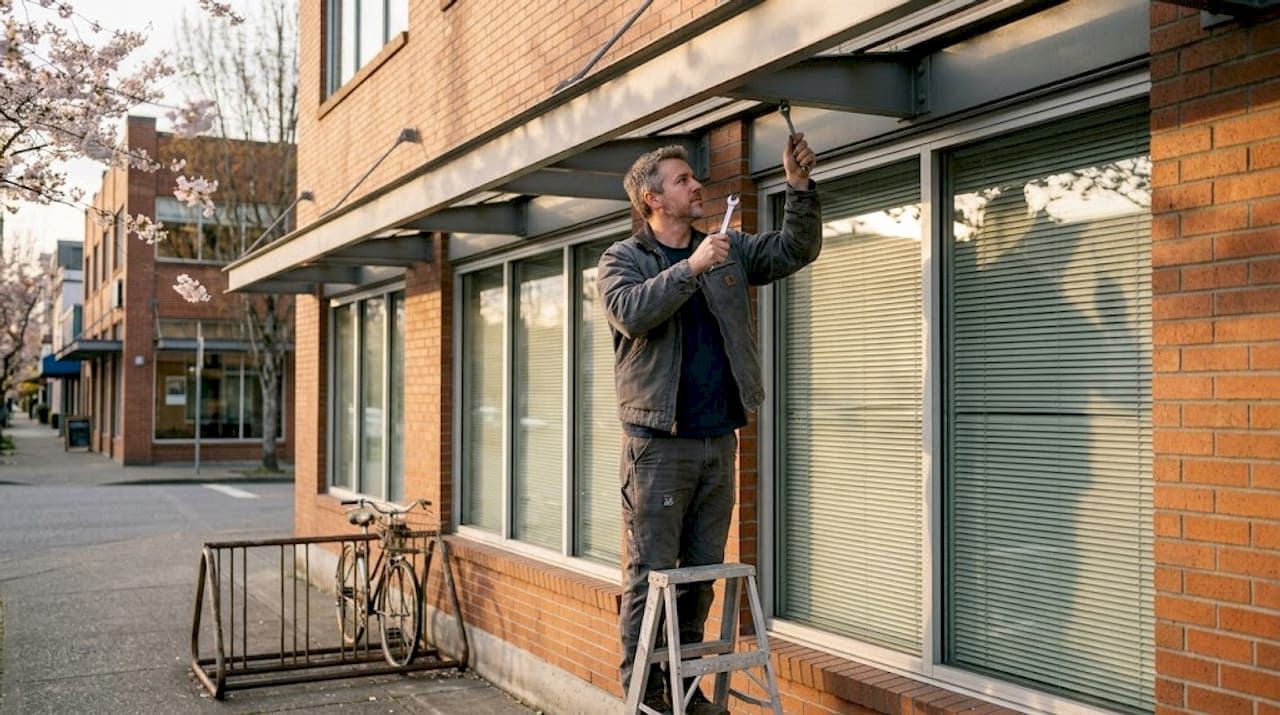
External shading stops solar radiation before it even touches the glass. That distinction matters because once solar energy passes through a window, it becomes trapped heat inside your building. Blocking it outside is fundamentally more effective than trying to manage it after entry.
Horizontal overhangs work exceptionally well on south-facing windows. They block the high-angle summer sun while allowing the low-angle winter sun to enter for passive heating, which reduces heating loads in colder months. Vertical fins, by contrast, are better suited for east and west facades where the sun travels at low angles across the sky.
Deciduous trees block 60 to 90% of solar radiation in summer and allow 50 to 80% of sunlight through in winter once leaves drop. If your site allows for landscaping, strategically placed trees are one of the most cost-effective commercial sunshade options available, with zero ongoing energy cost.
For retrofit situations where adding overhangs or fins is not structurally practical, exterior solar screens and tensioned shade sails can provide real solar heat reduction without major construction.
Pro Tip: Pair any external shading structure with a solar film on the glass behind it. The shade handles direct beam radiation. The film manages diffuse sky radiation and UV that still reaches the glass on overcast days.
2. Install high-performance solar window films
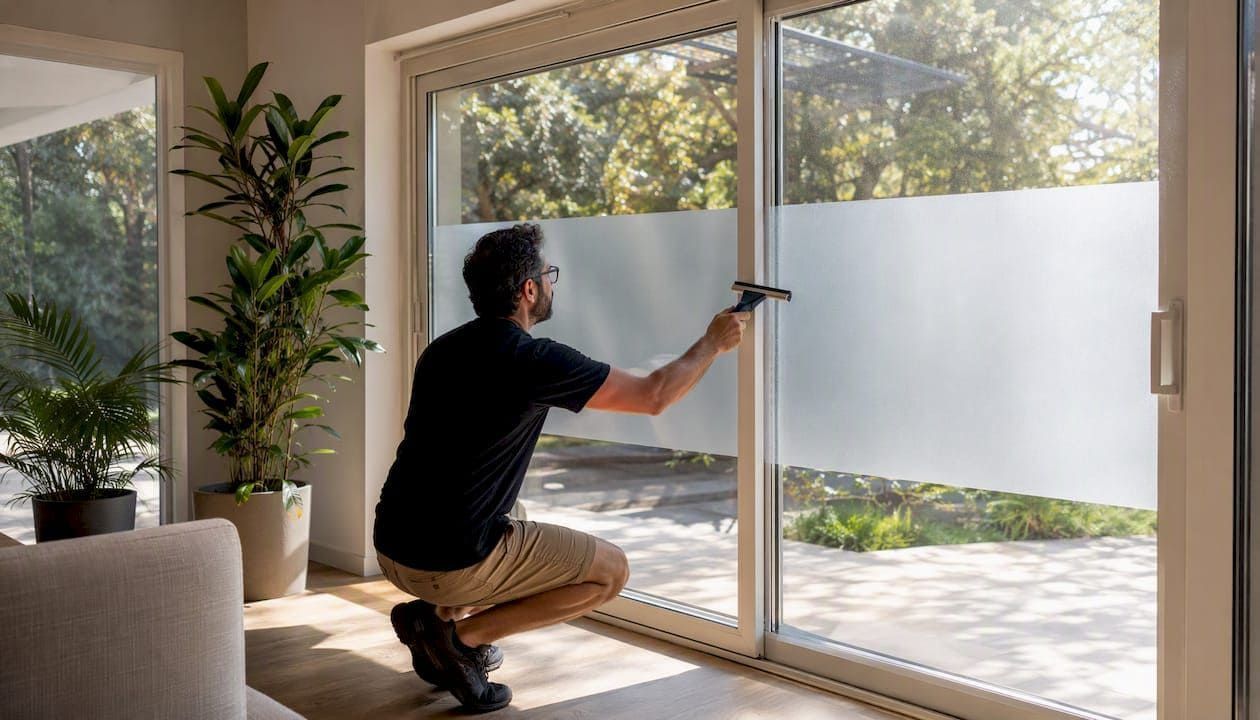
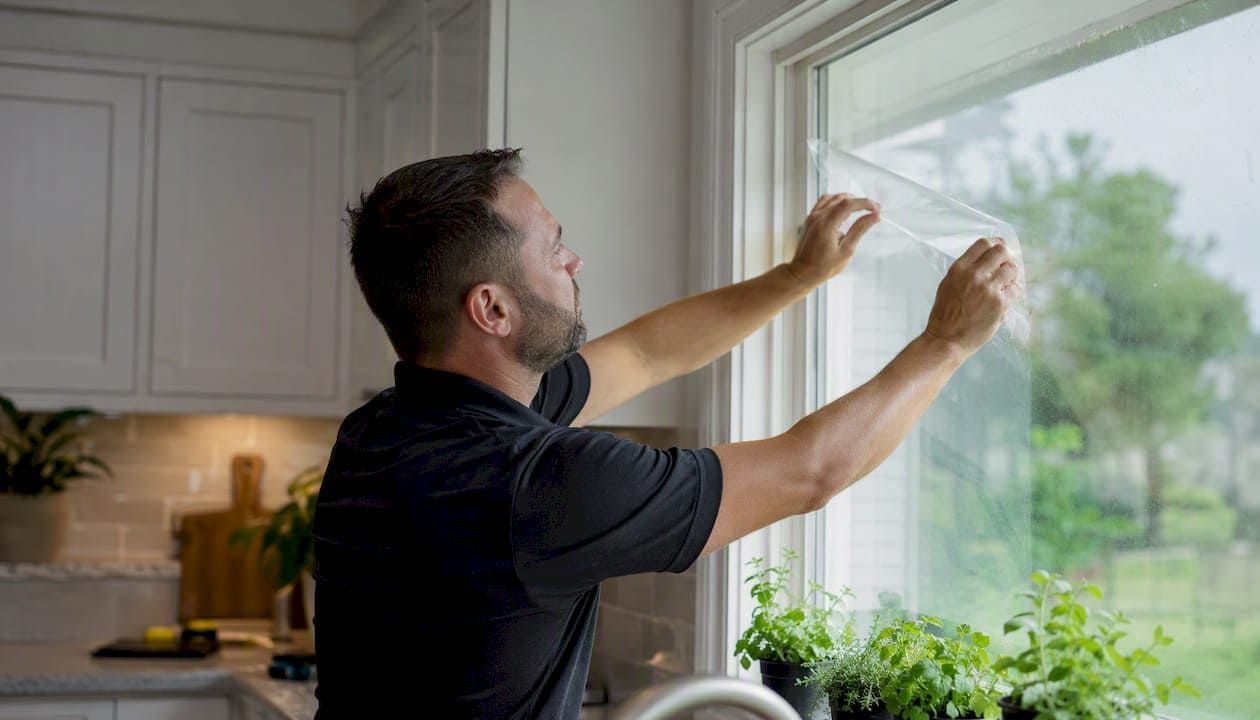
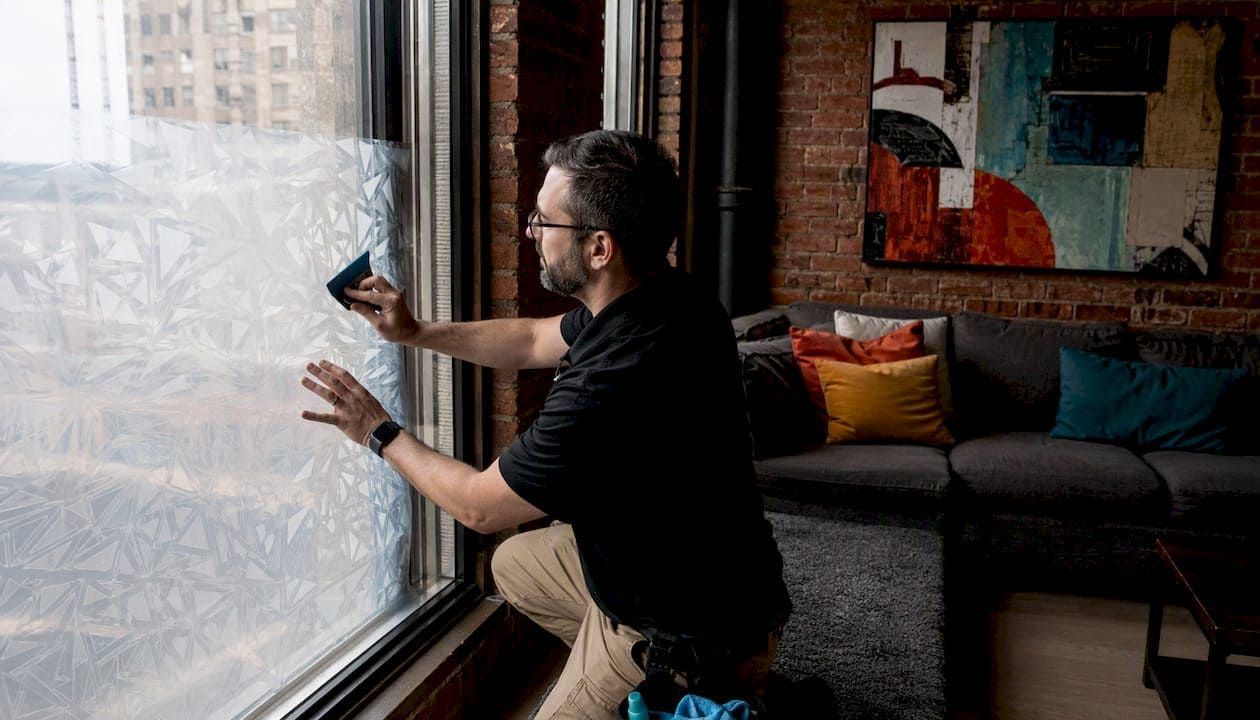
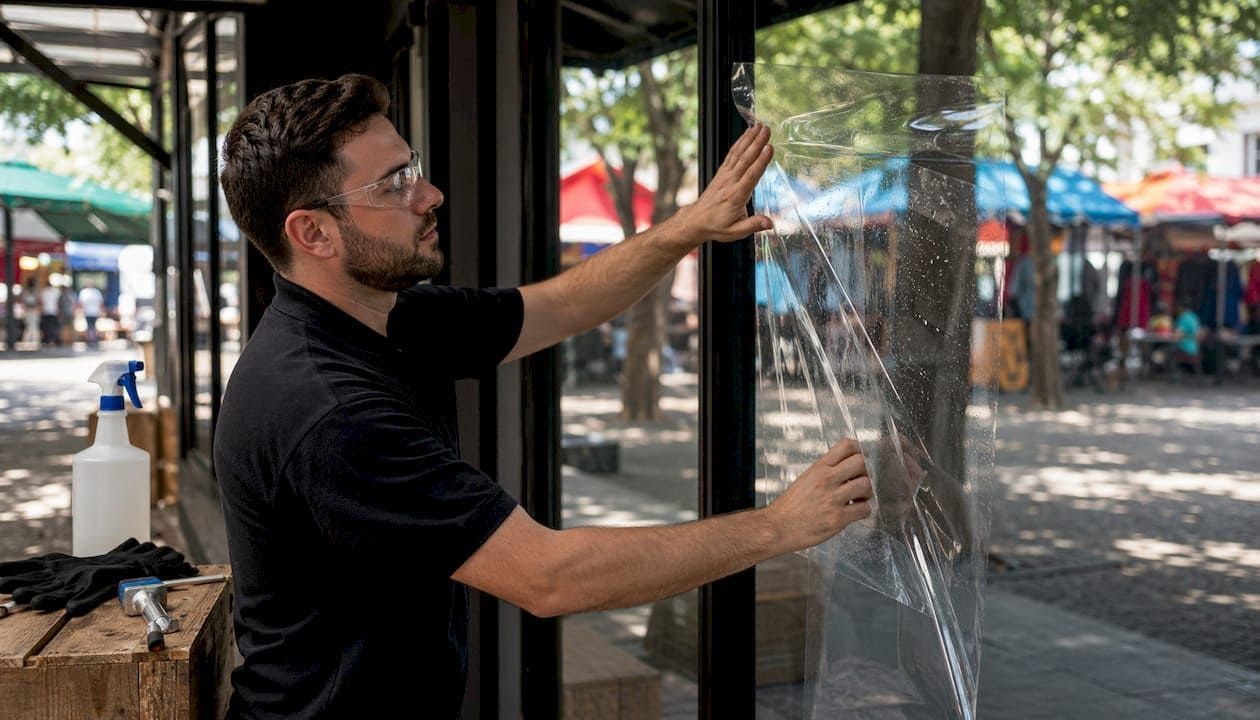
Window films are the most accessible and cost-effective retrofit solution for commercial sun protection. They require no structural changes, install in days rather than weeks, and deliver measurable results immediately.
Solar window films block up to 99% of UV radiation while maintaining visible light transmission. That means your occupants keep their views and natural light while you eliminate the UV that fades furniture, flooring, and artwork. For office environments with expensive finishes or retail spaces with merchandise displays, that protection pays for itself quickly.
The performance range across film types is wide. Spectrally selective films allow high visible light transmission while rejecting a significant portion of near-infrared heat. Reflective films reject more total solar energy but can create exterior glare. Neutral films balance both concerns well and tend to work in most commercial environments.
A key consideration: internal shades and blinds trap solar heat inside once it passes through the glass. Internal shades often turn windows into indoor radiators, making them poor substitutes for actual solar control. Films work at the glass level, intercepting heat before it enters the occupied space.
3. Select glazing with the right SHGC for each facade
If you are in new construction or doing a major renovation, glazing selection is where you can make the largest single-product impact on solar heat gain. The goal is matching SHGC to both climate and orientation.
Low SHGC glass is critical for east and west facades to reduce cooling loads from low-angle morning and afternoon sun. South-facing windows in cold climates can tolerate a higher SHGC because you want passive solar heating in winter. One-size-fits-all glazing specs waste money on the facades where they are not needed and underperform on the ones that matter most.
Here is a quick comparison to guide your glazing decisions:
| Glazing type | SHGC range | Best for | Trade-off |
|---|---|---|---|
| Clear double-pane | 0.55 to 0.70 | Cold climates, north facades | High heat gain in summer |
| Low-E double-pane | 0.20 to 0.45 | Mixed and hot climates | Slightly reduced visible light |
| Triple-pane low-E | 0.15 to 0.30 | Extreme climates, high-performance targets | Higher cost, heavier weight |
| Solar control film over clear glass | 0.15 to 0.35 | Retrofit on existing glazing | Performance varies by film spec |
Combining low-E glazing with external shading can reduce peak solar heat gain by 70% or more compared to unshaded clear glass. That reduction translates directly into smaller HVAC equipment, lower peak demand charges, and improved occupant comfort on the hottest days.
4. Apply cool roof coatings to cut rooftop heat load
Your roof absorbs more solar radiation per square foot than any other surface on your building. A dark commercial flat roof can reach 170°F on a hot summer day. That heat radiates into your top-floor spaces and forces your HVAC system to work harder throughout the building.
Cool roof coatings keep surfaces 30 to 50°F cooler by reflecting solar energy instead of absorbing it. The payoff: up to 30% reduction in commercial cooling costs, with annual savings of $4,000 to $7,000 for typical mid-sized buildings in hot climates. Payback typically runs three to five years.
| Coating type | Typical reflectance | Cost per sq ft | Climate fit |
|---|---|---|---|
| White elastomeric | 80 to 90% | $1.50 to $3.00 | Hot and mixed |
| TPO membrane (white) | 75 to 85% | $3.50 to $6.00 | Hot, mixed, cold |
| PVC membrane | 70 to 80% | $4.00 to $7.00 | Hot, chemical exposure |
| Aluminum-pigmented coating | 55 to 65% | $1.00 to $2.50ll | Moderate climates |
There is an important caveat. Cool roofs offer large summer savings in hot climates, but in cold northern climates they can slightly reduce beneficial winter solar gain. A net annual energy evaluation is necessary before committing, especially for buildings in New England or the upper Midwest.
Cool roof coatings can also extend roof lifespan by up to 20 years by protecting the membrane from UV degradation and thermal cycling. At $1.50 to $4.00 per square foot for application, it is significantly cheaper than full roof replacement.
Pro Tip: If your roof structure is sound, applying a reflective coating over existing membrane is often the most cost-effective path to cool roof compliance without full replacement. Have a roofing contractor assess membrane condition first. A coating on a failing roof is money wasted.
5. Prioritize orientation-specific solutions for each facade
This is where most commercial managers make a costly mistake. They spec the same window treatment or film product across every facade of the building and then wonder why one side still gets complaints about heat or glare.
East and west facades need the most aggressive solar control because they receive direct low-angle sunlight for hours each day. Selecting glazing with low SHGC is particularly critical on these exposures. If you have existing clear glass on a west-facing wall of offices, that is your first renovation priority.
South facades in northern climates need a more nuanced approach. Heavy solar control there can actually increase heating costs in winter, so consider seasonally adjustable shading like motorized exterior screens or deciduous tree placement before committing to fixed, high-rejection films.
North facades rarely need aggressive solar control but still benefit from UV-blocking films to protect interior finishes over time.
6. Integrate shading into building energy code compliance
Sun protection is not just about comfort. It is a code requirement in many climate zones, and getting it right protects you from costly renovations down the road.
ASHRAE 90.1 and the IECC both set prescriptive SHGC and U-value limits for commercial fenestration based on climate zone. Buildings in hot climate zones (Zones 1 through 3) face the strictest limits. Always verify compliance using the NFRC whole-window label rather than center-of-glass ratings, which can be misleadingly optimistic.
Layered strategies coordinating glazing, shading, and interior controls consistently yield better thermal comfort and energy savings than treating each component separately. Documenting that coordination in your energy model also gives you a stronger position during code review or LEED certification.
7. Protect outdoor commercial spaces from direct sun
Protecting outdoor spaces is part of a complete commercial sun management strategy. Covered walkways, canopies over entrances, and shaded parking structures all reduce the heat island effect around your building and improve the comfort of people moving in and out.
Tensioned fabric canopies and the best awning systems provide flexible, stylish shading that can be customized to match your building's design. For restaurant patios, retail courtyards, or building entrances with high foot traffic, shade structures with UV-blocking fabric keep surface temperatures 10 to 20 degrees lower than exposed areas. That improvement makes outdoor spaces usable through more of the summer day without relying on mechanical cooling.
My perspective on what actually moves the needle
I have reviewed enough commercial sun protection projects to see a clear pattern. Property managers who treat sun protection as a series of isolated purchases, one window film here, some blinds there, rarely get the results they are hoping for. They end up with a patchwork of solutions that each do something but never work together.
The buildings where I see real energy and comfort improvement are the ones where someone took a step back and mapped out a layered approach. They asked which facades get the most direct sun, what is already there in terms of glazing performance, and where the roof sits in the priority list. Then they sequenced their investments accordingly.
The most common pitfall I see is over-relying on interior solutions. Managers install interior blinds or cellular shades because they are cheap and quick. But as the research confirms, internal shading that blocks direct sun turns windows into radiant heat sources, exactly what you were trying to avoid. The money spent on interior treatments would almost always go further applied to a quality solar film or an exterior shade structure.
Aesthetics matter too, more than the technical literature typically acknowledges. A building that looks like it has been wrapped in foil gets pushback from tenants and ownership. Spectrally selective films and well-designed overhangs solve the same problem without compromising curb appeal or tenant satisfaction. That balance between performance and appearance is where the real decisions get made.
How Surfacetint helps you put these tips into action
Surfacetint, operating as Surface Dynamics Window Tinting, works with commercial property owners and managers across Southern New Hampshire and the Greater Boston Area to design and install professional solar control solutions. As an exclusive LLumar SelectPro Dealer, Surfacetint installs Vista Solar Control Films that block up to 99% of UV radiation, reduce glare, and cut heat gain without sacrificing natural light or views. Every project starts with an orientation audit and a film recommendation matched to your specific facade conditions.
You can use the commercial energy savings calculator to estimate your potential cost reduction before committing to anything. And when you are ready to move forward, request a free estimate to get a professional assessment and a clear picture of your options, costs, and expected payback.
FAQ
What is the most effective commercial sun protection method?
External shading is the most effective barrier to solar heat gain because it stops radiation before it reaches the glass. Combining exterior shading with solar control films and quality low-E glazing delivers the strongest overall performance.
How much can cool roof coatings save on energy costs?
Cool roof coatings can reduce commercial cooling energy costs by up to 30%, with typical annual savings of $4,000 to $7,000 for mid-sized buildings in hot climates.
Do window films work on all commercial building facades?
Yes, but film selection should be orientation-specific. East and west facades need high solar rejection films, while south facades in cold climates may benefit from films with moderate SHGC to preserve some winter solar gain.
What SHGC should commercial windows have in hot climates?
Energy codes in hot climate zones typically require a maximum SHGC of 0.25. Always verify using the NFRC whole-window rating rather than center-of-glass data, which tends to overstate performance.
Can solar window films protect office furniture and finishes?
Yes. Quality commercial solar films block up to 99% of UV radiation, which is the primary driver of fading in flooring, furniture, artwork, and merchandise displays.
Recommended