
Explaining UV Filtration for Homeowners in 2026
TL;DR:
- UV filtration blocks up to 99.9% of UVA and UVB rays through specialized window films, preventing indoor damage. It offers interior fading protection, health benefits, and energy savings by reducing heat, glare, and UV exposure. Professional installation with certified films ensures optimal performance and maintains warranties on your windows.
UV filtration is the process of blocking ultraviolet radiation from entering a building through its windows, using specialized polyester films that block up to 99.9% of both UVA and UVB rays. Standard glass stops almost no UVA, which means your floors, furniture, and skin absorb damaging radiation every day the sun shines through untreated windows. The industry term for this technology is solar control window film, though "UV filtration" accurately describes its core function. Explaining UV filtration matters because the protection is invisible, the damage it prevents is cumulative, and most homeowners and property managers do not realize how much UV exposure happens indoors.
How does UV filtration work in window films?
Window films block UV radiation through UV-absorbing compounds built directly into layers of polyester film. These compounds capture ultraviolet wavelengths before they pass through the glass, converting that energy into trace heat rather than letting it penetrate your interior. The result is glass that acts like an invisible sunscreen for every room in your home.
Understanding the difference between UVA and UVB matters here. UVB rays cause sunburn and are largely blocked by standard glass. UVA rays penetrate typical glass easily, contributing to skin aging and cancer risk indoors. Most homeowners assume their windows protect them. They do not, at least not from UVA.
Film technologies that deliver UV protection
Modern UV films use three main coating technologies:
- Nano-ceramic films use ceramic particles to block UV and infrared wavelengths without metal layers, which means no signal interference and a clear, neutral appearance.
- Metallic films use thin metal layers that reflect UV and solar heat. They perform well but can interfere with cell signals in some buildings.
- Spectrally selective films target specific wavelengths, blocking UV and infrared while passing most visible light. These are the best option when you want protection without darkening a room.
One fact surprises most homeowners: tint darkness is not a UV protection indicator. A nearly clear film with the right UV-absorbing compounds can block as much UV as a dark tint. You do not need to sacrifice natural light to protect your interior.
Pro Tip: Ask your installer for the film's UV rejection percentage on the spec sheet, not just its visible light transmission. A film rated at 99% UV rejection protects your interior regardless of how dark or light it appears.
What are the benefits of UV filtration for homeowners?
UV filtration delivers three categories of benefit: interior preservation, health protection, and energy savings. Each one has a measurable impact on your property and the people inside it.
Interior fading protection
UV radiation is the largest single contributor to interior fading, responsible for approximately 40% of the total fading effect on flooring, furniture, artwork, and upholstery. Heat and visible light contribute additional fading, but blocking UV gives you the most meaningful protection. Hardwood floors, wool rugs, and oil paintings are particularly vulnerable because UV breaks down dyes and organic materials at the molecular level.
Health protection indoors
The Skin Cancer Foundation recognizes window film as a legitimate health intervention. Films that earn the Skin Cancer Foundation's Seal of Recommendation block more than 99% of UVA and UVB rays. That certification is the clearest signal that a film performs at a clinically meaningful level. People who work from home or spend long hours near windows accumulate real UV exposure over months and years.
Energy savings and comfort
- Reduced cooling load. Combined solar control films block 78–80% of solar heat and up to 97% of infrared radiation. That directly reduces how hard your air conditioning works.
- Lower energy bills. Energy savings range from 12–38% depending on glass type and sun exposure. Homes with large south- or west-facing windows see the highest returns.
- Glare reduction. UV films reduce glare up to 80%, which improves comfort for anyone working or relaxing near windows.
- Extended HVAC lifespan. Less solar heat gain means fewer cooling cycles. Fewer cycles mean less wear on your HVAC system over time.
Protecting your home from UV exposure is part of a broader approach to maintaining your property's condition, much like keeping your roof in good repair to prevent long-term structural damage.
How to choose the right UV filtration window film
Choosing the right film means balancing UV rejection, heat control, and visible light transmission for your specific windows and rooms.
Key factors to evaluate
- Skin Cancer Foundation Seal of Recommendation. This is the non-negotiable baseline. Films with this certification block more than 99% of UV rays and typically carry lifetime residential warranties and 15-year commercial warranties.
- Visible light transmission (VLT). VLT measures how much natural light passes through the film. A film with 70% VLT looks nearly clear. A film with 15% VLT creates a noticeably darker room. Match VLT to the room's function and your privacy needs.
- Heat rejection rating. UV-only films stop UV but do little for heat. Solar control films stop both. If your windows face south or west, a combined solar control film gives you far more value per dollar.
- Glass type and age. Older single-pane glass and some tempered glass types carry a risk of thermal stress during film installation. A professional assessment catches this before it becomes a problem.
- Building orientation. North-facing windows receive less direct sun, so a lighter UV-only film may be sufficient. South- and west-facing windows benefit from full solar control.
Pro Tip: Do not pay a premium for a UV-only film when a solar control film with equivalent UV rejection costs a similar amount and also reduces heat and glare. UV blocking is a baseline property across most high-quality films. The price difference usually reflects heat and glare control, not UV performance.
The right film for your home depends on more than UV specs. Surfacetint's guide on choosing the right film walks through the full decision process, including room-by-room considerations.
What to expect during professional UV film installation
Professional installation follows a defined process that protects your windows and ensures the film performs as rated.
The installation process step by step
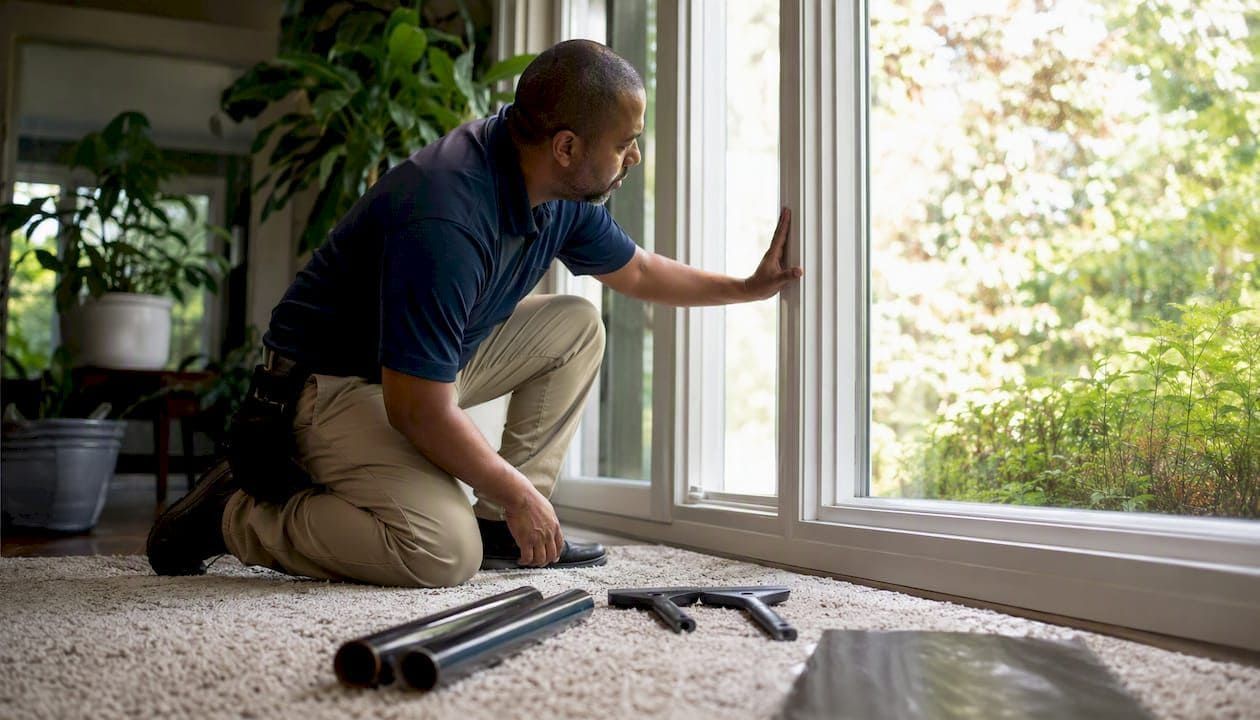
- Pre-installation assessment. A qualified installer checks glass condition, age, and type before applying any film. This step identifies thermal shock risks, existing damage, and whether the glass is compatible with the chosen film.
- Surface preparation. The glass is cleaned thoroughly to remove dust, oils, and debris. Any contamination under the film creates bubbles and reduces adhesion over time.
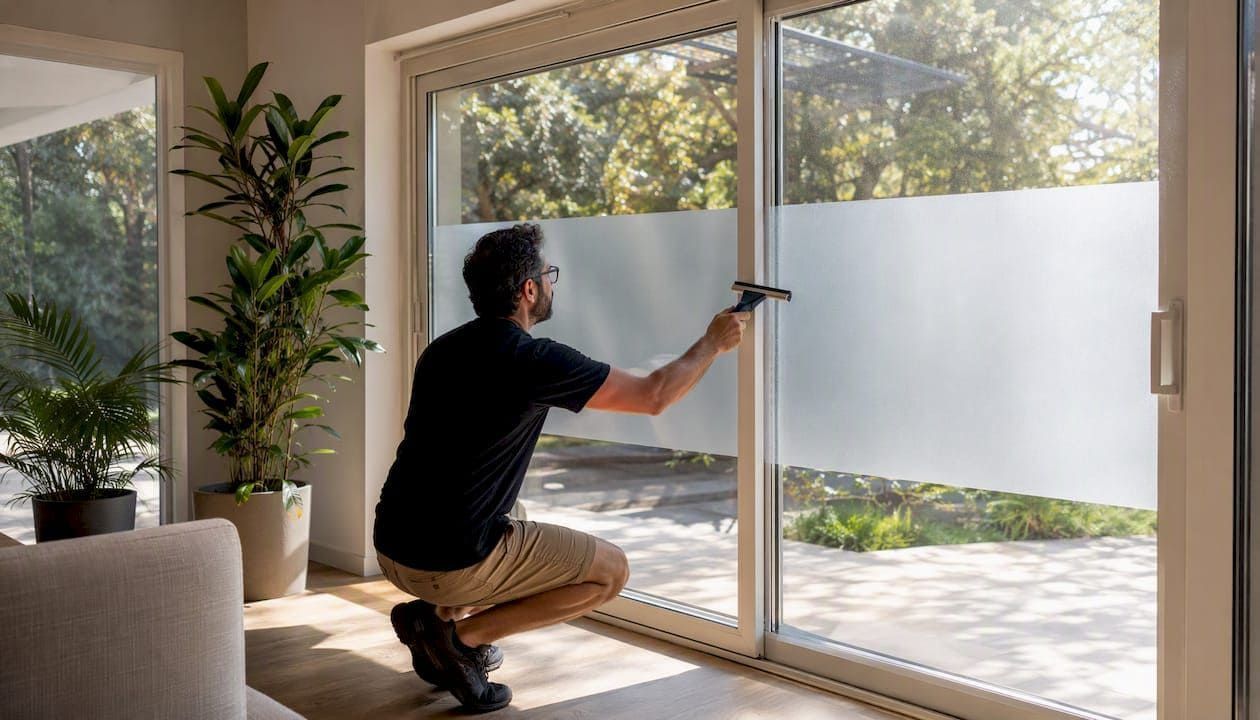
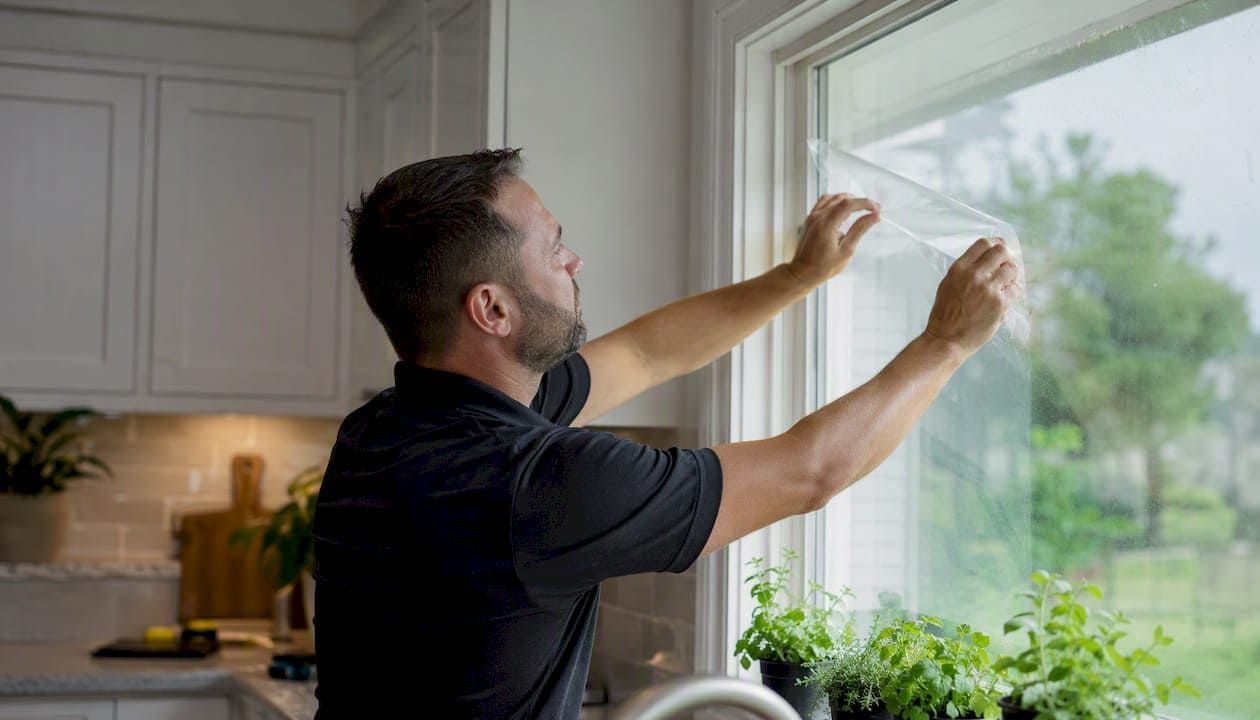
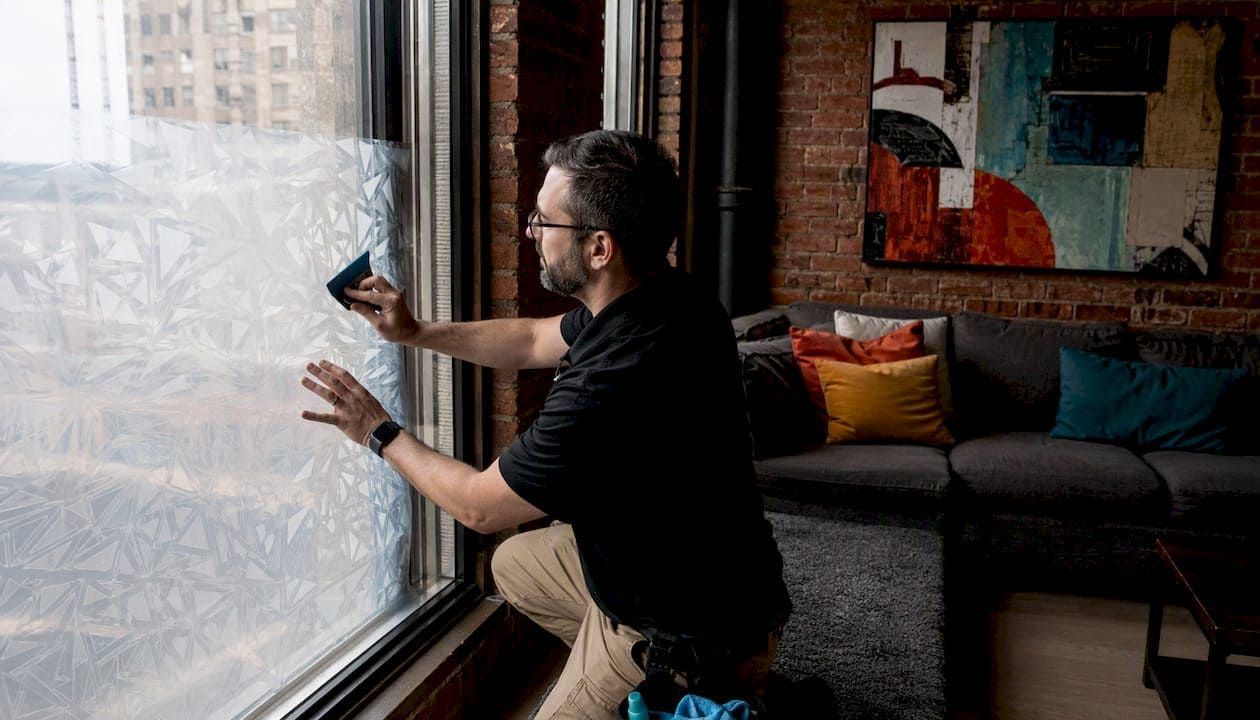
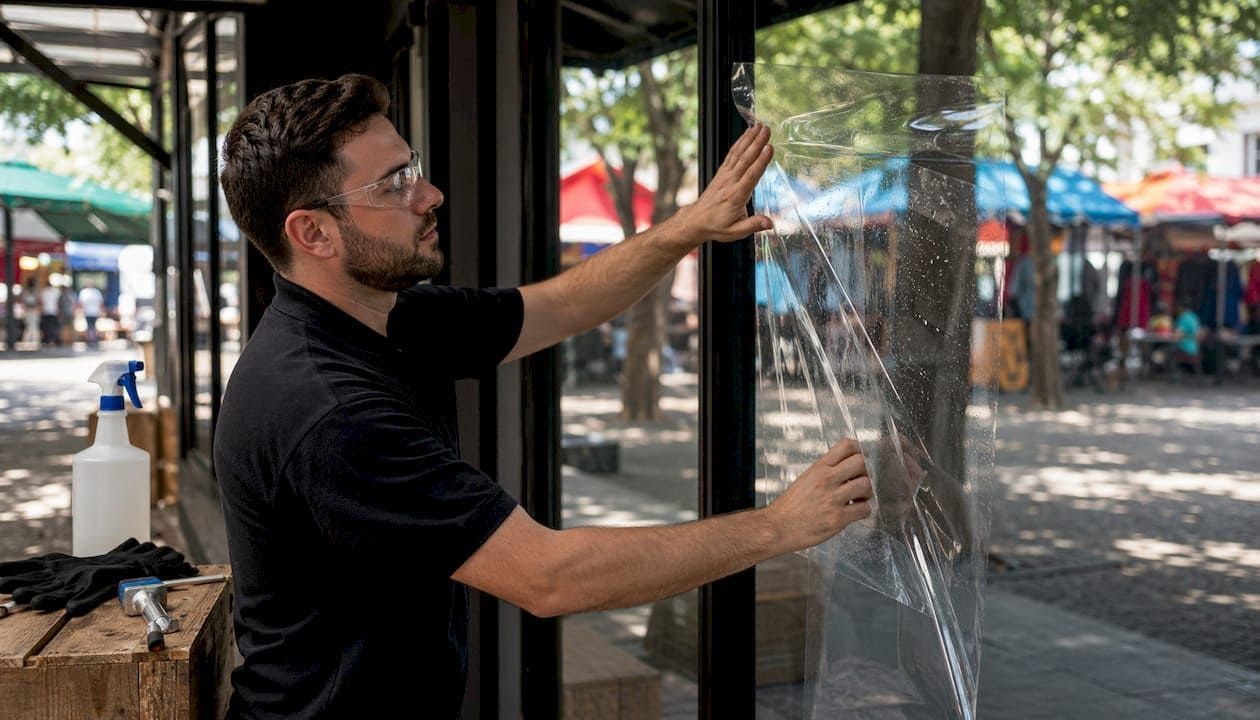
- Film application. The film is cut to size, wet-applied to the glass, and squeegeed to remove air and water. Precision matters here because misaligned edges or trapped air pockets compromise both appearance and performance.
- Curing period. Most films take 30–60 days to fully cure, depending on temperature and humidity. During this period, small water bubbles may appear. They are normal and disappear as the adhesive sets.
- Final inspection. A professional installer checks every pane for uniform coverage, clean edges, and proper adhesion before signing off.
Professional installation also protects your warranty. Most film manufacturers void warranties on DIY applications because improper installation causes premature failure. A certified installer ensures the film performs at its rated UV rejection level for the life of the warranty.
Key Takeaways
UV filtration window film is the most direct way to block the UVA radiation that standard glass allows through, protecting both your interior and the people inside your home.
| Point | Details |
|---|---|
| Standard glass fails on UVA | Typical glass blocks UVB but passes up to 75% of UVA, the ray that causes fading and skin damage. |
| UV protection is not about darkness | Clear films with UV-absorbing compounds block as much UV as dark tints. Check the UV rejection spec, not the tint level. |
| Certification is the key standard | The Skin Cancer Foundation Seal of Recommendation confirms a film blocks more than 99% of UV rays. |
| Solar control films offer more value | Combined films block UV, heat, and glare, delivering 12–38% energy savings on top of UV protection. |
| Professional installation protects your investment | A pre-installation assessment prevents thermal shock damage and keeps manufacturer warranties valid. |
UV filtration: what I've learned that most articles skip
Most articles on UV filtration focus on what the film blocks. The more useful question is what it cannot undo.
UV film stops further damage from the day it goes on. It does not restore faded floors, bleached upholstery, or sun-damaged artwork that already exists. That distinction matters when you are setting expectations for a client or deciding whether to replace furnishings before installation. I always tell homeowners: if your hardwood floor has visible fading near the windows, film will stop it from getting worse. It will not make the floor look new again.
The second thing most guides miss is the cost logic. UV blocking is a baseline feature of nearly every quality polyester film. You are not paying extra for UV protection when you choose a premium solar control film. You are paying for heat rejection and glare control. If a salesperson quotes you a high price specifically for "UV-only" film, ask why a solar control film with the same UV rating costs less and does more.
Finally, professional installation is not optional if you want the warranty to hold. I have seen DIY applications that looked fine at first and failed within a year because the glass was not properly cleaned or the film was applied to incompatible tempered glass. The UV-blocking examples from real installations show what proper application looks like and what it protects.
Surfacetint's certified UV filtration solutions for your home
Surfacetint installs LLumar Vista Films that carry the Skin Cancer Foundation Seal of Recommendation, which means every film we apply blocks more than 99% of UVA and UVB radiation. We serve homeowners and property managers across Southern New Hampshire and the Greater Boston Area with professional assessments, certified film products, and installations backed by manufacturer warranties.
Whether you need UV protection for a single sun-drenched room or a full-building solar window film installation, we match the right film to your glass type, orientation, and goals. Every project starts with a free consultation and site assessment. Request your free window tinting estimate and get a clear picture of what UV filtration can do for your property.
FAQ
What is UV filtration in window film?
UV filtration in window film is the process of blocking ultraviolet radiation using UV-absorbing compounds built into polyester film layers. Professional-grade films block up to 99.9% of UVA and UVB rays that standard glass allows through.
Does UV window film work on clear glass?
Yes. Clear UV films with specialized compounds perform UV blocking comparable to darker tints. Tint darkness is not a UV protection indicator; the film's UV rejection percentage is what matters.
How much energy can UV filtration window film save?
Energy savings from high-performance solar control films range from 12–38% depending on glass type and sun exposure. Films that also block infrared radiation reduce cooling loads most significantly in south- and west-facing rooms.
What is the Skin Cancer Foundation Seal of Recommendation?
The Skin Cancer Foundation Seal of Recommendation certifies that a window film blocks more than 99% of UVA and UVB rays. It is the most recognized standard for evaluating UV protection effectiveness in residential and commercial window films.
Does UV film prevent interior fading completely?
UV film blocks approximately 40% of the fading effect, which is the largest single contributor among fading factors. It significantly slows fading of flooring, furniture, and artwork, but heat and visible light also contribute, so combined solar control films provide the most complete protection.
Recommended