
Top Commercial Sun Control Solutions for Comfort & Efficiency
TL;DR:
- Modern window films significantly reduce solar heat, glare, and UV exposure, improving comfort and lowering energy bills.
- Safety and security films enhance impact resistance and deter break-ins, adding occupant protection.
- Combining different film types tailored to building zones maximizes sun control, safety, aesthetics, and overall property value.
Uncontrolled sun exposure in commercial buildings is more than an inconvenience. It drives up cooling costs, creates uncomfortable glare for employees and customers, fades interior furnishings, and can even compromise glass safety. For property owners and managers in Southern New Hampshire and Greater Boston, the seasonal swing from harsh summer sun to winter reflective glare makes this a year-round challenge. The good news is that modern window film technology delivers targeted, cost-effective answers. This guide walks you through the best commercial sun control solutions available today, so you can make a confident, informed choice for your property.
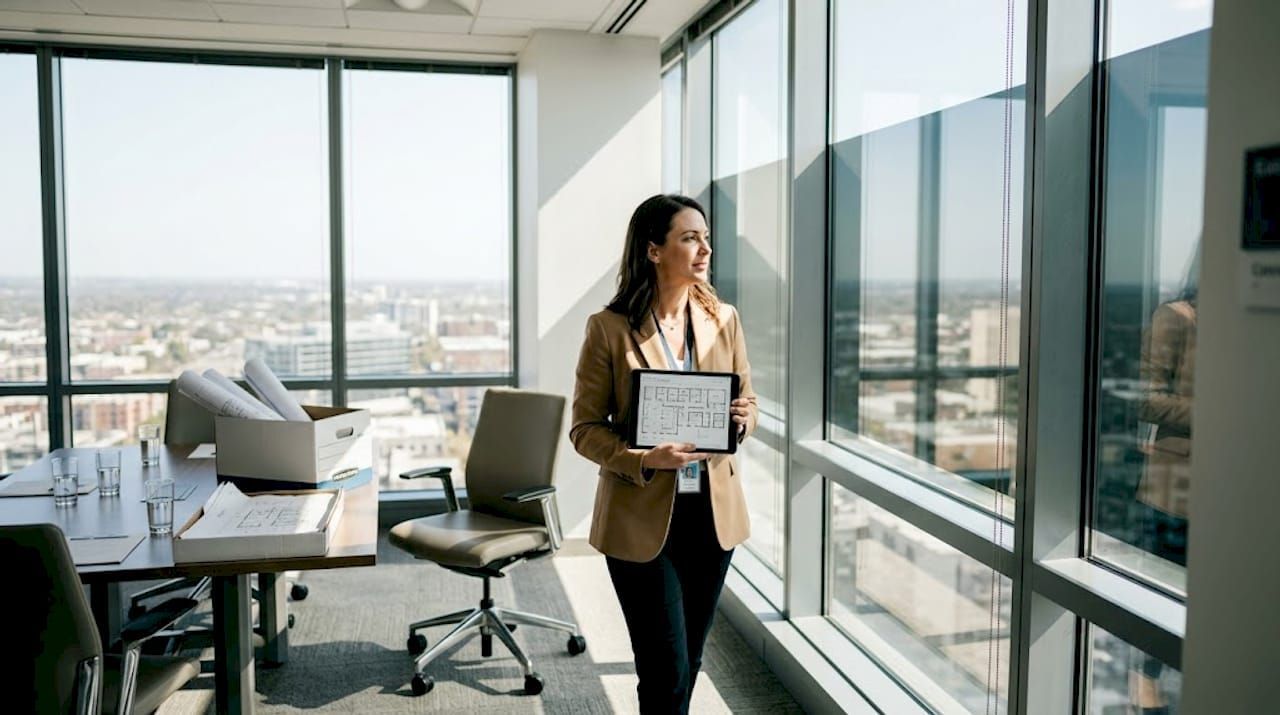
Table of Contents
- How to evaluate commercial sun control solutions
- 1. Solar window films: The foundation of modern sun control
- 2. Safety and security window films: Protection with sun control benefits
- 3. Decorative and privacy films: Balancing aesthetics, branding, and sunlight
- 4. Comparing your top commercial sun control options
- Why your sun control solution must address more than just energy savings
- Get started with the most effective sun control solutions
- Frequently asked questions
Key Takeaways
| Point | Details |
|---|---|
| Evaluate by need | Start by identifying your property's main sun control challenges—energy, security, or privacy. |
| Solar films save energy | High-quality solar window films reduce cooling costs, glare, and heat for offices and retailers. |
| Safety films add protection | Safety and security films provide impact resistance alongside UV and solar heat reduction. |
| Decorative films for style | Decorative and privacy films enhance aesthetics and privacy without major construction. |
| Compare before investing | Use a head-to-head comparison to find the right fit for your building's unique conditions. |
How to evaluate commercial sun control solutions
Choosing the right sun control product starts with asking the right questions. Not every building has the same needs, and not every film delivers the same results. Before you commit to any solution, build your evaluation around these core criteria:
- Energy efficiency: How much solar heat does the film reject, and what is the realistic impact on your cooling bills?
- Glare reduction: Does the film lower visible light transmission enough to improve screen visibility and occupant comfort?
- UV protection: Does the film block UV rays that cause fading to flooring, furniture, and merchandise?
- Safety: Does the film add impact resistance or hold glass together if broken?
- Aesthetics: Does the film complement your building's exterior and interior design?
- Compliance: Does the solution meet local building codes for commercial glazing?
Different property types have different priorities. A retail storefront in downtown Boston needs maximum glare control and a clean visual appearance. A corporate office park in Southern New Hampshire may prioritize energy efficiency and occupant productivity. A hospitality venue might weigh privacy and branding just as heavily as heat rejection.
Climate matters too. Greater Boston and Southern New Hampshire see significant solar gain in summer months and intense low-angle winter sun that punches directly into east and west-facing windows. Commercial tinting benefits extend well beyond summer, making a year-round evaluation essential.
For Boston business window tinting projects, solar orientation and glass type dramatically influence which film performs best. Evaluating tinting and sun control options is essential for energy cost savings and occupant comfort, so start with the data your building already provides.
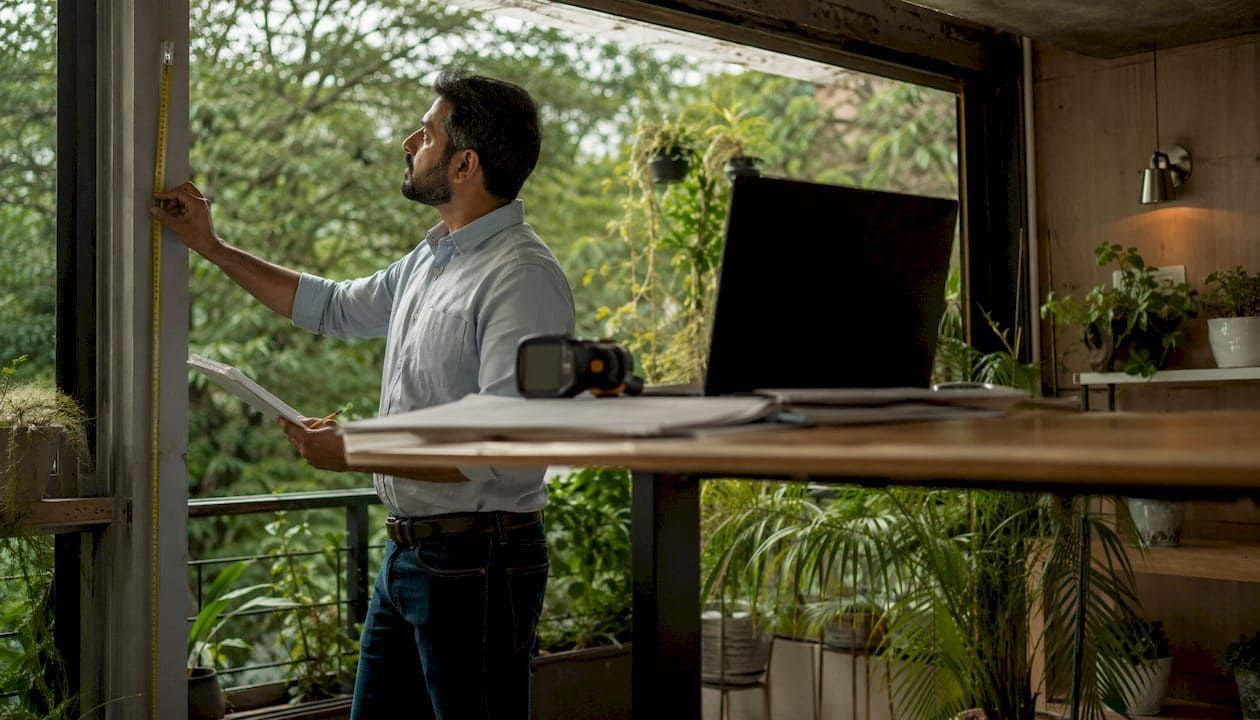
Pro Tip: Before selecting any film, schedule a professional sun exposure audit. A qualified installer can map your building's solar load by orientation and floor level, helping you match the right film to each zone rather than applying a one-size-fits-all solution.
1. Solar window films: The foundation of modern sun control
Solar window films are the most widely used and well-proven commercial sun control technology available. They work by reflecting and absorbing solar radiation before it passes through the glass, reducing the amount of heat and light that reaches the interior. The result is a measurably cooler, more comfortable space without sacrificing natural daylight.
Solar films can reduce up to 85% of incoming solar heat and cut glare dramatically, which translates directly into lower HVAC loads and reduced electricity consumption. For large commercial buildings with significant glass facades, that impact adds up fast.
Key benefits of solar window films:
- Reject up to 85% of solar heat gain
- Reduce visible glare by 60% or more
- Block up to 99% of UV radiation
- Lower cooling costs measurably across summer months
- Preserve existing glass and window frames
- Improve occupant comfort and screen visibility
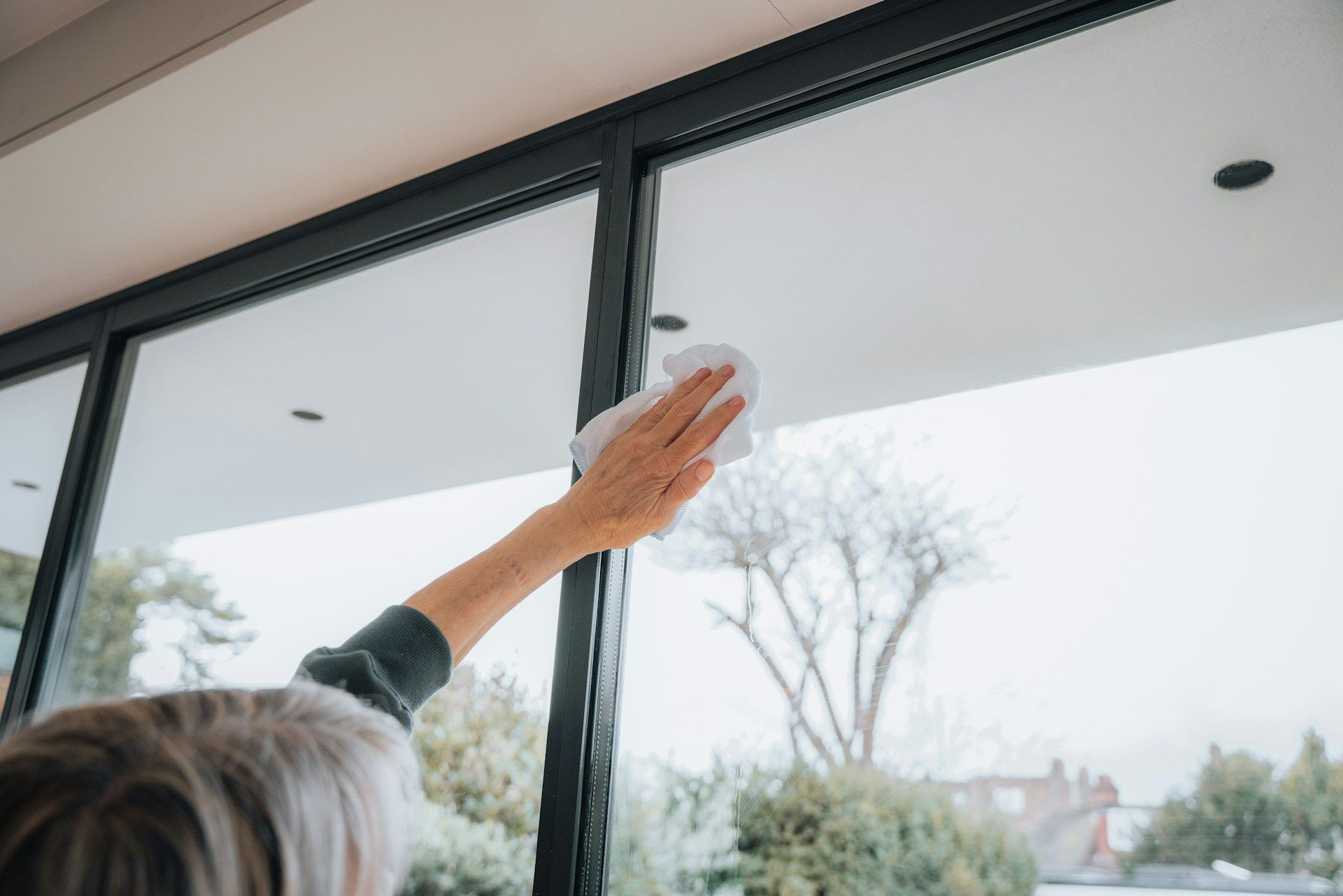
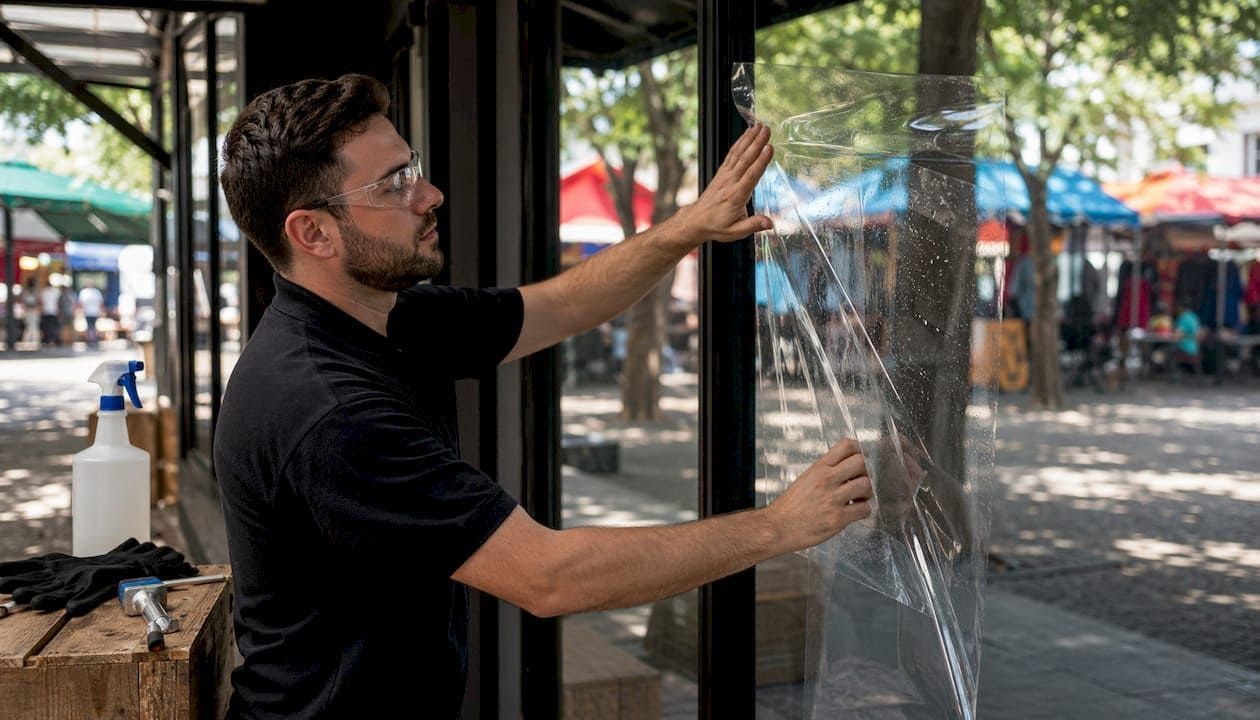
Solar films are ideal for offices, retail storefronts, schools, and healthcare facilities. They work on most existing glass types and can be installed during business hours with minimal disruption. Maintenance is simple: clean the film with a mild, non-abrasive solution and a soft cloth.
| Feature | Performance |
|---|---|
| Solar heat rejected | Up to 85% |
| Glare reduction | Up to 60% |
| UV blocked | Up to 99% |
| Typical ROI period | 3 to 5 years |
| Installation time | 1 to 3 days (most projects) |
If you're unsure whether your current glass is already underperforming, there are clear signs your commercial building needs solar film upgrades that indicate it's time to act. Explore commercial solar film installation options to see what's available for your building type and glass configuration.
2. Safety and security window films: Protection with sun control benefits
While solar films are essential for sun control, safety and security films add a valuable layer of defense. These films are engineered with thicker polyester layers and strong adhesives that hold glass together on impact, slowing break-in attempts and dramatically reducing the risk of shatter injuries.
Safety films strengthen glass and can slow or deter intrusion while also blocking up to 99% of UV rays, making them a dual-purpose investment for any commercial property with security concerns.
What safety and security films deliver:
- Hold broken glass in place, reducing injury risk
- Slow or deter smash-and-grab break-ins
- Block up to 99% of UV radiation
- Provide moderate solar heat rejection depending on film spec
- Available in clear and lightly tinted options to preserve sightlines
- Can be combined with attachment systems for maximum holding strength
Understanding the difference between film types is important here. There is a meaningful distinction when comparing safety vs security film options. Safety film focuses on occupant protection from broken glass, while security film is engineered to actively resist forced entry and may include thicker construction or attachment systems anchored to the frame.
"The best time to install security film is before an incident occurs. Reactive security is always more expensive than proactive protection."
Pro Tip: Prioritize safety and security film on ground-level glazing, entry doors, and any high-traffic or high-visibility glass areas. These locations carry the highest exposure to both accidental impact and potential forced entry. Retail storefronts, lobby entrances, and ground-floor office windows are the most critical zones.
3. Decorative and privacy films: Balancing aesthetics, branding, and sunlight
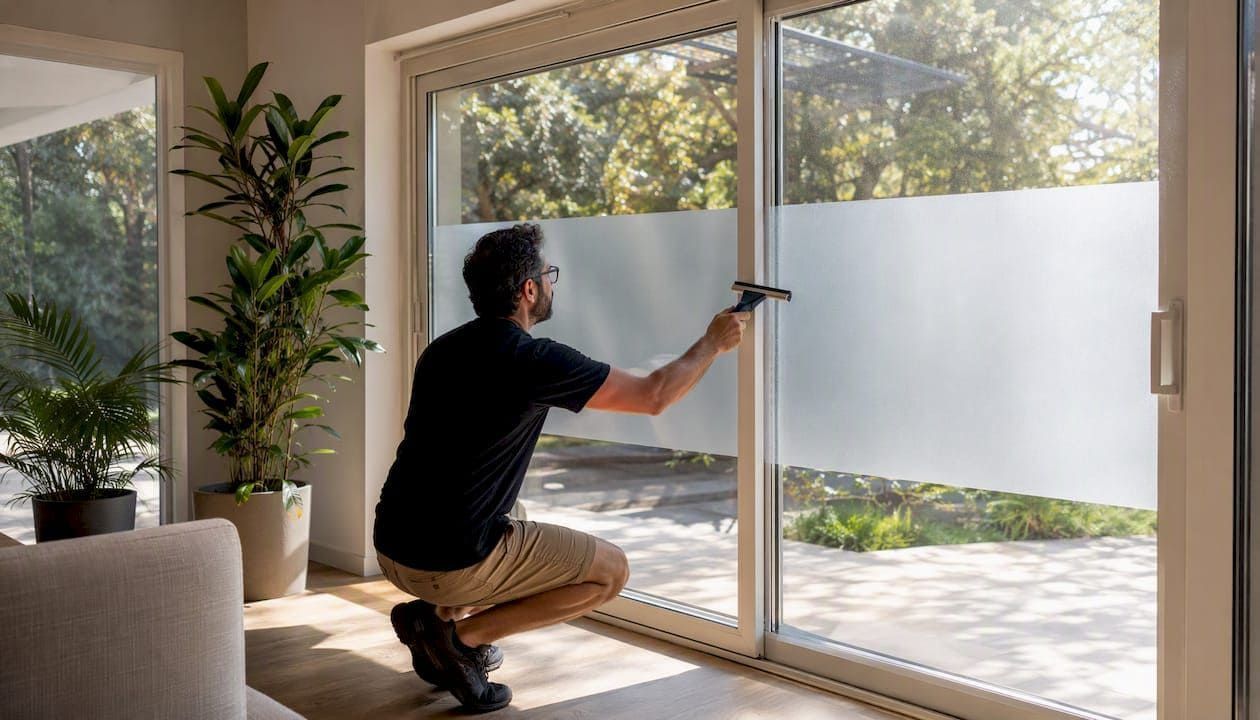
Beyond safety and energy savings, sun control can also align with your branding and privacy goals. Decorative and privacy films give commercial properties a polished, intentional look while managing light transmission and occupant visibility from the outside.
These films come in a wide range of styles and effects:
- Frosted films: Mimic the appearance of etched or sandblasted glass; ideal for conference rooms, private offices, and restrooms
- Gradient films: Transition from opaque to clear, offering partial privacy while maintaining an open feel
- Branded films: Custom-cut logos, patterns, or text that reinforce your brand identity on glass surfaces
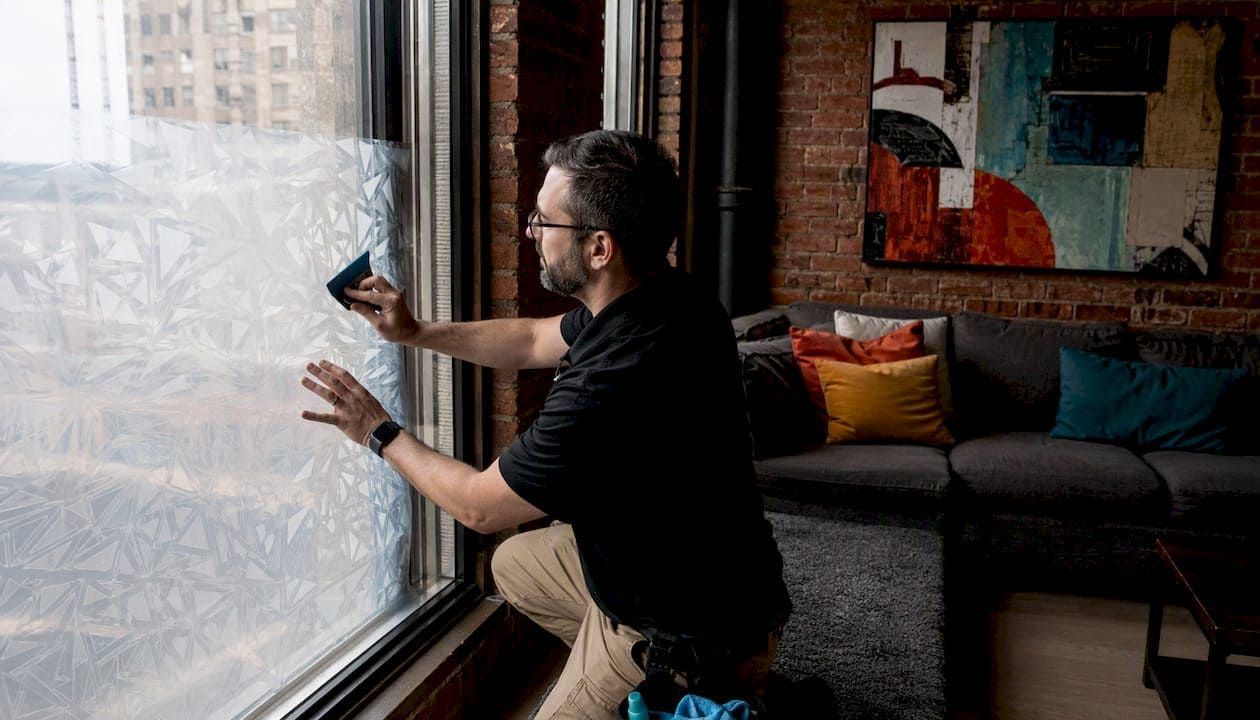
- Dusted or patterned films: Add visual texture to glass walls and partitions without sacrificing light
Decorative and privacy films improve tenant satisfaction while reducing glare and maintaining natural light. That balance is especially valuable in open-plan offices and collaborative workspaces where daylight is a design priority but visual distraction needs to be managed.
These films are particularly effective in healthcare offices, where patient privacy matters as much as comfort. Retail storefronts use branded films to reinforce identity at street level. Corporate conference rooms benefit from frosted options that signal privacy without completely closing off the space.
Browse commercial tinting examples to see how other properties in the region have used decorative films creatively. The visual possibilities are far broader than most property managers expect.

4. Comparing your top commercial sun control options
With each solution reviewed, here is a direct side-by-side comparison to simplify your decision. Different types of films offer unique blends of energy savings, safety, and appearance, and no single option is best for every building.
| Film type | Heat rejection | UV blocking | Safety | Aesthetics | Best use case |
|---|---|---|---|---|---|
| Solar film | Up to 85% | Up to 99% | Minimal | Neutral to tinted | Offices, retail, schools |
| Safety/security film | Moderate | Up to 99% | High | Clear to lightly tinted | Storefronts, lobbies, entry glass |
| Decorative/privacy film | Low to moderate | Moderate | Low | High, customizable | Conference rooms, healthcare, branding |
For Southern New Hampshire and Greater Boston properties, the most effective strategies often layer film types across different zones. Solar film handles sun-exposed south and west facades. Safety film covers ground-level entry points. Decorative film finishes interior glass partitions and conference room glazing.
Explore the full range of regional commercial films available for your specific climate zone and property type. The right combination depends on your building's orientation, glass type, and operational priorities.
Why your sun control solution must address more than just energy savings
Most commercial property conversations about window film start and end with energy costs. That framing misses most of the value. Energy savings are real and measurable, but they are one dimension of a broader impact that touches occupant wellbeing, security posture, brand perception, and even lease retention.
Think about what consistently uncomfortable glare actually costs you. Employees request interior blinds that block the view, lowering morale and making your building feel closed in. Customers in a retail environment feel fatigued faster and spend less time browsing. Tenants cite discomfort in renewal conversations. None of these costs show up on an energy bill, but they are just as real.
The total value of window tinting for a commercial property is best measured across comfort, safety, productivity, and aesthetics together. In our experience, the properties that commit to a layered film strategy see the strongest outcomes across all those categories. A single film type chosen only for its energy specs rarely delivers the full picture. The goal is to control sunlight in a way that serves every person in your building, not just your utility meter.
Get started with the most effective sun control solutions
If this guide has helped you clarify what your property needs, the next step is getting a recommendation built specifically for your building, not a generic one. Surface Dynamics Window Tinting serves commercial properties throughout Southern New Hampshire and Greater Boston with professional film installation and expert guidance.
Request a free window tinting estimate and get a site-specific recommendation based on your building's orientation, glass type, and priorities. You can also view commercial installations from local properties to see real results before you decide. Want to visualize how a film looks on your own glass? Explore window film options with our interactive viewer and see what's possible before committing.
Frequently asked questions
How much can commercial solar films reduce energy costs?
Solar films reduce solar heat by up to 85%, which typically translates to 20 to 30% in cooling cost savings depending on glass type and building orientation. Actual results vary based on local climate and how much glazing your building has.
Are safety window films required for code compliance?
Safety films enhance impact resistance and can help meet safety glazing requirements in certain glass applications, but specific requirements vary by local building codes. Consult a professional installer familiar with New Hampshire and Massachusetts regulations.
Can I install window films without disrupting business operations?
Modern film installations are fast and minimally disruptive, with most commercial projects completed within one to three days. Work can often be scheduled during off-hours or in phases to keep your business fully operational.
Do decorative films block as much sunlight as solar films?
Decorative and privacy films offer moderate glare reduction but prioritize design over maximum sun control. For high-heat zones, pair decorative film with a solar or safety film for better combined performance.
Recommended
- Commercial Solar Window Film Installation Services
- Top Benefits of Commercial Window Tinting for Businesses
- Commercial Window Tinting Workflow: Cut Energy Costs 25%
- Premium Solar Window Tint for Residential Homes
- Benefits of outdoor shading: enhance comfort, save energy 2026
- Commercial air conditioning tips for energy efficiency – Akita AC