
Glare Problems? When Office Window Film Beats Interior Shades

Stop Office Glare From Wrecking Your Workday
Strong sunlight on office glass sounds nice until it hits the wrong way. In Southern New Hampshire and the Greater Boston area, bright sun can flood workspaces with harsh glare, washed-out screens, and hot spots that make it hard to stay focused. People start squinting at monitors, shifting around the room, and closing blinds just to get through the day.
Many offices rely on interior shades as the only answer. Shades help in some ways, but they also block natural light and views, and they do not always solve the problem. Office window film for glare reduction gives another option. It can cut the harsh brightness while still letting daylight in, keep views open, and support a cleaner, more modern look. In this article, we compare film and shades, explain how film works, clear up common concerns, and show when it makes sense to talk with a local professional installer.
Why Glare Is More Than Just Annoying
Glare is not only a small bother, it can change how people feel at work. When daylight hits screens or glass tables at the wrong angle, eyes work harder to focus. Over time, that can lead to:
- Eye strain and tired eyes
- Headaches and tension
- Fatigue and low energy
- Frustration and short tempers
On top of that, glare often leads to real productivity loss. Instead of working where it makes sense, employees start chasing better light. Desks get moved. People crowd into the few spots that do not have blinding reflections. Shades are closed for most of the day, which then leads to more overhead lighting and a less comfortable feel.
Glare also changes how space and technology are used. Projected images and TV displays can be hard to see in bright rooms. Some parts of open offices and conference rooms turn into “no-go” zones in the late morning or afternoon. That wasted space is space you are still paying for.
In New England, the problem is not only summer. In winter, the sun sits lower in the sky, so it can shine straight into eye level through east and west windows. Standard shades do not always block those angles without closing off the whole window, so teams still end up fighting with streaks of light across monitors and tables.
When Shades Fall Short in Modern Offices
Traditional blinds and roller shades are familiar tools, but they come with trade-offs. To get rid of glare, you often have to close them most of the way. That means:
- Losing natural light that keeps people alert
- Making rooms feel closed in and cave-like
- Turning on more overhead lights for basic tasks
Shades also create uneven control. In open offices, some people want shades down because they sit near the glass, while others want them open to enjoy the light. This leads to a patchwork of dark and bright spots that can cause both hot and cold spots, which is hard on comfort and on the HVAC system.
There are design concerns too. Long rows of different shade types or colors, cords, and hardware can clash with modern glass-heavy designs. Street-facing windows and lobbies can look cluttered when shades are half-open or crooked across the front of the building.
Maintenance is another factor. Shades collect dust, need cleaning, and have moving parts that can jam, tangle, or break. When that happens, whole units often need replacement, which adds more cost and hassle over time.
How Office Window Film Tames Glare Without Losing Light
Office window film for glare reduction works in a different way. Instead of blocking light with a moving barrier, film is a thin layer applied directly to the glass. High-performance films are designed to filter and balance light. They cut down harsh brightness and help stop strong reflections on screens, while still letting useful daylight through.
The benefits show up across the whole space:
- Softer, more even light from wall to wall
- Easier viewing of monitors and TV displays
- More usable square footage near windows and glass walls
Many people worry that film will make their office dark or mirror-like. That might have been true for some older products, but modern options are much more flexible. You can choose films that are:
- Nearly invisible, for a very natural look
- Lightly tinted, to soften light without a heavy tone
- Neutral in color, so the view outside still looks true
Along with glare control, many solar films help reduce heat gain and block most of the UV rays that come through glass. That can help protect flooring, furniture, and finishes from fading and keep spaces more comfortable during bright, hot stretches.
Film Versus Shades: Cost, Comfort, and Curb Appeal
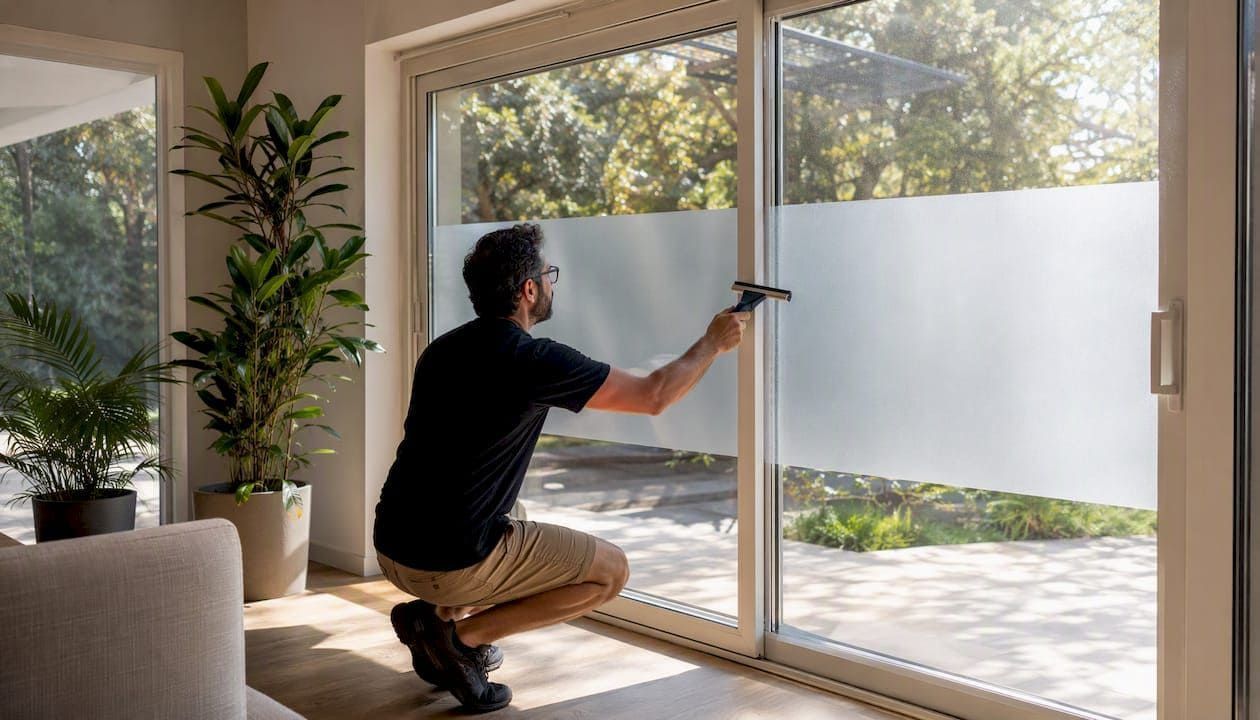
When you compare window film with shades, it helps to think beyond the first install. Film is a one-time application with no cords, tracks, or springs. It stays in place and needs very little attention in normal use. Shades, on the other hand, move every day, get pulled at different speeds, and wear out over time.
From a comfort and energy point of view, film and shades also work differently. With film, you keep your windows clear. Daylight can spread through the space more evenly, which can support a pleasant working light and reduce the need for extra fixtures during the day. Less heat streaming through the glass can also ease the load on your cooling system in the warmer months.
Shades that stay closed to fight glare cut off that natural light and view. Rooms can feel smaller and more boxed in, which is the opposite of what many offices want from their glass. That also means more demand on lighting and HVAC systems for much of the day.
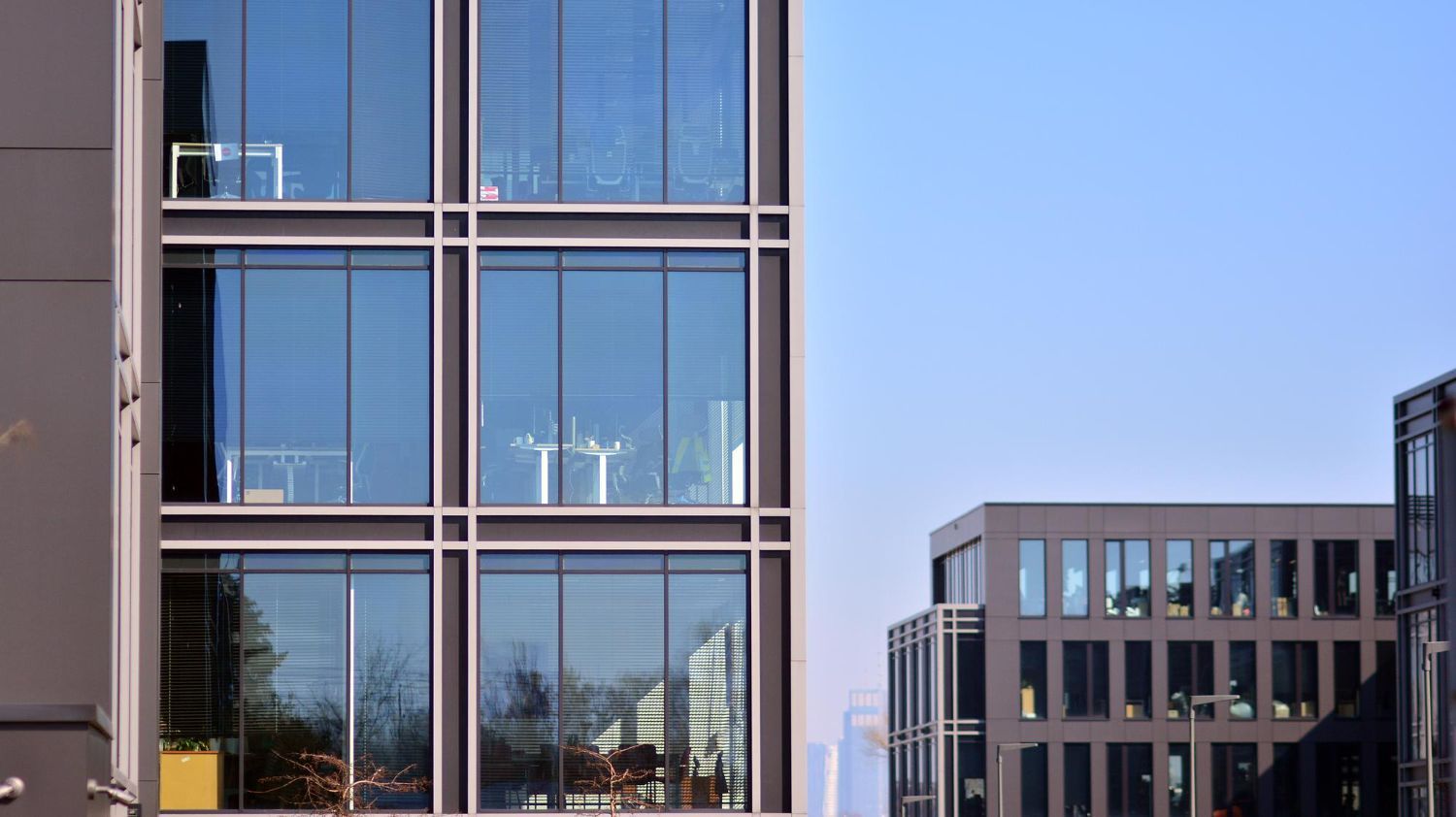
There is a visual impact from the outside too. Film can give glass a clean, uniform appearance that works well for office buildings, storefronts, medical spaces, and lobbies. It supports a polished look with consistent glass from one end of the building to the other, instead of a random pattern of open and closed shades.
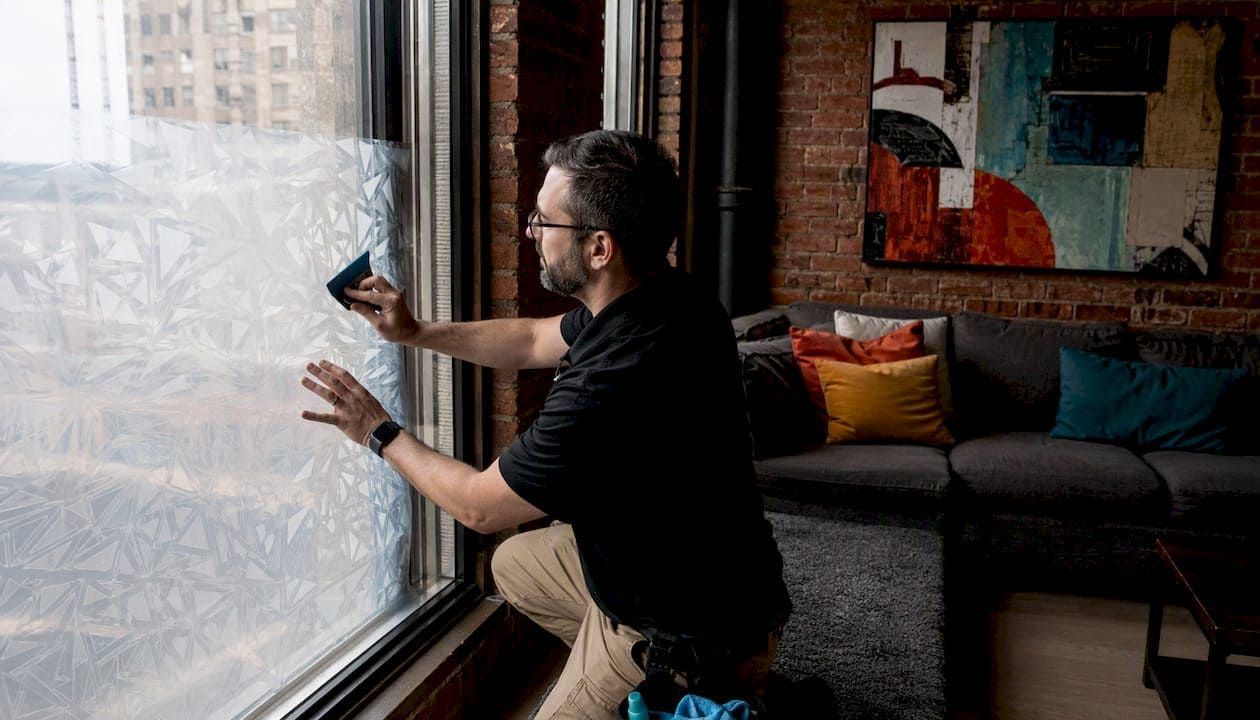
Some glare-control films also bring extra functions. Certain options can offer daytime privacy by limiting inward views while still letting people inside see out. Decorative films can be added on interior glass, such as conference rooms and reception areas, to bring style, branding, or a frosted look without closing off the light.
How to Choose the Right Glare-Reducing Film
Picking the best office window film for glare reduction starts with a few simple questions:
- Which windows cause the worst problems, east, west, south, or all of the above?
- What type of glass is in place now?
- Are issues mainly glare, or also heat and fading?
- Are there any building rules or lease limits on window changes?
Film performance is measured in ways that are fairly easy to understand once they are explained. A few key terms include:
- Visible light transmission, how light or dark the film appears
- Glare reduction, how much it can cut down visible brightness
- Solar heat gain reduction, how much it can limit heat build-up from the sun
- UV blocking, how much it can help protect interiors from sun damage
Looks and performance go hand in hand. Some offices prefer a neutral, almost invisible film that keeps the glass appearance close to clear. Others like a slightly tinted or softly reflective film that gives a bit more privacy and a hint of style from the outside. The right choice depends on how the space is used, the building design, and the comfort goals.
This is where professional support matters. An experienced installer can walk the space, note the sun angles and glare patterns through the day, and suggest film types that match your needs. Samples can be placed on the glass so you can see the difference with your own eyes before making decisions. For offices in Southern New Hampshire and the Greater Boston area, teams like Surface Dynamics Window Tinting focus on matching film solutions to local buildings and light conditions.
Take Back Your Windows and Create a Productive Office
Glare does not have to control how your office works. You do not need to pick between people being comfortable and people having daylight and views. With the right office window film for glare reduction, you can soften harsh light, keep screens readable, and keep glass working as part of a bright, welcoming design.
The best next step is to review the rooms that cause the most complaints, like glass-heavy conference rooms, corner offices, and street-facing areas. Think about your goals for comfort, energy, privacy, and style. Then involve a professional window film installer who understands commercial spaces and local sun patterns. With a solid plan and the right film, your windows can support productivity instead of fighting it, in every season of the year.
Get Started With Your Project Today
If glare is disrupting work in your office, we can help you create a more comfortable and productive space with our
office window film for glare reduction. At
Surface Dynamics Window Tinting, we will assess your windows, explain your options, and recommend a solution tailored to your building and team. Reach out today to discuss your project or
schedule a consultation through our
contact page.