
UV-Blocking Window Film Examples for Every Home
TL;DR:
- Most UV-blocking window films achieve over 99% UV rejection, but their heat rejection and light transmission differ significantly. Ceramic films balance UV protection, heat control, and a natural appearance, whereas reflective films maximize heat rejection with a mirror-like exterior. Choosing the right film depends on room orientation, desired aesthetics, and specific comfort needs, not UV rejection alone.
Not all window films are created equal. If you've spent any time searching for UV-blocking window film examples, you already know the options are overwhelming: clear films, ceramic films, reflective films, and everything in between. Each one promises UV protection, but they differ dramatically in how much heat they block, how much light they let through, and what your windows look like from the inside and outside. This article walks you through real film examples with actual performance numbers so you can make a confident decision for your home or property.
Table of Contents
- Key takeaways
- 1. UV-blocking window film examples: what you need to know before comparing
- 2. Clear UV-blocking films for unobstructed views
- 3. Dual-reflective and silver reflective UV-blocking solar films
- 4. Ceramic UV-blocking and heat-control window films
- 5. Reflective films vs. ceramic films: how to choose
- 6. Solar vs. privacy film trade-offs by room orientation
- 7. Side-by-side comparison and situational recommendations
- My take on choosing UV-blocking window film
- See how Surfacetint can find the right film for your property
- FAQ
Key takeaways
| Point | Details |
|---|---|
| UV rejection is standard | Nearly all window films block 99%+ UV, so compare heat rejection and light transmission to find real differences. |
| Clear films protect, not cool | Clear UV films like BDF S2M prevent fading but offer minimal heat control. |
| Ceramic films balance everything | Nano-ceramic series like ComforTech offer high UV and heat rejection with a natural appearance. |
| Reflective films maximize rejection | Silver reflective films achieve the highest heat rejection but create a mirror effect inside and out. |
| Metrics matter more than labels | Use TSER and SHGC to evaluate film performance, not IR rejection claims alone. |
1. UV-blocking window film examples: what you need to know before comparing
Before you pick a film, you need a shared language for reading the specs. The good news: TSER and SHGC give you far more useful information than IR rejection figures alone. Here's what each metric means in plain terms:
- UV Rejection: The percentage of ultraviolet radiation blocked. Nearly every quality film hits 99% or better, so this spec alone won't help you choose between options.
- VLT (Visible Light Transmission): The percentage of visible light that passes through. Higher VLT means a brighter room. Lower VLT means more shade and privacy.
- TSER (Total Solar Energy Rejected): The percentage of total solar energy blocked. This is the best single number for understanding how much a film will cool your space.
- SHGC (Solar Heat Gain Coefficient): The fraction of solar energy that enters through the window. Lower is better for heat control.
There's also a critical distinction between clear UV films and solar control films . Clear UV films protect your furnishings from fading but do almost nothing to reduce heat. Solar control films, which include reflective and ceramic options, tackle both UV and heat simultaneously.
Pro Tip: When a film is marketed heavily on IR rejection at a single wavelength, ask for the TSER value instead. A film can block 95% of IR at one wavelength while still letting through significant solar heat. TSER captures the full picture.
2. Clear UV-blocking films for unobstructed views
If your main concern is protecting furniture, flooring, and artwork from fading without changing how your windows look, a clear UV film is your starting point. The most referenced example in this category is the BDF S2M .
The BDF S2M blocks 99% UV in the 300 to 380 nm range, the wavelength band most responsible for fading and material degradation. It's optically clear, meaning it won't alter the appearance of your windows from inside or outside. It also features a scratch-resistant coating, which matters for longevity in high-traffic rooms.
What the BDF S2M won't do is reduce heat. It is not intended for heat control but is highly effective at reducing fading. If you sit near a south-facing window on a summer afternoon, you'll still feel the sun's heat coming through.
Best use cases for clear UV films:
- Rooms where natural light is a priority and you don't want any tint
- Protecting artwork, antiques, wood floors, and upholstery from UV damage
- Rental properties where tenants or HOA rules require minimal visual change
- North-facing windows that get little direct sun but still receive diffuse UV exposure
This film type is an honest, single-purpose solution. It does one thing extremely well.
3. Dual-reflective and silver reflective UV-blocking solar films
Reflective films add a metallic layer that bounces solar energy back before it enters the glass. The result is strong heat rejection combined with 99%+ UV blocking. Two common examples are Dualflex (dual-reflective) and Chromoflex (silver reflective).
Dual-reflective films feature an outer reflective layer for heat rejection and daytime privacy, paired with an inner layer designed to reduce the mirror effect you see from inside. In practice, you get a clearer outward view during the day than you would with a single-layer reflective film.
Silver reflective options like Silver 15 push heat rejection even further. This film achieves a TSER around 79%, which is among the highest available in any residential film category. The trade-off is a strong metallic mirror effect that's visible both outside during the day and inside at night when interior lighting is on.
What to expect from reflective film options:
- Daytime privacy from the exterior (people outside cannot see in)
- No nighttime privacy when interior lights are on
- A mirror-like exterior appearance that some property owners find too commercial
- Shade variations (15, 20, 35) that trade off between privacy and how much light enters
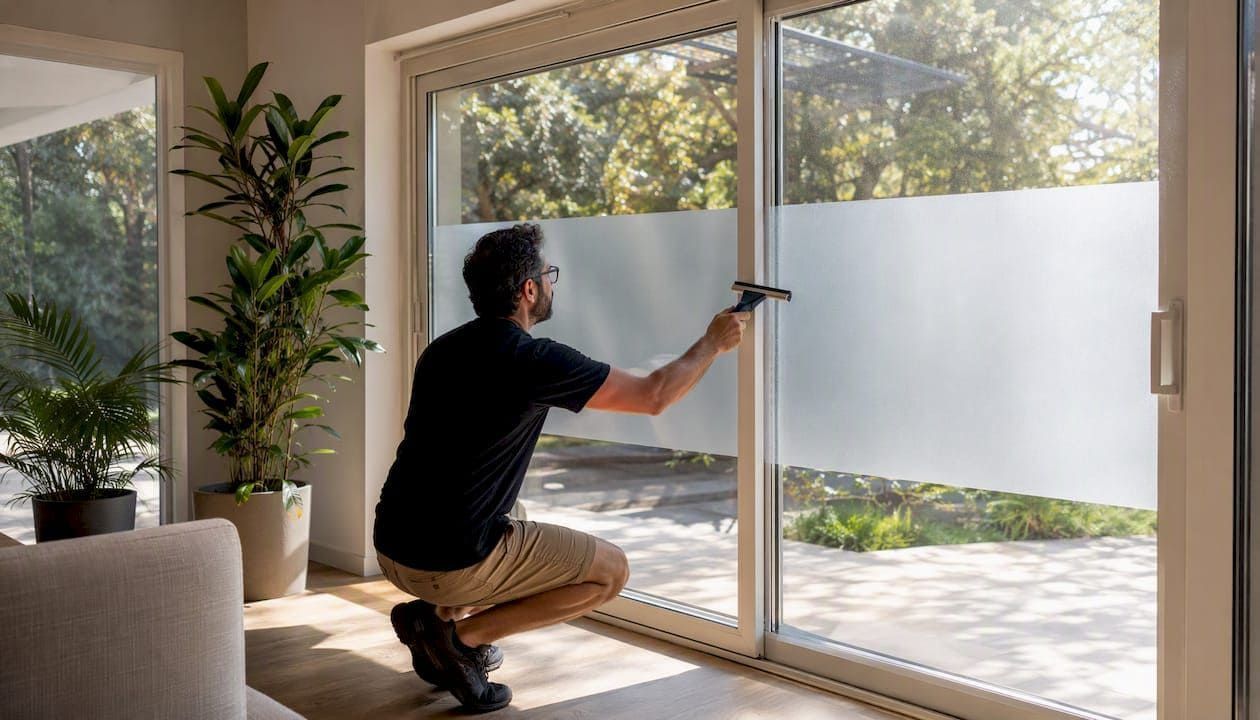
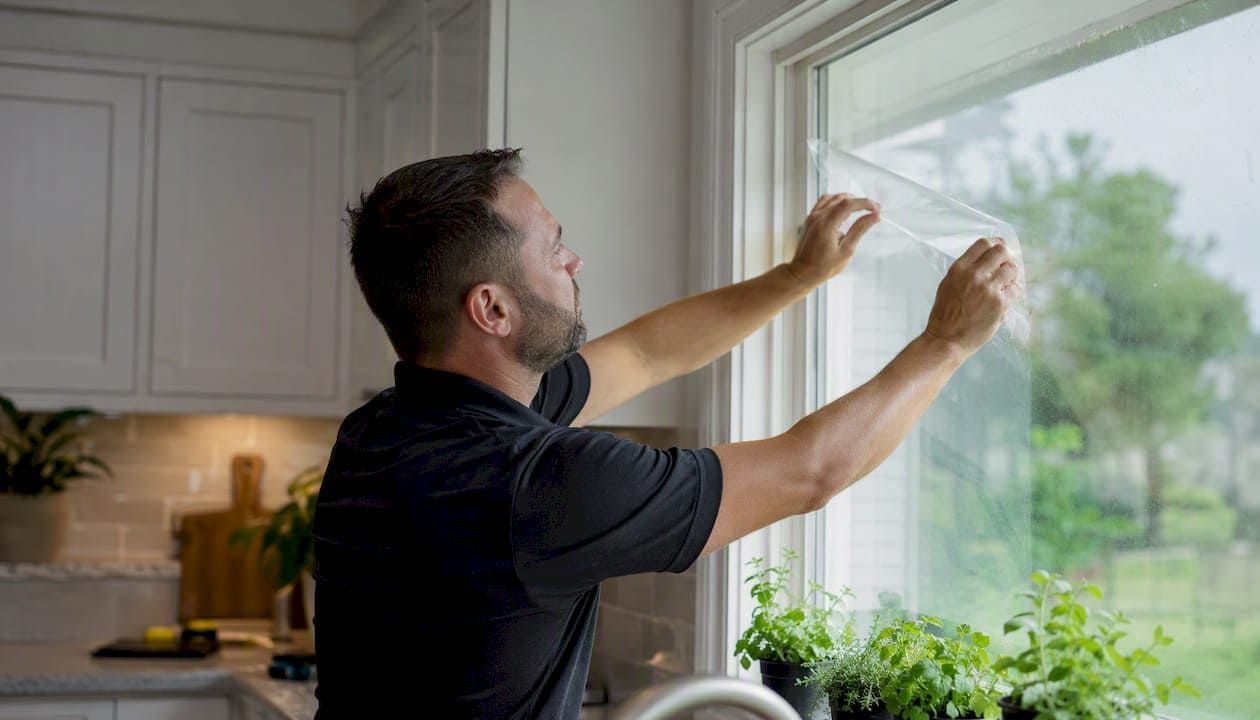
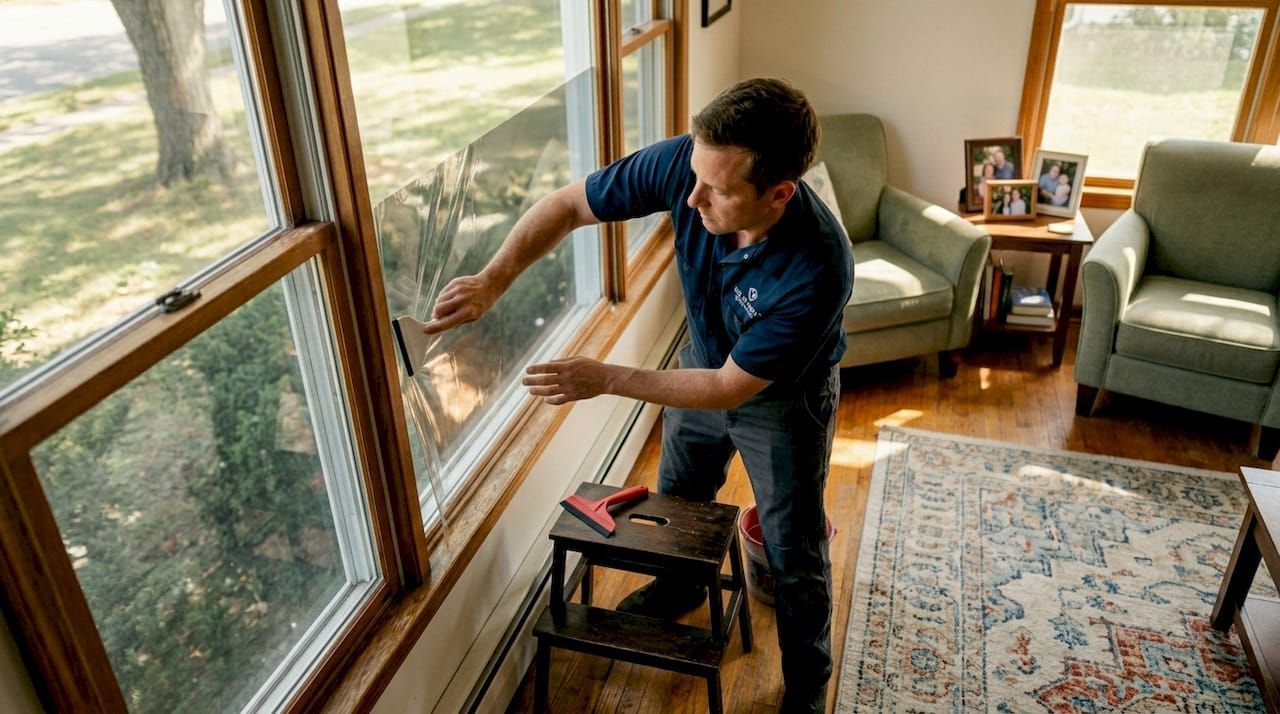
- Pressure-sensitive adhesive on most models, making them a common DIY candidate for those researching how to install window film at home
Reflective films are a strong fit for west-facing windows that take a beating from afternoon sun, commercial-facing facades, and properties where cooling costs are the primary driver.
4. Ceramic UV-blocking and heat-control window films
Ceramic films represent the current high-water mark for residential UV and heat control without the mirror look. They use nano-ceramic technology that blocks solar heat without the metallic layer, so exterior appearance stays natural and interior reflectivity stays low.
The ComforTech Ceramic Series by Concord is a well-documented example with five distinct shades. Each shade offers the same high UV rejection with meaningfully different heat and light performance.
| ComforTech Shade | VLT | TSER | SHGC | UV Rejection |
|---|---|---|---|---|
| ComforTech 45 | 45% | 51% | 0.48 | >99% |
| ComforTech 35 | 35% | 56.% | 0.43 | >99% |
| ComforTech 25 | 25% | 61% | 0.38 | >99% |
| ComforTech 15 | 15% | 66% | 0.33 | >99% |
| ComforTech 05 | 5% | 70% | 0.29 | >99% |
The ComforTech series blocks more than 99% UV across all five shades. The real difference between them is how much light and heat you want to manage. ComforTech 45 keeps the room bright and blocks about half the incoming solar energy. ComforTech 05 creates a near-blackout effect and rejects 70% of solar heat.
For most living rooms and bedrooms, the 35 or 45 shade hits the sweet spot. Darker shades are better suited to home offices, media rooms, or any west-facing wall that absorbs punishing afternoon sun.
Pro Tip: Ceramic films typically cost more than reflective options upfront. But when you factor in reduced cooling loads and protection of furniture that would otherwise fade and need replacing, the math often favors ceramic within a few years.
5. Reflective films vs. ceramic films: how to choose
This is the decision most homeowners and property managers actually face. Both film types block UV effectively, but they serve different priorities.
Choose a reflective film if:
- Maximum heat rejection is your top priority and budget is a constraint
- You're treating commercial-facing windows or outward-facing walls where exterior appearance matters less
- You want the highest possible TSER (reflective films like Silver 15 outperform most ceramic options on raw heat rejection)
Choose a ceramic film if:
- You want heat control without a mirror appearance inside or outside
- The space is used for living, working, or hosting guests where aesthetics matter
- You're managing rental units and want a finish that photographs well and doesn't feel like a tinted office building
Beyond appearance, adhesion type matters when thinking about how to install window film. Most consumer reflective films use pressure-sensitive adhesive, which allows repositioning during installation. Ceramic films often use a water-activated adhesive that requires more precision but bonds more durably over time.
Reflective and ceramic films differ significantly in interior mirror effect, influencing tenant comfort and aesthetics in multi-window installations. If you're managing a property with dozens of windows, that mirror effect becomes a real quality-of-life issue for occupants.
6. Solar vs. privacy film trade-offs by room orientation
Room orientation shapes the right choice more than most people realize. Here's a practical framework based on window placement:
South-facing windows receive the most consistent sun exposure year-round. A ceramic film in the 35 to 45 VLT range gives you meaningful solar heat protection without making the room feel like a cave.
West-facing windows get intense afternoon heat. This is where reflective or darker ceramic options earn their keep. A ComforTech 25 or a dual-reflective film significantly reduces that late-day heat load.
East-facing windows get morning sun, which is generally less aggressive. A lighter ceramic film or even a clear UV film may be sufficient here, depending on your climate.
North-facing windows get minimal direct sun. Clear UV films are often the right call: you protect against diffuse UV damage without sacrificing light in an already low-light space.
Understanding UV damage to interiors goes beyond just the direct sun angle. Reflected UV from light-colored surfaces and pavement can still enter north and east-facing windows and cause fading over time.
7. Side-by-side comparison and situational recommendations
Here's a direct comparison of the main UV-blocking film categories covered in this article, with the key specs that matter for your decision.
| Film Example | UV Rejection | VLT | TSER | Best For |
|---|---|---|---|---|
| BDF S2M Clear | 99% | ~90% | Minimal | Fade protection, no tint preferred |
| Dualflex Dual-Reflective | >99% | Varies | Moderate-High | Privacy + heat, natural interior look |
| Silver 15 Reflective | >99% | 15% | ~79% | Maximum heat rejection, budget option |
| ComforTech 45 Ceramic | >99% | 45% | 51% | Bright rooms, balanced comfort |
| ComforTech 25 Ceramic | >99% | 25% | 61% | West-facing, afternoon heat management |
| ComforTech 05 Ceramic | >99% | 5% | 70% | Media rooms, maximum shade needed |
The key trade-off among all these options is not UV rejection. It's balancing TSER against VLT to match your space, climate, and aesthetic preferences.
For a property manager overseeing multiple units, solar films for residential properties can significantly cut cooling costs across an entire building when applied to the highest-heat exposures. The energy savings add up faster than most people expect, and the protection of tenant belongings reduces friction and complaints.
My take on choosing UV-blocking window film
I've seen homeowners obsess over UV rejection percentages and pick a film that checks that box perfectly, then live with a space that's either too dark, too reflective, or uncomfortable in ways they didn't anticipate. UV protection is table stakes at this point. Almost every quality film on the market gets you to 99%. That number is not your differentiator.
What actually determines whether a film improves your daily life is the TSER and VLT combination. I've watched people install a budget reflective film on a living room window, achieve excellent heat numbers, and then sit in a room that feels like the inside of a car with tinted windows. The metrics looked right. The experience didn't.
My honest recommendation: don't start with the film. Start with the room. What time of day does it get uncomfortable? What do you want the natural light to feel like at noon? Do you have furniture or floors you're actively trying to protect? The answers to those questions tell you whether you need a clear film, a mid-range ceramic, or a high-rejection reflective. Then match the film to the need, not the other way around.
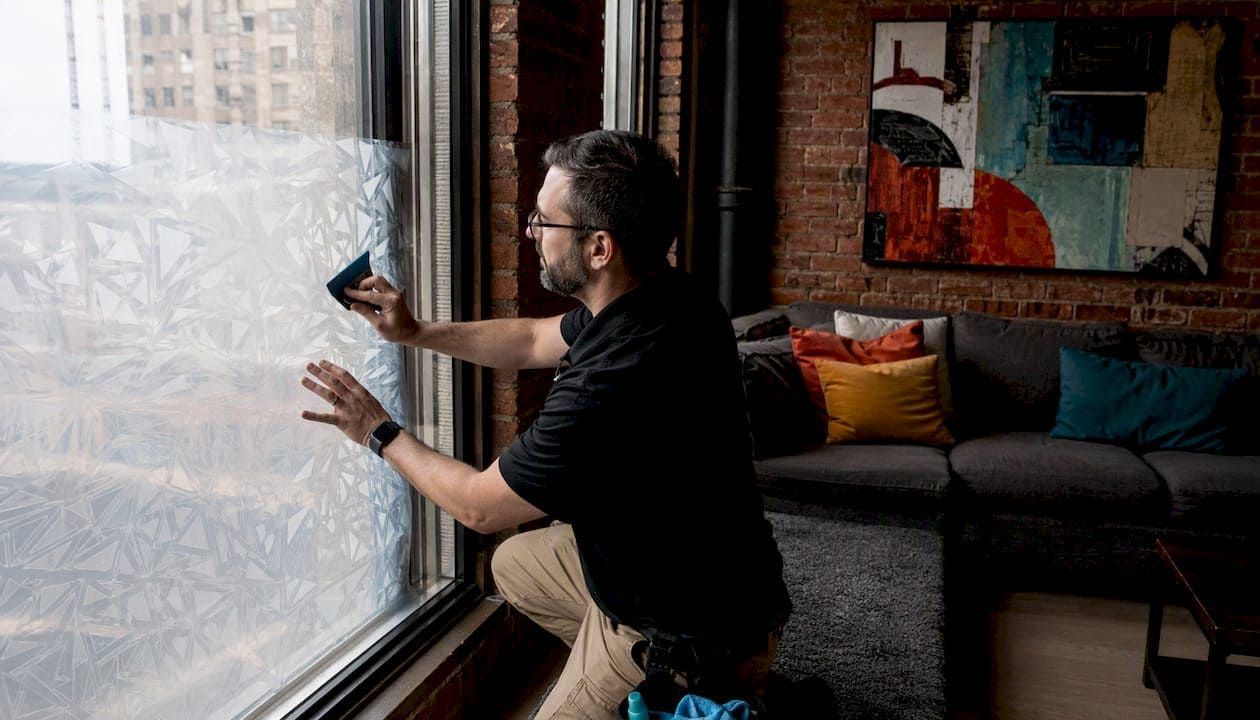
One more thing: installation quality changes the performance of every film listed here. Even the best ceramic product will underperform if it's bubbled, peeling at the edges, or applied to glass that wasn't properly prepped. Ask your installer about their surface prep process before you commit to a product.
See how Surfacetint can find the right film for your property
Surfacetint serves homeowners and property managers across Southern New Hampshire and the Greater Boston Area as an exclusive LLumar SelectPro Dealer. The team works with premium LLumar Vista Solar Control Films and can match the right UV protection film to every window in your home based on orientation, room use, and your specific comfort goals. Whether you're looking for a clear fade-protection film for a single room or a full ceramic solar control installation across an entire property, Surfacetint handles the assessment, product selection, and installation. Get a free residential estimate today, or use the energy savings calculator to see what window film can actually do for your cooling costs.
FAQ
What is the difference between clear UV film and solar control film?
Clear UV films like BDF S2M block 99% of UV rays to prevent fading but provide minimal heat reduction. Solar control films, including ceramic and reflective options, block both UV and solar heat.
Which window film type blocks the most heat?
Silver reflective films like Silver 15 achieve the highest heat rejection, with a TSER around 79%, but create a mirror effect on both sides of the glass. Ceramic films offer slightly lower heat rejection with a much more natural appearance.
Do all UV-blocking window films look the same on windows?
No. Clear UV films are nearly invisible, dual-reflective films have a subtle sheen, and silver reflective films create a strong mirror effect. Ceramic films maintain a natural tinted look with low interior reflectivity.
How do I choose the right shade for my room?
Match the shade to the room's sun exposure and your light preference. South and west-facing rooms with heavy sun benefit from ComforTech 25 or 35, while bright north-facing rooms can use a 45 or clear UV film.
Can window film actually lower my energy bills?
Yes. Films with TSER values above 50% meaningfully reduce solar heat gain, which lowers air conditioning load. The savings vary by climate, window area, and film choice, but are measurable in homes with significant sun exposure.
Recommended